Chinese script evolved like a living organism driven by natural selection: study
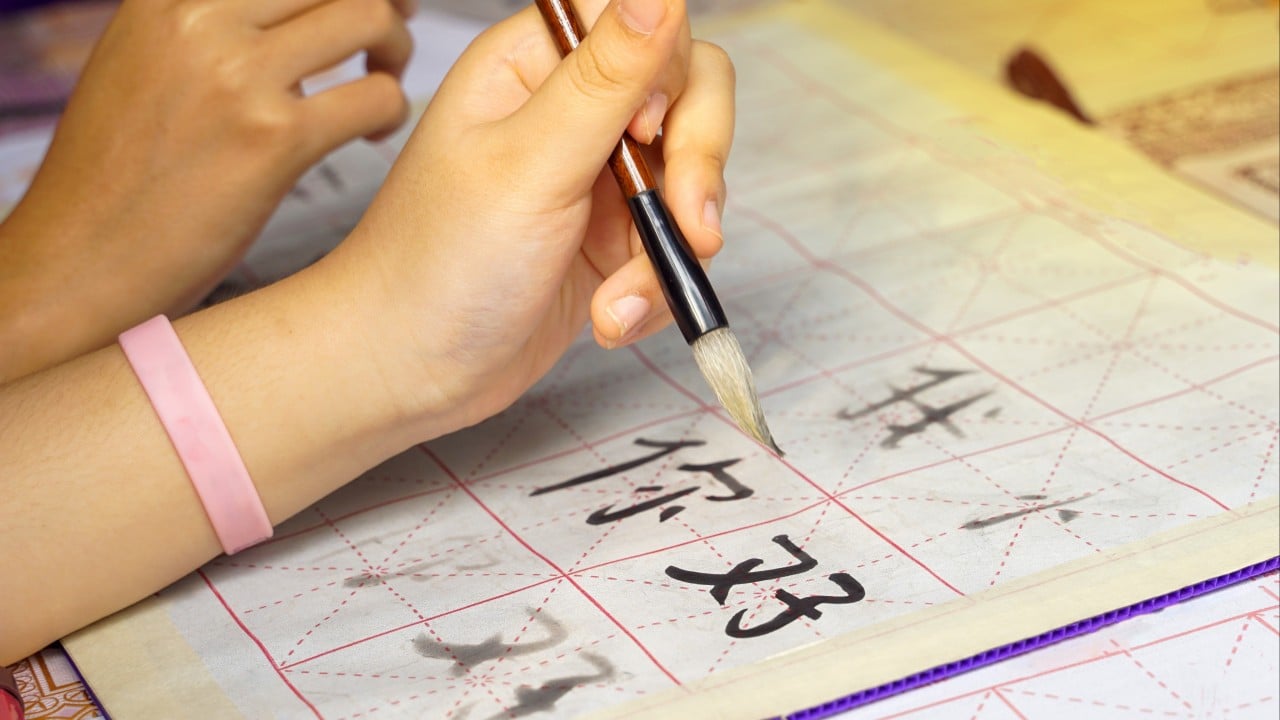
Modern simplified Chinese characters form a tightly connected network from just 514 basic components that evolved through a process similar to natural selection, according to researchers who say their findings could change how Chinese writing is taught.
“Chinese characters evolve like living organisms,” lecturer Xie Yonghui of Shanghai Normal University said on August 24.
The research into the evolution of Chinese writing over thousands of years, led by Huang Wei, of Beijing Language and Culture University and Xie, was published in the peer-reviewed journal Digital Scholarship in the Humanities in January.
10:28
Where more than 200 Chinese dialects are spoken, how is China united by ‘common speech’?
Their study of “the structural formation system of modern simplified Chinese characters from a complex network perspective” reveals that a small number of core components – such as 日 (sun), 月 (moon) and 人 (human) – are repeatedly combined to create new characters.
When existing elements were insufficient, entirely new components were invented.
“From ancient times to the present, Chinese characters have evolved from complex to simplified forms, such as the shift from traditional to simplified characters, partly to make writing easier and partly through natural selection driven by usage frequency,” Xie said.
The researchers said this evolutionary pressure produced a system in which a minority of high-frequency components dominated, while less-central elements remained on the margins.
The pattern followed a principle of economy, mirroring the linguistic tendency towards greater output with less effort.
KioskNews shows a cleaned-up reading view extracted from the publisher’s page — the original always lives on their site, not ours.