Is China a Russia-allied Arctic threat to Europe or a potential polar partner?
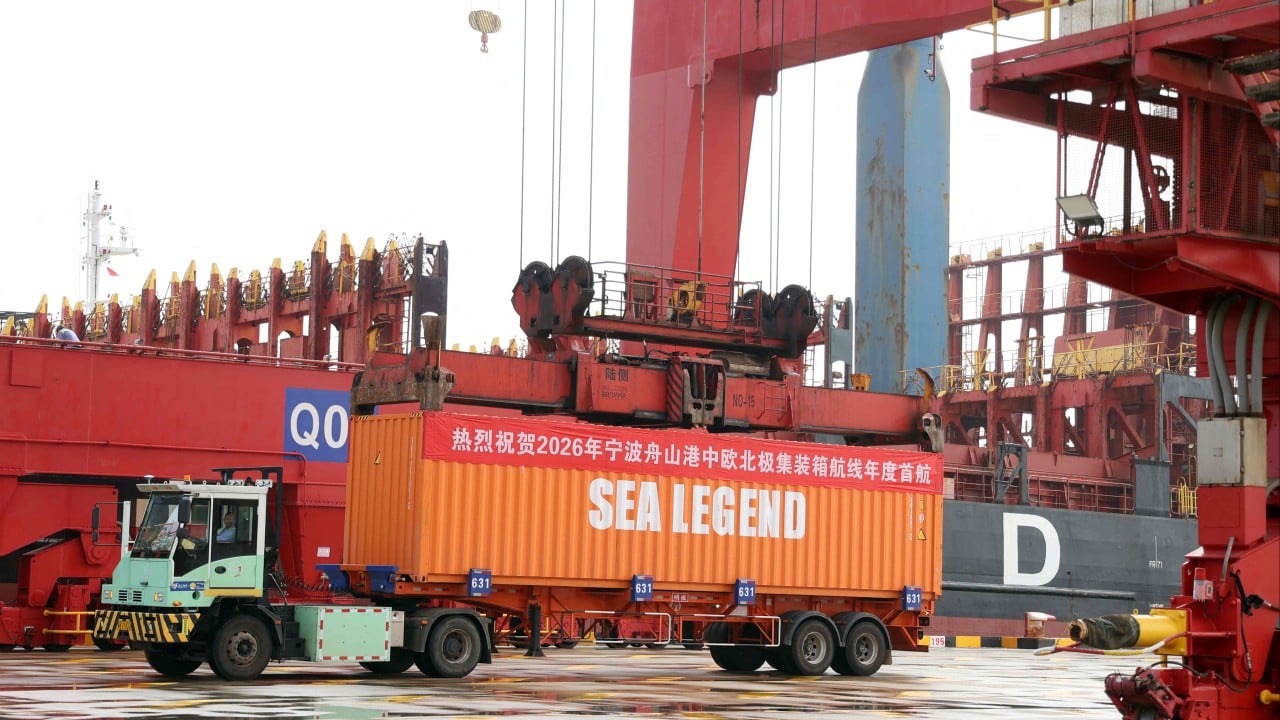
Europe should work with Beijing to develop shipping through the Arctic rather than trying to advance its transatlantic security alliance by framing China as a threat linked to Russia.
In addition to identifying Russia as its main threat, the policy warns of Beijing’s growing strategic ambitions in the European Arctic through its deepening alignment with Moscow.
“With our new strategy, we are investing in stronger security, resilient infrastructure and economic opportunities,” European Commission President Ursula von der Leyen said.
China launched its first regular container shipping service through the polar zone in August, as conflicts in the Middle East added to the appeal of shipping in the region.
Northern Arctic routes can cut transport times between Asia and Europe and are becoming more viable as climate change makes the area passable throughout the year.
Wang Yong, director of the Centre for International Political Economy at Peking University, said Brussels should be more constructive and less defensive about the benefits for Europe of a shorter passage to and from Asia.
“Europe has done far too little to pioneer Arctic shipping routes and European enterprises should instead partner with China to jointly develop these corridors,” Wang said.
Although several major European shipping lines have publicly ruled out Arctic transit on environmental and safety grounds, the EU’s new policy signals an interest in their long-term potential – Brussels plans to produce a strategic foresight study on Arctic shipping, but discussion would be with “like-minded partners”.
The blueprint maintains support for scientific collaboration and environmental coordination in the Arctic, but Wang warned that the shift towards security reinforcement was concerning and detrimental to healthy global governance.
Xu Guangmiao, associate professor and deputy director of the Centre for Russian Studies at East China Normal University in Shanghai, had similar concerns.
SCMP Plus is a new premium news platform that gives you an
all-inclusive edge to stay ahead on China news.
To access our exclusive content you’ll need to subscribe.
Already a subscriber?
LOG IN
She said China’s activities in the Arctic region were modest, yet the idea of “Sino-Russian militarisation of the Arctic” still dominated policy discussions.
“If we conflate perception with reality, we risk oversecuritising areas where cooperation remains possible, and we may ultimately undermine the very stability that all parties claim to seek,” Xu said.
She noted that Brussels’ effort to bundle China and Russia into a joint threat was mainly a bid to reinforce Nato’s operational relevance and solidify the EU’s link with the United States.
This concern is reflected in the EU’s proposed “Pan-Arctic cable” project, a subsea fibre-optic network designed to link Greenland directly to Europe, with planned extensions to Canada and Japan.
The plan highlights Brussels’ growing anxiety about how relations among China, Russia and the United States will evolve. Europe feared that its interests could be sidelined and Russia’s advanced by major-power coordination on a Russia-Ukraine ceasefire, Xu noted.
By anchoring critical subsea infrastructure alongside Canada and Japan, the EU aimed to rally those countries with similar security pressures, she said.
In its updated strategy, the EU anchors this approach as “Northern Neighbourhood”, calling for closer cooperation among member states, Arctic partners and other allies, including the US and Nato.
The EU continued to list the US among the key neighbours it needed to work with, noting that the two sides had “long-standing cooperation in the Arctic”.
Emphasising its commitment to transatlantic engagement, the policy added that the agreement signed between Greenland, Denmark, and the US – which expanded Washington’s military footprint on the Arctic island – “strengthens [the] common security in the Arctic”.
However, Wang warned that Brussels was clinging to a legacy mindset of relying on Nato and Washington for Arctic security – hopes that could fall short given US President Donald Trump’s recalibration of US strategy towards Europe and closer ties with Russia.
KioskNews shows a cleaned-up reading view extracted from the publisher’s page — the original always lives on their site, not ours.