Four areas in Sarawak record 'hazardous' air quality; East Malaysian state prepares for possible haze emergency
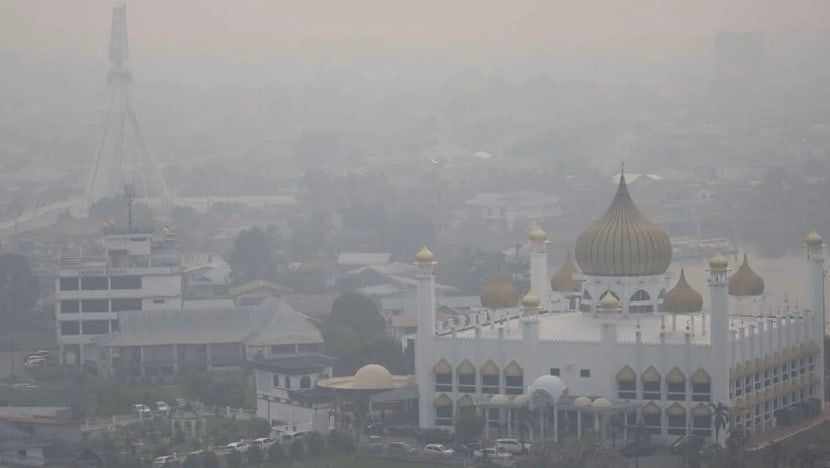
KUALA LUMPUR: Four areas in Sarawak recorded “hazardous” air quality on Monday (Aug 31), the second day running that Malaysia has hit such levels as it continues to grapple with haze linked to forest fires in neighbouring Indonesia.
Air quality in the country began to reach hazardous levels over the weekend.
Sarawak’s Serian district recorded the worst Air Pollutant Index (API) reading of 475 at 9am on Monday, followed by Samarahan at 334, Sri Aman at 330 and Kuching at 324.
Another three areas in the East Malaysian state – Sarikei, Sibu and Mukah – recorded “very unhealthy” air quality, with API readings of 271, 219 and 214 respectively.
Another 14 locations in the country – in Sarawak, Kedah, Penang, Labuan, Sabah and Perak – observed “unhealthy” air quality, the Department of Environment, under Malaysia's Ministry of Natural Resources and Environmental Sustainability, said in a statement posted on Facebook.
Under Malaysia’s API scale, readings above 300 are classified as hazardous. Readings up to 50 are classified as good, 51 to 100 as moderate, 101 to 200 as unhealthy, and 201 to 300 as very unhealthy.
The Department of Environment said air quality across the country has deteriorated, including in parts of the west coast of Peninsular Malaysia as well as in Sarawak, Sabah and Labuan due to the “movement of haze from various directions”.
Areas with unhealthy air quality included Taiping in Perak with an API of 150, Seberang Jaya in Penang (156) and Sungai Petani in Kedah (157).
In Sabah, the Kota Kinabalu Polytechnic monitoring station recorded an API of 111 while Tawau registered 153.
Citing an Aug 30 report by the Singapore-based ASEAN Specialised Meteorological Centre, the Department of Environment said satellite images showed 324 hotspots in Kalimantan and 42 in Sumatra.
Only two hotspots were detected in Malaysia - one each in Perak and Sarawak.
Moderate to dense transboundary smoke was observed over West and Central Kalimantan, Brunei and western and central Sarawak, while moderate smoke from hotspot clusters in North Kalimantan was seen moving into southern Sabah, said the department on Monday.
“Moderate to dense smoke was also observed coming from hotspot clusters across much of Kalimantan and central and southern Sumatra,” it added.
On Sunday, Sarawak’s deputy premier Douglas Uggah Embas said the state was prepared to declare an emergency should air quality reach a critical level, local media reported.
“Should the Air Pollutant Index exceed 500, the applicable guidelines provide for the closure of government and private-sector offices and workplaces, except essential services, pending declaration of a disaster emergency by the national committee on disaster management,” he was quoted as saying by the Borneo Post.
A haze emergency was previously declared in Kuching in September 1997 when an air pollution reading of 650 was recorded.
Air quality in Sarawak is also believed to be at its worst since 2019, when a monitoring station in Miri recorded an API reading of 442, according to the Borneo Post.
Sarawak premier Abang Johari Openg announced on Sunday that the state-level National Day celebrations, which had been scheduled to take place in Kapit, were cancelled due to the haze affecting large parts of the state.
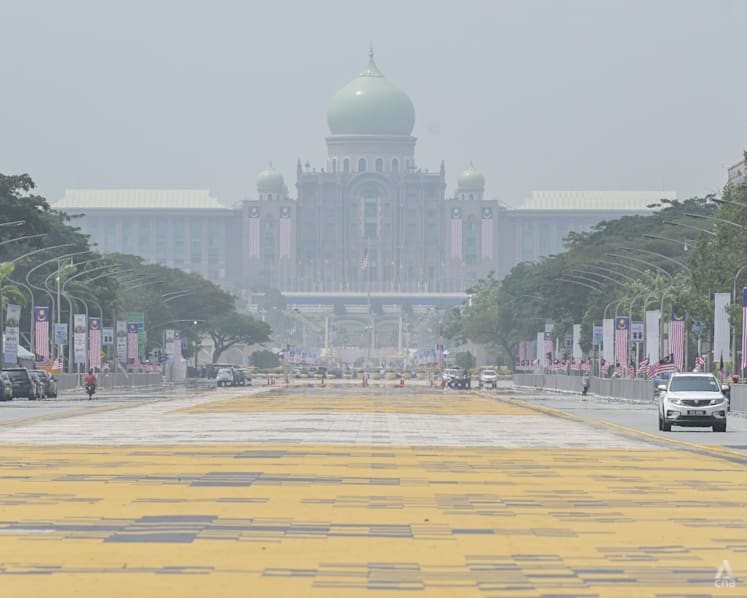
Over on the peninsula, air quality in Putrajaya was moderate at 79 as of 7am on Monday and did not affect the main National Day celebrations.
The parade and procession were reported to proceed as scheduled, with Malaysians beginning to fill the area around Dataran Putrajaya as early as 4am on Monday, New Straits Times reported.
On Sunday, Indonesia’s National Disaster Mitigation Agency (BNPB) found that smoke from forest and land fires in Indonesia’s Sumatra and Kalimantan was drifting towards the Malacca Strait and Natuna Sea, raising the risk of transboundary haze affecting Malaysia, Singapore and Brunei, Bernama reported.
KioskNews shows a cleaned-up reading view extracted from the publisher’s page — the original always lives on their site, not ours.