Nations haggle over draft climate deal at UN talks
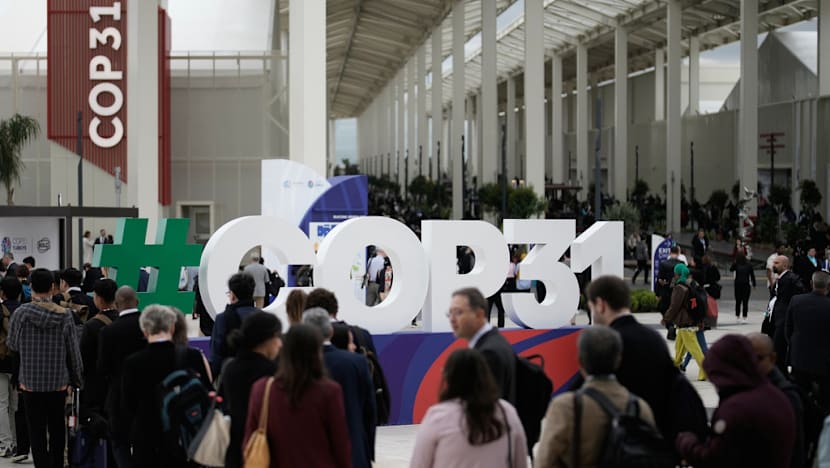
The COP31 climate talks face major challenges over fossil fuels, climate finance and other key issues as Friday’s deadline approaches.
18 Nov 2026 12:53AM (Updated: 18 Nov 2026 12:55AM)
ANTALYA: Climate negotiators warned Tuesday (Nov 17) that a sprawling and contentious draft COP31 deal set the stage for tough negotiations before the UN talks in Türkiye end later this week.
The 18-page draft "cover decision" published by summit co-host Australia includes a broad range of demands, from calls for a phaseout of fossil fuels to a defence of climate science and age-old battles over finance.
The European Union's climate envoy, Wopke Hoekstra, told ministers that the draft as written could make the negotiations "untenable".
He later told reporters that while the document includes elements that the EU likes, it had "many of the characteristics of a shopping list" that reopens old issues.
"I think the cover decision does not go in the right direction and needs significant change," he said.
The talks are scheduled to end on Friday but climate negotiations usually run into overtime as agreements must be reached by consensus, meaning even a single country can block the entire process.
A delegate from an emerging country, who requested anonymity, said the draft text was a "compilation of red lines".
"I don't see how there might be a cover decision in three days," the delegate said.
Australian Climate Minister Chris Bowen, who is steering COP31 negotiations, acknowledged when he released the document on Monday that the text included elements "that not all parties agree on".
Bowen said there would be "at least one more draft" before the end of the week.
"KITCHEN SINK APPROACH"
"It's very easy to draw red lines at the start of the process," Brazilian Environment Minister Joao Paulo Capobianco told AFP, adding that deadlocks can be overcome through "an adjustment in the wording" in the draft.
"We would like to have a short, sharp cover decision," said another European negotiator, who described the Australian strategy as a "kitchen sink approach".
"So we've got a long journey to go from what we've got to what we'd like to see," the negotiator said.
The text includes a call for wealthy nations to achieve net zero emissions by 2030 - a target few could hope to realistically meet.
"Emerging countries want to impose as many obligations as possible on developed countries. It's tactical," said another official from a European country who requested anonymity.
"These things are obviously unacceptable," the official said, pointing to a bloc of countries whose members include Saudi Arabia and India.
FOSSIL FIGHT
The draft includes wording on phasing out fossil fuels that oil-rich countries have long resisted.
"We would love to see a commitment that calls on the phasing out of fossil fuels," Michael Joseph, the environment minister of Antigua and Barbuda, told AFP.
But he acknowledged that getting consensus on the issue at COP31 "might be very, very difficult".
Saudi Arabia is also at the centre of another battle over the timeline for the publication of crucial reports by the UN's climate science panel.
Dozens of European, African and Pacific nations want the next Intergovernmental Panel on Climate Change (IPCC) reports published before a crucial stocktake of global carbon-cutting efforts at COP33 in 2028.
But Saudi Arabia and India are among a smaller number of countries accused of pushing for the IPCC's "seventh assessment report" to be delayed until 2029.
Saudi Arabia's COP31 delegation defended its stance on Tuesday, saying the kingdom "advocates publication timelines that allow sufficient scientific review, transparency and meaningful participation, particularly from developing countries".
Ilana Seid, who chairs the Alliance of Small Island States, said the IPCC report must be ready for the global stocktake and that any delay "is unjustifiable to us".
KioskNews shows a cleaned-up reading view extracted from the publisher’s page — the original always lives on their site, not ours.