Gambling site GemBet hires money mules in S'pore to issue fake invoices as cover for illegal bets
SINGAPORE – An overseas-based gambling website has continued to recruit individuals in Singapore to set up shell companies to facilitate bets, amid efforts to make South-east Asia a hub for punters.
Curacao-based GemBet is said to be operated by a gambling syndicate with links to groups in Cyprus.
The only licensed operator for lotteries, sports betting and remote gambling services is Singapore Pools, and all others – online or offline – are illegal.
The Straits Times learnt that GemBet circumvents the rules by hiring individuals in Singapore to issue fake invoices for services and goods to punters. These monies are then deposited in digital wallets linked to the gambling site.
One invoice seen by ST showed an $80 payment to a Singapore-registered company operating out of a Punggol residential address. The invoice claimed the money was for pre-owned gaming equipment.
Corporate records revealed that the firm – registered in April by a 19-year-old woman – is actually a wholesale trading company, with a secondary business activity connecting buyers with third-party food sellers for a commission.
Her LinkedIn page identified herself as a tertiary student. No one answered the door when ST visited the flat on Nov 4.
GemBet made the headlines in July during the FIFA World Cup, when ST reported that the site was funnelling bets and payouts through PayNow transactions made with three local companies registered earlier in 2026.
The firms included a manpower company, a cleaning services provider and a wholesale trader.
Nine people were arrested a week after the report.
Six of them are suspected of setting up business entities and corporate bank accounts believed to have been used to facilitate monetary transactions for illegal gambling, while three are said to have assisted the syndicate behind GemBet in obtaining these entities and bank accounts.
Following the arrests, panic spread in a Telegram group of over 2,600 members, as punters worried that they would be targeted next by police.

Following news of nine arrests, members in a Telegram group chat for GemBet users panicked.
PHOTO: SCREENGRAB FROM TELEGRAM
Punters said their bank accounts had been frozen as a result of the police investigation.
In response, individuals in Singapore began to issue fake invoices in a bid to disguise the illegal gambling transactions as payments for legitimate services.
The invoices are from companies such as a handicrafts retailer and an interior design firm.
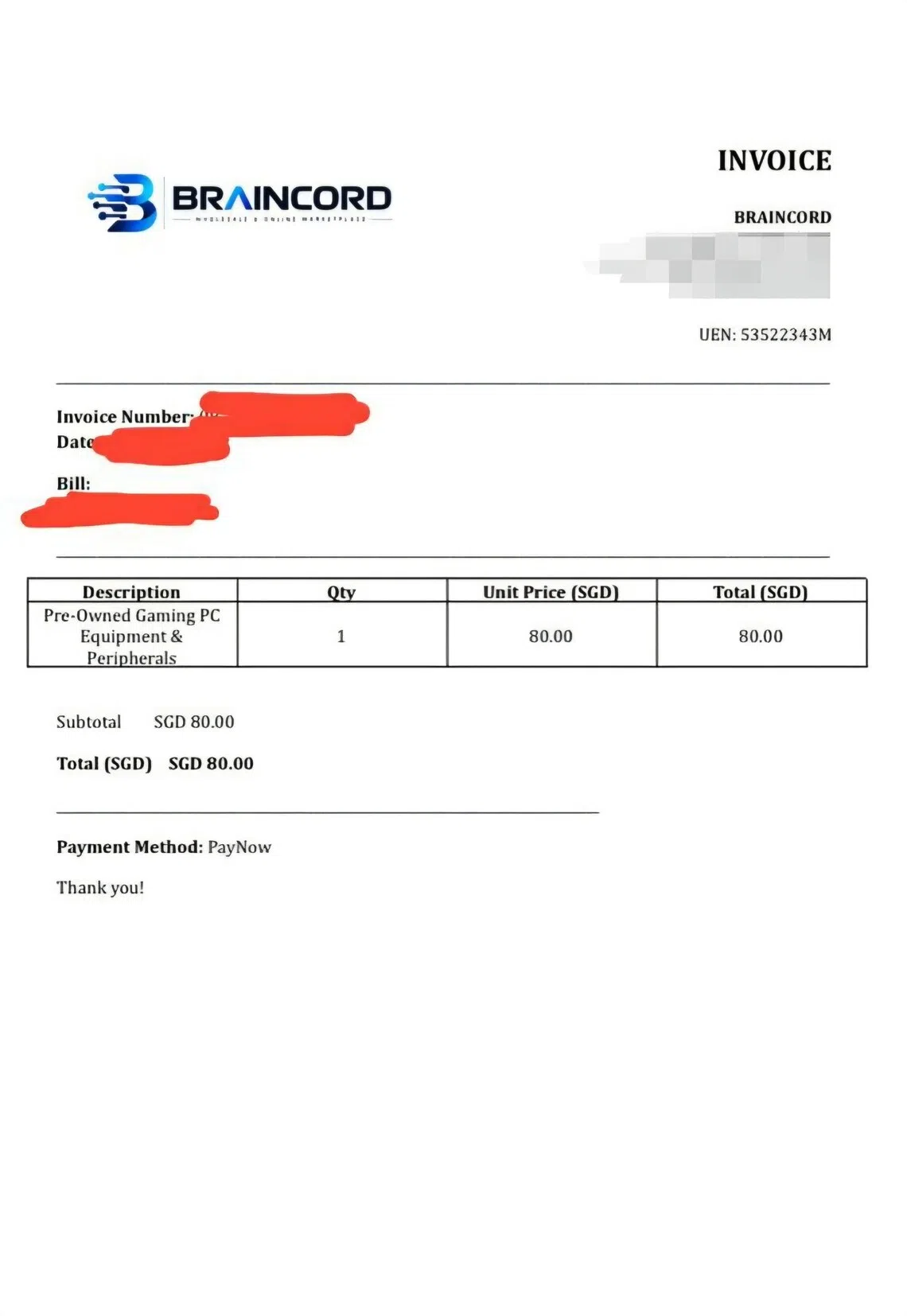
An invoice from a Singapore-registered company meant to mask a deposit for illegal gambling. An individual put it up on the GemBet Telegram chat and censored information in red.
PHOTO: SCREENGRAB FROM TELEGRAM
Recruiting mules
The operational muscle behind the offshore gambling platform appears to be a Europe-based firm named Ludicrum Tech, whose representative signed off on GemBet’s licence application.
A job opening for a remote payment operator in South-east Asia shed light on how it recruits individuals in the region to manage financial flows.
The listing on Ludicrum Tech’s website outlined working hours that followed Central European Time. Candidates were to include salary expectations in euros.
The role entailed processing incoming and outgoing payments, although what these payments were for was not specified.
ST applied for the role, indicating that the applicant was working out of Singapore, and was directed to submit video responses to interview questions, but did not follow through.
The listing was deleted as at Nov 6. Ludicrum Tech did not respond to ST’s queries.
ST has learnt that a company called Grand Complications is linked to GemBet but public information about it is scarce.
However, ST was able to view its records in leaked confidential documents belonging to thousands of online casinos registered on the Caribbean island of Curacao.
An online gaming licence application form submitted to the Curacao Gaming Control Board showed that Grand Complications had applied to register GemBet.
The document showed that GemBet accepts several currencies – the Singapore dollar, Malaysian ringgit, Thai baht, Vietnamese dong and Indonesian rupiah, as well as US dollar and euros. It also accepts cryptocurrencies, such as Bitcoin and Ethereum.
Transactions are made via platforms such as PayNow and DuitNow, or via cryptocurrencies.
In a separate document that outlined Grand Complications’ business plans, it pitched itself as an online casino company “dedicated to transforming the gaming experience in the South-east Asian market”, highlighting that it focused specifically on the region.
It claimed to “understand the cultural nuances and regulatory landscape of the area”. Most South-east Asian countries prohibit online gambling.

The job opening for a payment processor in South-east Asia was up in late October but has since been deleted.
PHOTO: SCREENGRAB FROM INTERNET ARCHIVE
Global crackdown
The authorities in the region have been tackling the illegal gambling scourge by targeting punters and their bank accounts, among other initiatives.
On Nov 6, Indonesia’s Financial Services Authority instructed commercial banks to block 39,923 bank accounts linked to illicit online gambling operations, amid a nationwide crackdown on cyber-betting rings which has led to more than four million gambling-related content removed from the internet.
In Singapore, access to unlawful remote gambling services, the advertising of such services and payment transactions are blocked by the police, which took over the function from the Gambling Regulatory Authority (GRA) in 2025.
More than 3,400 illegal gambling websites, over 260 bank accounts and more than $36 million in payments linked to illegal remote gambling services were blocked by GRA as at Dec 31, 2024, before the authority handed over some functions to the police.
Bets placed on websites like GemBet are illegal and carry heavy penalties in Singapore.
Under the Gambling Control Act, those found guilty of illegal gambling can face jail time of up to seven years and a fine of up to $500,000. Repeat offenders can be jailed for up to 10 years and fined up to $700,000.
Individuals found to have placed bets with an unlicensed service provider can be jailed for up to six months and/or fined up to $10,000.
Wider enforcement action saw Interpol’s joint task force carry out an anti-gambling operation between November 2022 and January 2023 during the 2022 FIFA World Cup, which was held in Qatar.
The global operation involved 19 participating countries and led to the arrest of 1,200 people.
Some US$2 million (S$2.6 million) in funds were seized, along with US$76 million in betting records, on top of computers, luxury cars, jewellery, credit cards and mobile phones.
Out of nine such operations that Interpol has carried out, 20,300 arrests were made, US$64 million in cash seized, and about 4,000 illegal gambling dens that facilitated more than US$7.3 billion in bets were terminated.
KioskNews shows a cleaned-up reading view extracted from the publisher’s page — the original always lives on their site, not ours.