What we know about the UK EU food trade deal and when it will start

Britain and the European Union sealed deals on easing food trade and boosting youth travel to reset ties after Brexit at a summit on Friday.
A decade after Britain voting to leave the now 27-nation bloc, rancour has faded and both sides recognise the need for a closer alliance as the world order is reshaped by Russia's full-scale invasion of Ukraine, US tariffs, China's dominance of critical minerals supply chains and war in Iran.
"The agreement that we've reached together is a win-win," Prime Minister Andy Burnham told a press conference after the summit.
The two sides agreed on food checks, youth mobility and emissions trading schemes, but put off for six months a deal on reducing university fees, which the EU wants but Britain has resisted.
Burnham, who was greeted on arrival by a string quintet, has said Britain should consider options for its future relationship including rejoining the EU. On Monday, he said it was an "obvious truth" that Britain had lost more than it had gained from Brexit.
Burnham said Friday's deal was "probably the limit" of what could be done before the next national election due by mid-2029, but he envisaged an informal conversation in about a year with the EU about what could be achieved next.
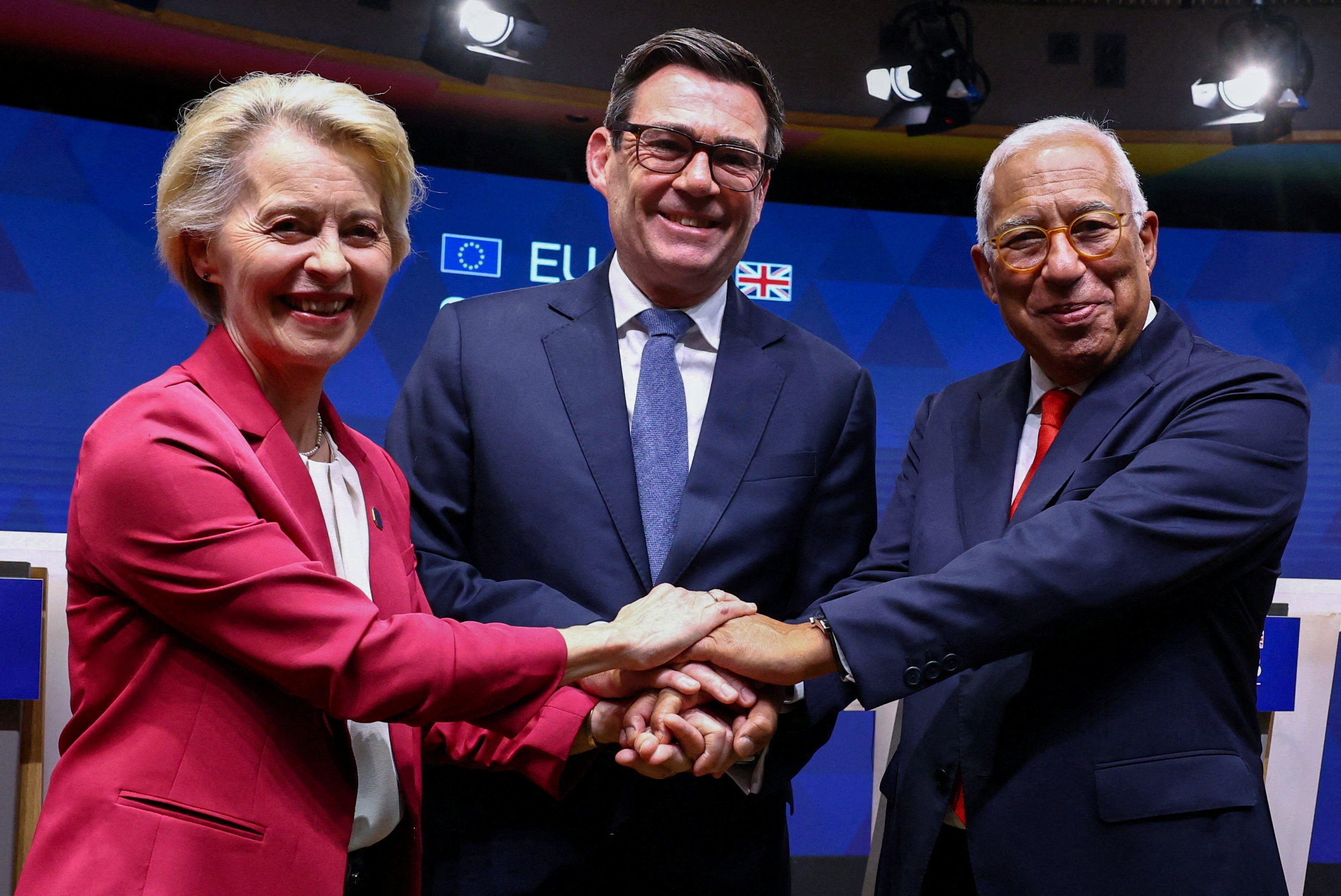
European Commission President Ursula von der Leyen said she welcomed Burnham's willingness to have a broad debate about future relations with the EU.
"We are open for brainstorming, and we welcome this brainstorming, so count on us," she said.
Nigel Farage, leader of the Reform UK party, said the deal "was about the first steps, incrementally, to taking us back into membership of the European Union," and again predicted an early election next year. Farage told reporters he would campaign to preserve Brexit. "I am ready for this fight."
At the summit, postponed from July after the resignation of Burnham's predecessor Keir Starmer, the two sides addressed some of the Brexit losses with a package of agreements.
The most significant allows cross-border trade in animals, plants and related products, such as sausages or seeds, without the certificates and controls currently required. Britain has estimated this could add up to £5.1 billion ($6.7 billion) per year to its economy.
A further agreement will link the emissions trading systems of Britain and the EU, which would exempt British and EU goods, such as steel, from each other's border carbon levies.
What we know about the food deal
The most significant agreement economically will allow cross-border trade in animals, plants and related products, such as sausages, cheese, apples or seeds, without the certificates and controls currently required.
It should mean exports of fresh sausages, burgers, shellfish from domestic waters and seed potatoes to the EU can resume.
Britain has estimated this could add up to £5.1 billion ($6.7 billion) per year to its economy. Consumers on both sides could benefit from lower prices. Travel for pets would also be easier.
The deal is due to come into effect in March 2028.
Logistics UK says cross-border shipments of animal or plant products from Britain to the European Union require health export certificates, which typically cost £150 to £250 per consignment. Many trucks have multiple consignments. Some consignments are subject to physical checks at the border by official vets.
Errors can lead to delays at the border, during which products may go off.
UK food, drink and feed exports to the European Union fell by 26% in value terms from 2019 to 2025, according to a House of Lords paper.
Under the deal, Britain would need to align with EU food and plant safety rules, an arrangement Brexit supporters oppose.
KioskNews shows a cleaned-up reading view extracted from the publisher’s page — the original always lives on their site, not ours.