Why the ball is in Kim Jong-un’s court on a meeting with Donald Trump
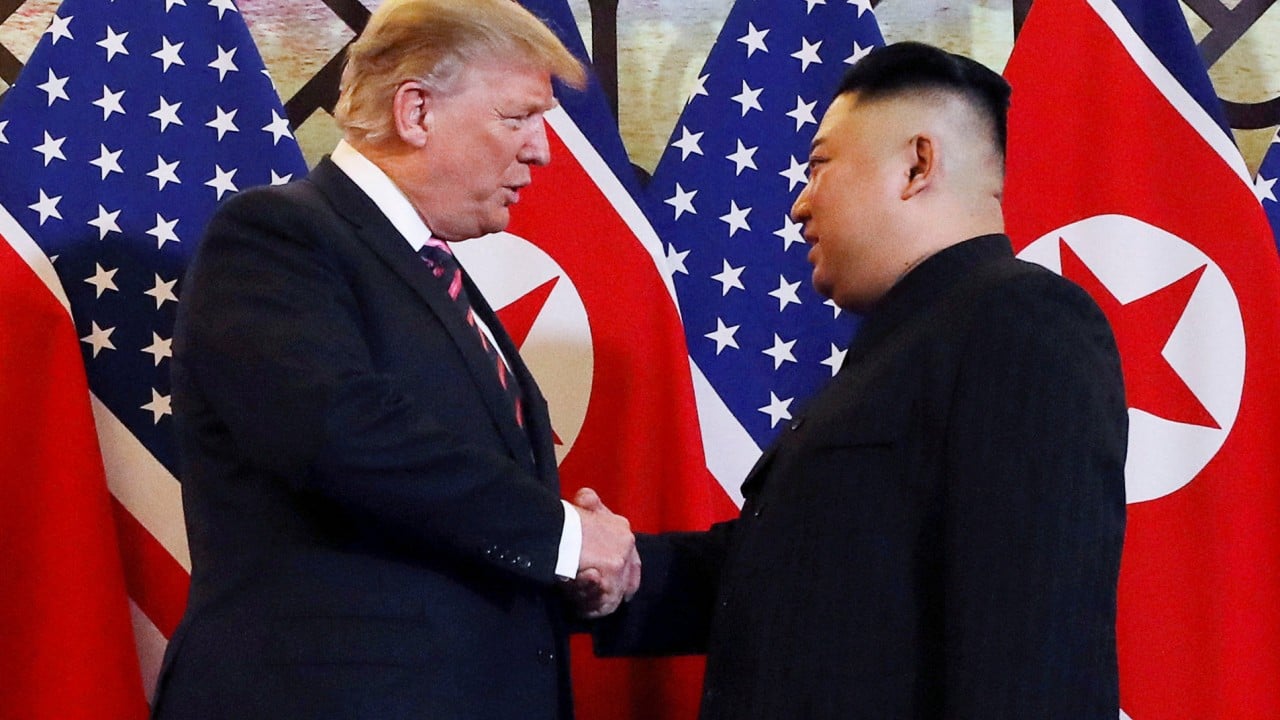
North Korean leader Kim Jong-un’s absence from the Asia-Pacific Economic Cooperation gathering in Shenzhen could indicate that a meeting with Donald Trump will not take place in the foreseeable future.
Analysts said it was a vastly different geopolitical and logistical situation from Trump’s first term, when the two leaders met three times.
Sydney Seiler, senior adviser to the Korea chair at the Centre for Strategic and International Studies, said Kim was trying to “lock in” his nuclear weapons state status and get the world to forget about denuclearisation and sanctions.
“Right now, he does not need to meet Donald Trump. He does not see value in that. Things are developing well with both China and Russia,” Seiler said during an online event hosted by the Washington-based think tank on Thursday.
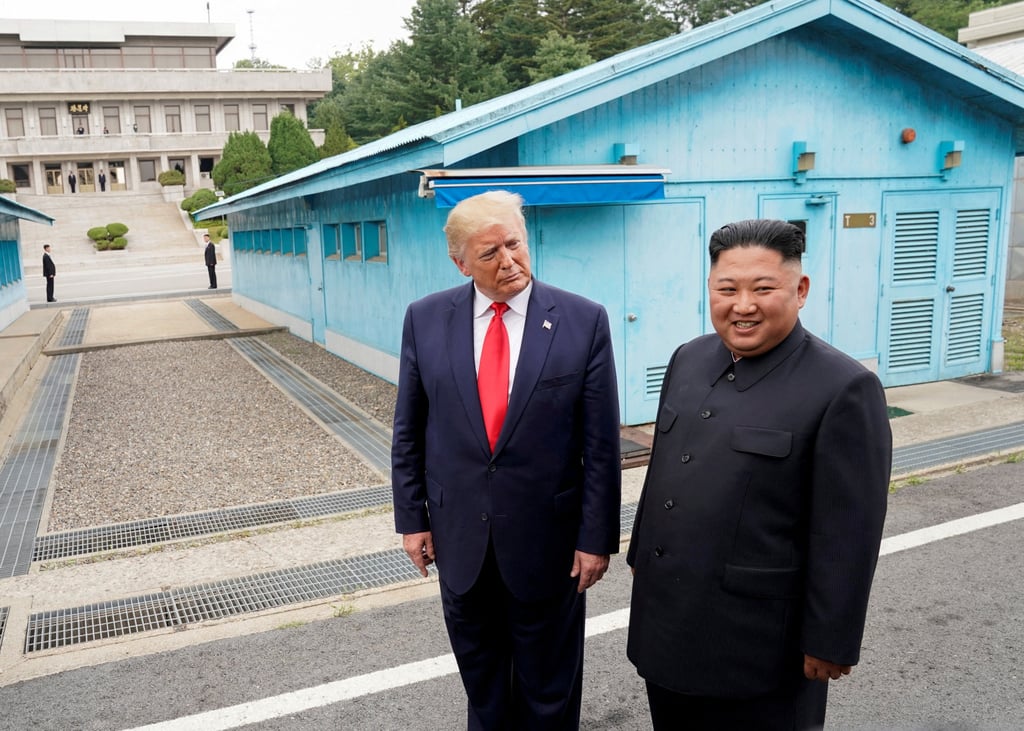
During Trump’s first term, he and Kim held a summit in Singapore in June 2018, followed by a second one in Hanoi, Vietnam in February 2019. They also had an unplanned meeting at the demilitarised zone that divides the two Koreas in June 2019, while the US president was visiting South Korea.
02:48
Xi, Trump and Putin meet for historic trilateral summit at Shenzhen Apec meeting
Speaking to reporters on Monday as he left the White House en route to the Philippines and China, Trump said he “may meet” Kim. At that stage he was already scheduled to join trilateral talks with Chinese President Xi Jinping and Russian leader Vladimir Putin on the sidelines of the Apec summit – a meeting that went ahead on Thursday and produced a “joint declaration of peace” that called for nuclear arms control.
The US leader has repeatedly expressed interest in holding another summit with Kim in his second term, while also frequently referring to North Korea as a nuclear power, in contradiction to Washington’s stance of denuclearising the Korean peninsula.
Pyongyang has demanded recognition of its nuclear state status as a prerequisite for resuming dialogue with Washington.
But Kim did not accede to Trump’s invitation for a meeting on the sidelines of Apec, with his last known activity being an inspection of a newly built ski resort near the Chinese border with his daughter Kim Ju-ae.
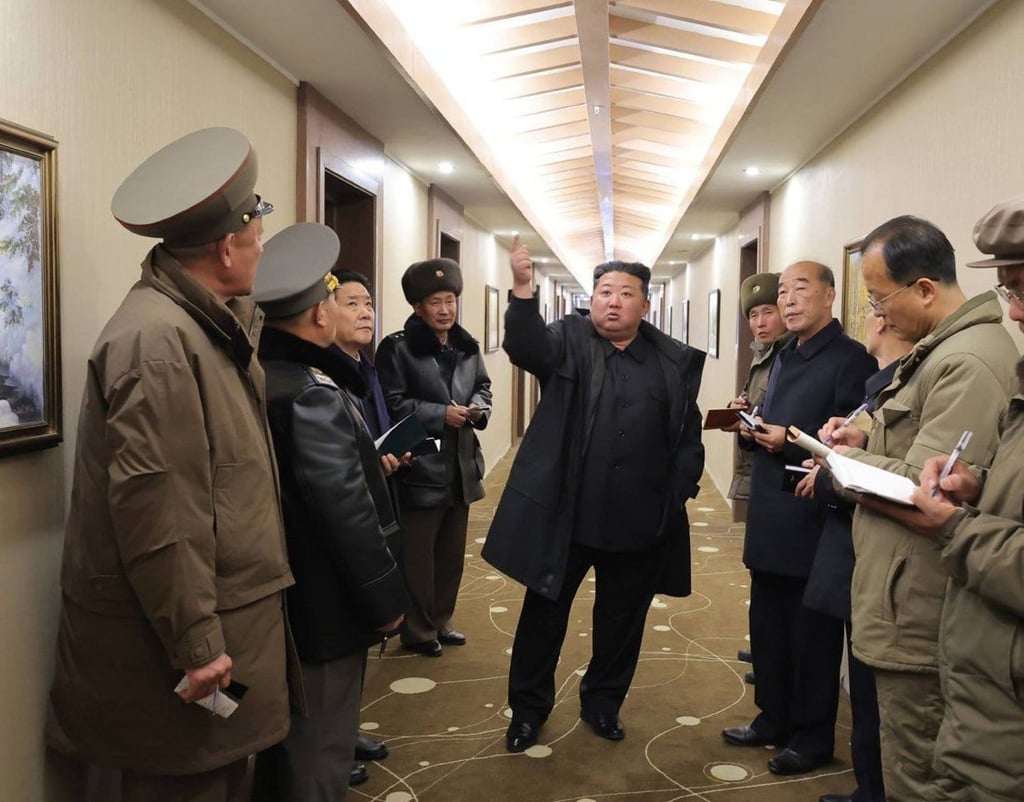
Analysts said Kim may have seen the meeting with Trump as a logistical challenge and unnecessary, as Pyongyang strengthens its military and economic ties with Beijing and Moscow, effectively evading the sanctions Washington used as a trading card in denuclearisation talks during Trump’s first term.
Andrew Yeo, a senior fellow and the SK-Korea Foundation chair at the Brookings Institution in Washington, said Kim was “specifically meeting Trump” in 2019, while his trip to Shenzhen would have put him in the middle of the Apec summit and the “historic” meeting between Trump, Xi and Putin.
He said Kim could be trying to find the right time to meet Trump, and he might have questioned “whether he would be treated as an equal in Shenzhen, or if he would be the sideshow in a party among great-power leaders”.
“Logistically, Beijing may not have been interested in trying to orchestrate and host a Trump-Kim meeting on top of other diplomatic meetings,” Yeo said.
“Also, the preparation for Kim to attend would have had to have taken place possibly weeks in advance since Kim usually travels by train – or possibly provide an aircraft for Kim as it did in 2018 to fly to Singapore.”
Kim’s last known international flight was in June 2018, when he travelled to Singapore for the summit with Trump on a commercial Boeing 747 provided by Air China.
Since then, he has only been seen taking trains to attend meetings with foreign leaders, such as a trip to Hanoi in 2019 that took more than 60 hours and his meeting with Putin in the Russian Far East in 2023.
Victor Cha, president of the Geopolitics and Foreign Policy Department and Korea chair at the CSIS, said Kim’s absence “speaks to how he feels like he doesn’t need the meeting” despite Trump sending an “open invitation” with no conditions.
“I don’t think President Trump has put more personal face into a foreign policy issue than he has on North Korea,” Cha said during the CSIS event.
“He has said only good things about Kim, despite all the bad things that they’re doing, and Kim just decided not to show up.”
Troy Stangarone, a visiting senior fellow at the Korea Economic Institute of America, said Trump had a “fundamental misunderstanding” of Kim, pointing to the US president relegating any meeting with the North Korean leader to a “secondary affair” during the recent Apec summits.
“A meeting at this year’s Apec, for example, would have been overshadowed by the US-China-Russia trilateral meeting. The circumstances matter and North Korea has shown little interest in being a secondary meeting for Trump,” Stangarone said.
The 2019 Hanoi summit did not result in any deals and instead prompted a freeze on official US-North Korea denuclearisation discussions. Since then, North Korea has significantly expanded its nuclear and missile capabilities, from intercontinental ballistic missiles to drone fleets, and strengthened ties with Russia and China.
Beijing has meanwhile been shoring up its ties with Pyongyang. Xi visited Pyongyang in June for the first time since 2019, and a new bridge across the Yalu River connecting the two countries opened last month after more than a decade of delays.
North Korea has also sent about 14,000 to 15,000 troops to support Russia’s war in Ukraine since 2024, according to Ukrainian and South Korean estimates. In exchange, Pyongyang received military technology and economic aid from Moscow.
Kim’s day trip to Dandong for a ceremony to open the Yalu River bridge in October was seen as a sign there could be a meeting ahead with Trump, since their previous summits have always been preceded by Kim visiting China.
A North Korean delegation headed by Kim’s closest ally Jo Yong-won, secretary of the ruling Workers’ Party of Korea, also met Putin at the Kremlin in Moscow just days before the Apec summit.
But Seiler said these signals were likely aimed at sending a “no” message to the invitation to meet Trump, while also showing that Beijing and Moscow had limits on their leverage to push Pyongyang to meet in China.
“In the way they handled themselves prior to Apec, both Beijing and Moscow looked like they favoured a dialogue between Donald Trump and Kim Jong-un, if it should come to fruition, but neither of them looked like they were putting much at stake,” Seiler said.
“Donald Trump, on the other hand, might feel increasingly frustrated that his overtures to Kim go ignored.”
Yeo said Kim still had some time to decide whether he really wanted to restart diplomacy with the US, and that he may want to “wait and see how relations between Trump and Putin, or Trump and Xi, develop first”.
“Unlike 2019, Kim is supported by both Moscow and Beijing, and it has less incentive to negotiate with Washington,” Yeo said.
Stangarone said while it would be wise for Kim to meet Trump, the North Korean leader also “no longer needs a deal” as a “deep partnership” with Russia and ties with China had removed any pressure to meet the US president.
“Trump will continue to try to meet with Kim. As he moves into lame-duck status, foreign policy is one of the few places where Trump will be able to make his mark, and North Korea has long been a priority of his,” he said.
“The ball is really in Kim Jong-un’s court on whether they meet. If Kim wants to meet, Trump will find a way to make it happen.”
KioskNews shows a cleaned-up reading view extracted from the publisher’s page — the original always lives on their site, not ours.