What does the text of Pakistan-Saudi Arabia-Turkey defense pact say? - explainer
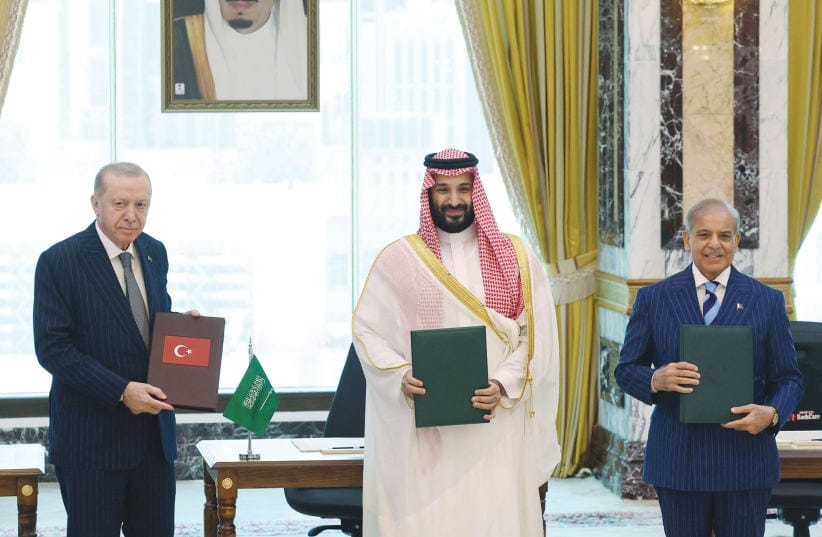
This week, a number of media outlets in the Middle East published the text of the Mecca Defense Pact between Saudi Arabia, Turkey, and Pakistan. The texts are largely the same, with a few minor differences.
The pact matters more than ever because the region is becoming more unstable due to the Iran war. Also, Saudi Arabia is being targeted by the Iranian-backed Houthis. The US is supporting Saudi Arabia, apparently with advice or other non-kinetic means so far. That suggests the US isn't ready to bomb the Houthis. The UK is sending warplanes to Saudi Arabia. Egypt may also send forces to help defend. Reports even indicate that Israel could help Riyadh if Riyadh agrees.
The Mecca Defense Pact between Saudi Arabia, Turkey, and Pakistan was signed in Mecca on August 7, 2026, by Saudi Crown Prince Mohammed bin Salman, Turkish President Recep Tayyip Erdoğan, and Pakistani Prime Minister Shehbaz Sharif. The agreement established a trilateral defense concept under which an armed attack against one member is considered an attack against all three. This is similar to the concept of NATO. However, the pact has not been activated so far.
The text is circulating because it has been presented to Turkey’s parliament.
What does the pact say?
The text published by The National on October 21 reveals that the Mecca Defense Pact between Saudi Arabia, Turkey and Pakistan is more than a mutual defense agreement. It envisages a permanent military and political structure, intelligence sharing, joint defense production, and other plans.

The Jerusalem Post examined various versions of the text that had also been published by Middle East Eye and the newspaper Dawn in Pakistan. The texts were very similar.
The 16 articles focus on key points such as protection against threats to sovereignty, an attack on one considered an attack on all, joint training, exercises and deployments, defense industry cooperation, establishing a permanent committee and secretariat in Saudi Arabia, and having a first secretary-general from Pakistan, as well as the possibility of admitting additional countries. It also envisions intelligence sharing and logistical support.
Several points in the text are worth noting. For instance, Article 2 notes that an attack on one is considered an attack on all, including a NATO-style collective-defense clause. However, the three countries retain discretion over the extent and nature of the assistance they provide, including military support.
The pact addresses both threats and actual attacks. Article 1, for instance, says the countries will use all necessary means when another member's sovereignty, territorial integrity, or recognized borders are threatened or endangered. This could require more than mutual defense. In addition, Article 6 calls for joint training, military exercises, personnel exchanges, and deployments during both peacetime and wartime.
Article 7 makes industrial cooperation a central pillar of the pact. This is important for the countries. It also comes as Qatar, Indonesia, Turkey, and Pakistan have agreed to expand cooperation in their defense industrial base. Article 7 of the pact focuses on joint weapons production, research and development, specialized technologies, defense innovation, and personnel training.
Meanwhile, Article 8 creates a “Strategic Political and Defense Committee” involving the foreign ministers, defense ministers, and military chiefs of all three countries. It will meet twice annually.
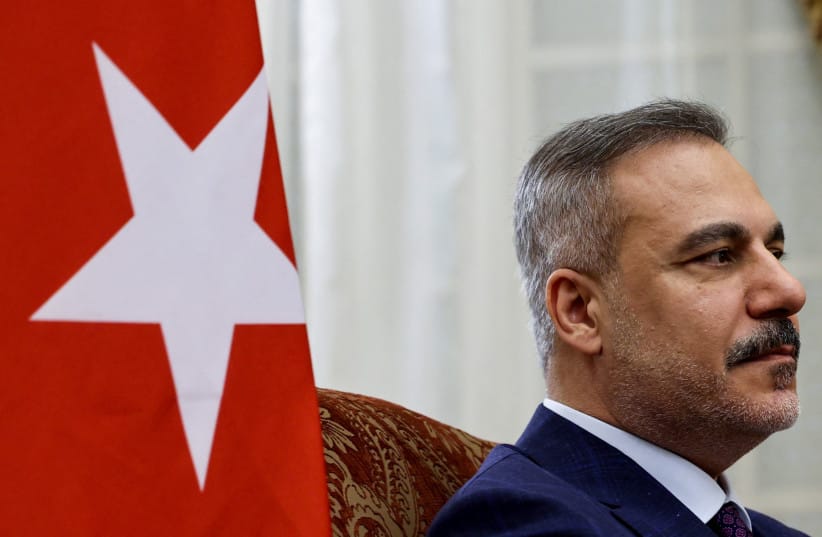
Articles 9 and 10 focus on intelligence sharing and the provision of weapons, ammunition, fuel, spare parts, and other military supplies during peace, war, and other contingencies.
For the Middle East, what matters most is whether this pact actually fulfills many of these visions. The countries have also discussed whether more countries might join. Article 8.4 sets out a process for admitting additional members, subject to consensus among the three countries. This implies an ambition to build a larger security organization rather than simply maintain a trilateral alliance.
The initial concept is that Saudi Arabia will host the permanent secretariat, while Pakistan will hold the first secretary-general term. In addition, Article 8.5–6 establishes the secretariat in Saudi Arabia, with a secretary-general appointed on a rotating three-year basis. Pakistan will hold the first term, a significant institutional commitment. This is a meaty part of the agreement, laying out specific bureaucratic functions.
Articles 6 and 10 cover military deployments, joint work, and logistical support during “wartime and peacetime.” This could enable the countries to establish regular joint military activities rather than cooperate only during emergencies. This would be similar to NATO drills or the frequent large joint exercises the US backs around the world.
At Article 13, the deal prohibits sharing confidential information with outside governments, companies, or individuals. This raises interesting concerns about how the arrangement would interact with existing intelligence partnerships, particularly Turkey's NATO relationships and Saudi Arabia's and Pakistan's relationships with Washington.
In Article 16, there is a sentence noting that any party “may withdraw from this agreement after 10 years have elapsed from its entry into force, by giving the other ‘parties’ written notification of its intention to withdraw through diplomatic channels at least three months in advance.” This is a strong long-term commitment. To avoid issues with NATO, the agreement notes that existing treaties are protected.
Does the pact represent the beginning of a new regional military alliance?
The permanent secretariat, rotating leadership, regular ministerial meetings, and provision to admit new members suggest something more ambitious than a typical defense-cooperation memorandum.
It could also affect the balance of power in the Middle East. Turkey brings a large defense industry and NATO experience, while Pakistan brings major military capabilities and nuclear weapons. All the countries are partners or allies with the US.
The only differences in the texts published by the various media that the Post could identify were that the Middle East Eye translation states that the countries will support "technology sharing among defense-industry institutions, joint technology development, joint production.” The National version mentions defense co-production, research and development, and exchanging expertise, but does not explicitly use the phrase technology sharing. It was not clear why there is this slight wording difference.
KioskNews shows a cleaned-up reading view extracted from the publisher’s page — the original always lives on their site, not ours.