7 Greatest Miniseries of the Last 50 Years, Ranked

Sign in to your Collider account
Miniseries are having a huge moment right now, but audiences have been watching them for generations. The reason is pretty simple. The format gives stories room to breathe without letting them overstay their welcome. A movie only has a few hours to fully develop its narrative, and a long-running show can eventually start repeating itself.
A miniseries sits comfortably in the middle. It can spend hours developing its characters and world while still moving toward a clear ending from the very first episode. The seven miniseries on this list are prime examples of why this style of storytelling has delivered some of television’s most unforgettable stories in the last 50 years.
7 ‘The Stand’ (2020)

The greatest thing about The Stand is its sheer scale. The nine-episode miniseries, based on Stephen King’s massive novel, begins after a deadly strain of influenza known as Captain Trips wipes out most of humanity. The survivors are slowly drawn toward two very different figures in the aftermath. Some follow the kind and mysterious Mother Abigail (Whoopi Goldberg) to Boulder, Colorado, while others are pulled toward Randall Flagg (Alexander Skarsgård), a supernatural figure building his own community in Las Vegas. That’s where this seemingly straightforward pandemic story eventually turns into a much larger battle over what kind of world should replace the one that disappeared.
The narrative jumps between characters shattered across the country to show the many ways people react when society as they know it completely collapses. Stu Redman (James Marsden), Frannie Goldsmith (Odessa Young), Larry Underwood (Jovan Adepo), and the rest of the survivors all bring their own baggage into this new world, which makes rebuilding civilization feel almost as difficult as surviving the plague itself. Instead of focusing on the apocalypse, the series asks what comes after. The Stand is a brilliant mix of horror, fantasy, and drama, with a new ending written by King himself, which gives this adaptation a more complete sense of closure and makes it feel like its own version of the story rather than yet another retelling.
6 ‘Generation Kill’ (2008)

Generation Kill never became a huge mainstream hit like other war series, but over time, it has been recognized as one of the most acclaimed portrayals of the Iraq War on television. The seven-part miniseries, based on journalist Evan Wright’s experience of reporting alongside the First Reconnaissance Battalion during the 2003 invasion, follows a group of Marines pushing toward Baghdad. The story features plenty of firefights and moments of genuine danger, but much of it is spent inside Humvees listening to the men complain, joke, argue with their officers, sing terrible songs, and try to make sense of orders that constantly change. That ordinary side of war is Generation Kill’s greatest strength.
The series doesn’t present its Marines as great heroes or evil villains. Instead, it shows how these people can be extremely efficient one moment and immature the next, which is the reality of the human condition, even in the face of war. The dialogue in Generation Kill is packed with real military slang, and the show features equipment and tactics that were closely checked by Marines who had actually served in the invasion. Former Recon Marine Rudy Reyes even plays himself. Those details gave the series an authenticity that actual service members instantly recognized. Generation Kill never attempted to make war look inspiring or cinematic, and that realism is why its reputation has lasted.
5 ‘The Jewel in the Crown’ (1984)

The Jewel in the Crown makes an enormous piece of history feel intimate, and that’s why it's impossible to quit watching until the very end. The miniseries, based on Paul Scott’s Raj Quartet, is set during the final years of British rule in India. The story begins in 1942 and moves toward independence in 1947. At the center of it all is the relationship between the young Daphne Manners (Susan Wooldridge) and Hari Kumar (Art Malik), an Indian man who was educated in England. The problem is that their connection is dangerous in a society built around strict racial divisions, especially once police officer Ronald Merrick (Tim Pigott-Smith) becomes involved.
From there, the series expands outward into the lives of British officers, Indian families, politicians, and civilians living in a country that is rapidly changing. The Jewel in the Crown never treats any of this history like background noise. Sure, the audience is following a love story, but race, class, colonial power, and the approaching end of the British Empire affect practically everything here. Even when characters believe they are simply making personal choices, they are constantly being shaped by the system around them. The show remains monumental for challenging the old myths surrounding the Raj and presenting different views of colonial India instead of the romanticized versions British audiences had often seen before.
Collider Exclusive · 8 Questions · 2 Minutes Which Iconic Romance Is Your Favorite? Harry & Sally · Love & Basketball · Heated Rivalry · Titanic
Four great love stories, and four completely different ideas of what love actually is. One is a friendship that took twelve years to admit itself. One is two people who refuse to stop competing. One happens entirely behind closed doors. And one lasts five days and never stops mattering. Eight questions decide which one is really yours.
🍂Harry & Sally(1989)
🏀Love & Basketball(2000)
🏒Heated Rivalry(HBO Max)
🚢Titanic(1997)
01
How does your love story start? The first scene tells you what kind of story this is going to be.
02
What do the two of you keep arguing about? Every great romance has one fight it has over and over.
03
How do you show somebody that you love them? Grand gestures are easy to write. This is the harder question.
04
What is actually standing in the way? There is always something. Which something tells you the genre.
05
Which romantic moment gets you every single time? Be honest. There is one that works on you and you know which.
06
What would you actually risk for the right person? Every romance asks this. Most people find out far too late.
07
Where are the two of you in ten years? Some love stories are about the meeting. Some are about the staying.
08
Which of these sounds most like something you would say? Eight questions in, this is the one that decides your romance.
Roll The Credits Your Romance Is…
Four love stories, four completely different ideas of what it means to be somebody's person. This is the one that matches how you actually fall, and what it would ask of you.
Harry & Sally
You do not fall for strangers. You fall for the person you have already been talking to for years, which is the slowest and by some distance the most durable way anybody has found to do this.
- When Harry Met Sally made the case that the best romance is an argument you enjoy, conducted over a decade, by two people refusing to admit what is happening.
- You want to be known rather than swept away. Somebody who remembers your worst story is doing better work than anybody arriving with flowers.
- The film is unusually honest about timing. These two are wrong for each other repeatedly until suddenly they are not, and neither of them engineered it.
- You would still be talking about everything at eighty. That is the entire promise.
Love & Basketball
You want a partner, not an audience. Somebody who wants their own life as badly as you want yours, and who would never ask you to be smaller to make the relationship easier.
- This is the rare romance where both people have a real career and the film takes both of them equally seriously.
- You would rather be pushed than protected. The right person for you is also a bit of a rival, and that never entirely goes away.
- It understands the actual problem in ambitious relationships. Not whether you love each other, but whose turn it is this year.
- You would still be competing at forty. That is how you would know it was working.
Heated Rivalry
The intensity was never the problem. The secrecy is. You are drawn to a love that lives entirely in private, and to the particular ache of wanting somebody you are not supposed to want.
- Heated Rivalry runs on the oldest engine in romance: two people on opposite sides, meeting in secret, getting far more attached than either of them planned.
- You keep your private life genuinely private, and something in you finds hidden things more real than public ones.
- The tension is not only between the two of them. It is between what they have and what it would cost either one to say it out loud.
- Years of this, and the whole story is really about whether either of them will finally stop hiding.
Titanic
You do not do this cautiously. When it happens for you it is immediate and total and it rearranges everything, and you would not accept a smaller version of it.
- Titanic gave us the biggest romance in film history and then made it last about five days, which is precisely the point of it.
- You measure love by intensity rather than duration. A few days of the real thing beats decades of something merely comfortable.
- The film is not only about the romance. It is about a woman who went on to live an enormous life afterwards because of it.
- You would still be telling this story at a hundred years old, and telling it exactly the same way.
4 ‘Angels in America’ (2003)

Angels in America is painfully underrated and deserves to be recognized as one of HBO’s greatest stories. The miniseries is set in New York during the height of the AIDS crisis in the 1980s and follows several people whose lives slowly crash into one another. That premise already sets the show up for success. The audience follows Prior Walter (Justin Kirk), who is diagnosed with AIDS and then abandoned by his terrified boyfriend Louis (Ben Shenkman), and Mormon lawyer Joe Pitt (Patrick Wilson), who is struggling to admit that he is gay while his wife Harper (Mary-Louise Parker) escapes into increasingly bizarre hallucinations. Then there is Roy Cohn (Al Pacino), the real-life political lawyer who refuses to admit that he has AIDS because admitting it would also mean admitting something about himself he has spent his entire life denying.
That’s not where it ends, though, because soon enough, Angels in America enters strange territory with ghosts, characters walking into dreams, and an angel crashing through Prior’s ceiling and telling him that he has been chosen as a prophet. Somehow, none of this makes the story feel less human. In fact, the fantasy is part of what makes it so memorable. The series can move from a brutally honest conversation about illness, politics, or prejudice to something completely surreal without losing the audience. Angels in America refuses to reduce the AIDS crisis to tragedy alone, and for a show that tries to contain so many ideas at once, it does justice to every one of them.
3 ‘Chernobyl’ (2019)
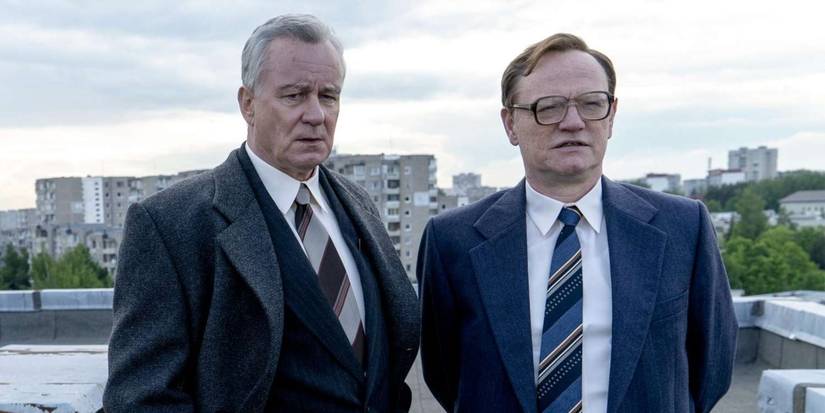
Chernobyl is one of the most terrifying shows ever made because the audience already knows the horror that is coming. The five-part HBO miniseries recreates the 1986 explosion at the Chernobyl Nuclear Power Plant and follows the people trying to understand what happened before the disaster spreads further. The story follows Scientist Valery Legasov (Jared Harris), who is brought in to assess the damage, while Soviet official Boris Shcherbina (Stellan Skarsgård) initially approaches the situation like another problem that can be managed through orders and procedure.
It does not take long for both men to realize they are dealing with something far worse. What makes this story so gripping is how slowly the full horror becomes clear. The series shows how firefighters and workers are sent into lethal areas without knowing what they are doing, while officials keep insisting that the reactor could not have exploded. Chernobyl is impossible to stop watching because of the sense of urgency the show creates in every episode. Every lie makes the disaster harder to contain, and soon enough, the bureaucracy surrounding the situation starts to feel just as dangerous as the radiation itself.
2 ‘The Night Of’ (2016)
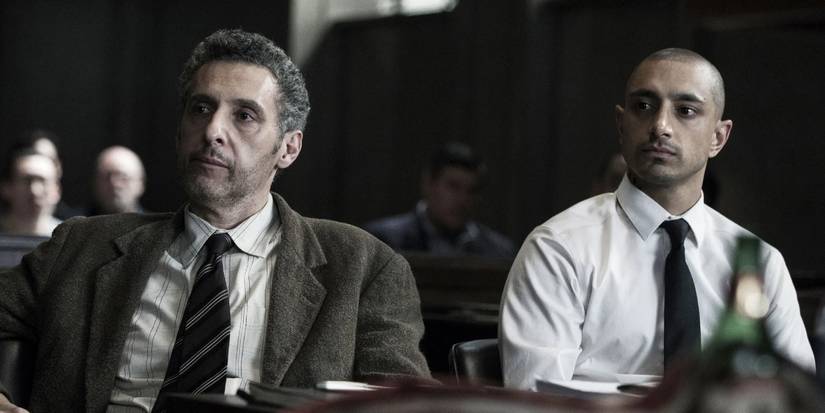
The Night Of is the kind of miniseries that is difficult to shake, even years after watching it. The show opens with a murder mystery, but it doesn’t take long for the audience to realize that it is only half the story. The narrative follows quiet college student Nasir “Naz” Khan (Riz Ahmed), who borrows his father’s taxi for a night out and ends up spending the evening with a woman he has just met. When he wakes up the next morning, she is dead, and he can’t remember what happened. What’s worse is that almost every piece of evidence seems to point straight at him. From that moment on, every decision Naz makes seems to push him deeper into a situation he no longer understands.
The Night Of isn’t a simple whodunit, because it shows what happens when a broken justice system decides someone is guilty, without ever really giving them a chance. The show follows Naz through police questioning, jail, Rikers Island, and eventually the courtroom. The audience can actually see him turn into a whole new person before their eyes, with his lawyer, John Stone (John Turturro), being the only person on his side. Ahmed delivers the performance of a lifetime and plays Naz’s heartbreaking transformation with extreme conviction. The mystery in The Night Of keeps the viewers guessing, but the show sticks because the question of what actually happened that night feels almost secondary to everything Naz has been through in the process.
1 ‘Band of Brothers’ (2001)

Band of Brothers is the ultimate war show. More than two decades after it first aired, every World War II drama still gets compared to it, and that is because the series set an almost ridiculous standard for the genre. The miniseries, produced by Steven Spielberg and Tom Hanks, follows the soldiers of Easy Company, 506th Parachute Infantry Regiment, from training in Georgia through D-Day, Operation Market Garden, the Battle of the Bulge, and eventually the end of the war in Europe. The scale of the story is enormous, but the show never lets the battles become more important than the men fighting them. That balance between action and emotion is why Band of Brothers resonated with so many people.
The show keeps shifting between different soldiers, so Easy Company never feels like it’s built around one hero. Instead, it feels like a real unit where everyone has their own fears, friendships, and reactions to the horrors that unfold around them. The production worked closely with the real veterans, used their letters and recollections, and aimed for an extremely high level of historical accuracy. The actors also spent time with the men they were portraying, which gives the series an emotional weight that is hard to fake. Band of Brothers helped an entire generation learn about Easy Company and the experience of American soldiers in World War II. The series won the Emmy for Outstanding Miniseries, and its reputation has only grown with time. All of that is why Band of Brothers still feels untouchable almost 25 years after its release.
KioskNews shows a cleaned-up reading view extracted from the publisher’s page — the original always lives on their site, not ours.