Ministry launches Human Rights 2036 study to map social issues
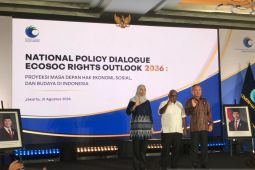
Jakarta (ANTARA) - Human Rights Minister Natalius Pigai launched the Human Rights Indonesia 2036 study, an effort to map potential economic, social and cultural (Ecosoc) rights issues in national development over the next 10 years.
The study was launched through the National Policy Dialogue on Ecosoc Rights Outlook 2036 here on Monday and was prepared by the Human Rights Ministry in collaboration with civil society organizations.
Pigai said developments in industry, technology, artificial intelligence and the economy need to be anticipated because, while bringing benefits, they can also create new vulnerabilities, such as job losses and environmental impacts.
"National development, including industrial, technological and artificial intelligence development, despite its positive impacts on economic growth, also carries risks for society, such as job losses, environmental impacts and others. Before a road is built, we must ask, who will be affected?" Pigai said.
According to him, the study must not remain merely a document but needs to be used as a reference for formulating national development policies and instruments.
"I hope today's activity does not stop as merely a study. Make this a living document. Make it a reference for the government in designing policies. Make it a tool to remind us when there is a human rights risk," he said.
Pigai expressed hope that the study could serve as a reference to ensure that Indonesia's development toward 2036 not only pursues economic progress but also considers justice, inclusivity and humanity.
Meanwhile, Deputy Human Rights Minister Mugiyanto said the study is expected to update perspectives on the fulfillment of Ecosoc rights, including in response to social, economic and technological changes.
"It is expected that this study can become a substantive document on the projection of Ecosoc rights over the next ten years," Mugiyanto said.
Meanwhile, the ministry's Acting Director General of Human Rights Instruments and Strengthening, Sofia Alatas, said the study is part of efforts to shift the ministry's working approach from reactive to preventive.
"We compiled this study to look at what might happen to human rights in Indonesia in the future, as well as various social and economic changes, which function as foresight and early warning on human rights issues," Alatas said.
Related news: Indonesia drafts business and human rights regulation
Related news: Indonesia seeks Human Rights Law revision to address digital rights
Translator: Devi, Kenzu
Editor: Primayanti
Copyright © ANTARA 2026
KioskNews shows a cleaned-up reading view extracted from the publisher’s page — the original always lives on their site, not ours.