David Leitch Wants His New Heist Thriller to Get People Talking About America's Healthcare and Debt Crisis
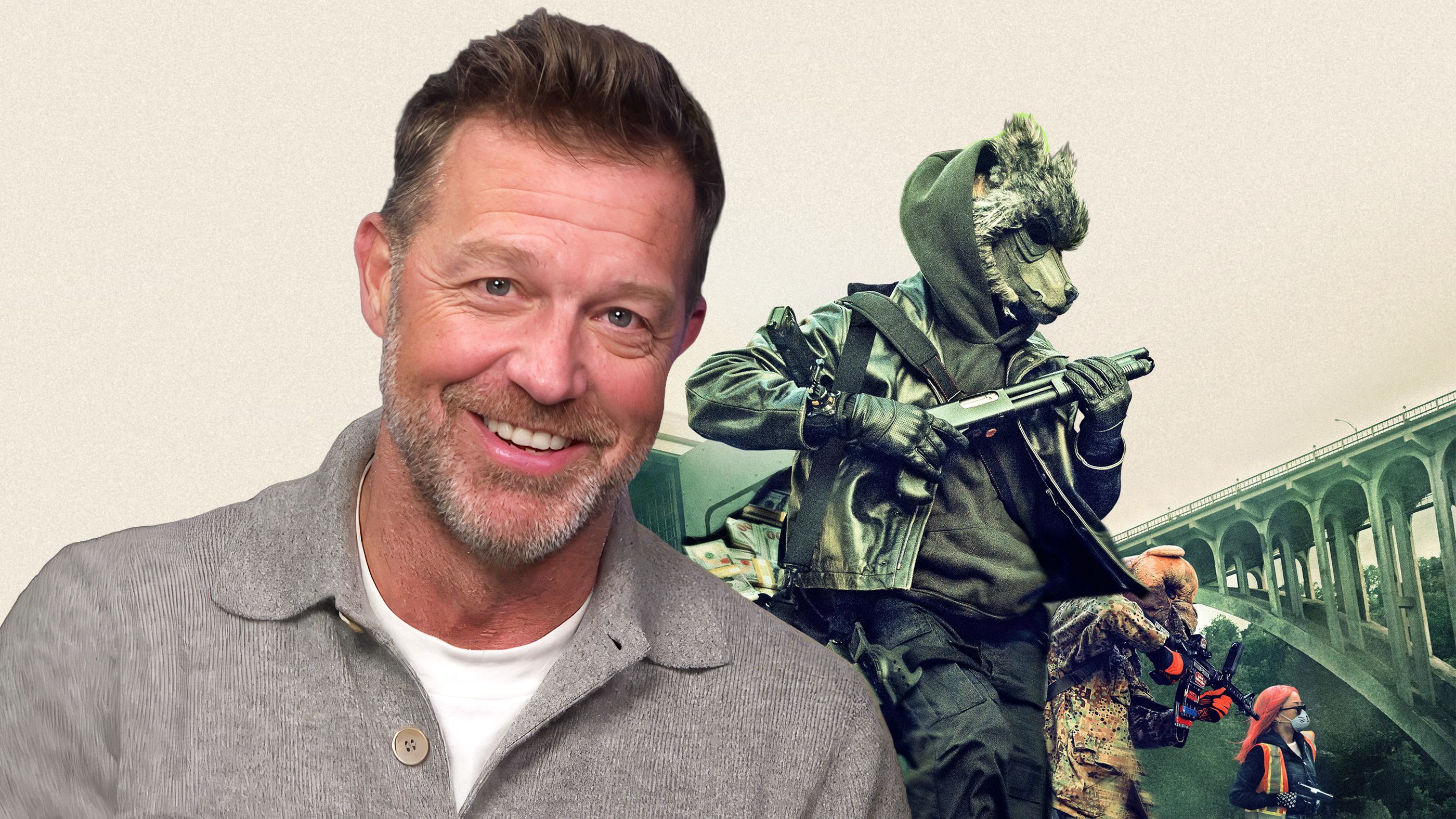
- Collider's Steve Weintraub talks with David Leitch for How to Rob a Bank.
- Leitch discusses filming in 35 mm, the movie's social commentary, and Nicholas Hoult's YouTube footage.
- He also teases his next movie, Jason Statham Stole My Bike.
From the man who brought us Deadpool 2 and The Fall Guy, director David Leitch’s new crime thriller, How to Rob a Bank, is set to release in theaters soon. But before you catch the getaway car, don’t miss our interview with Leitch, where he discusses why this star-filled feature is so much more than an action-packed heist movie.
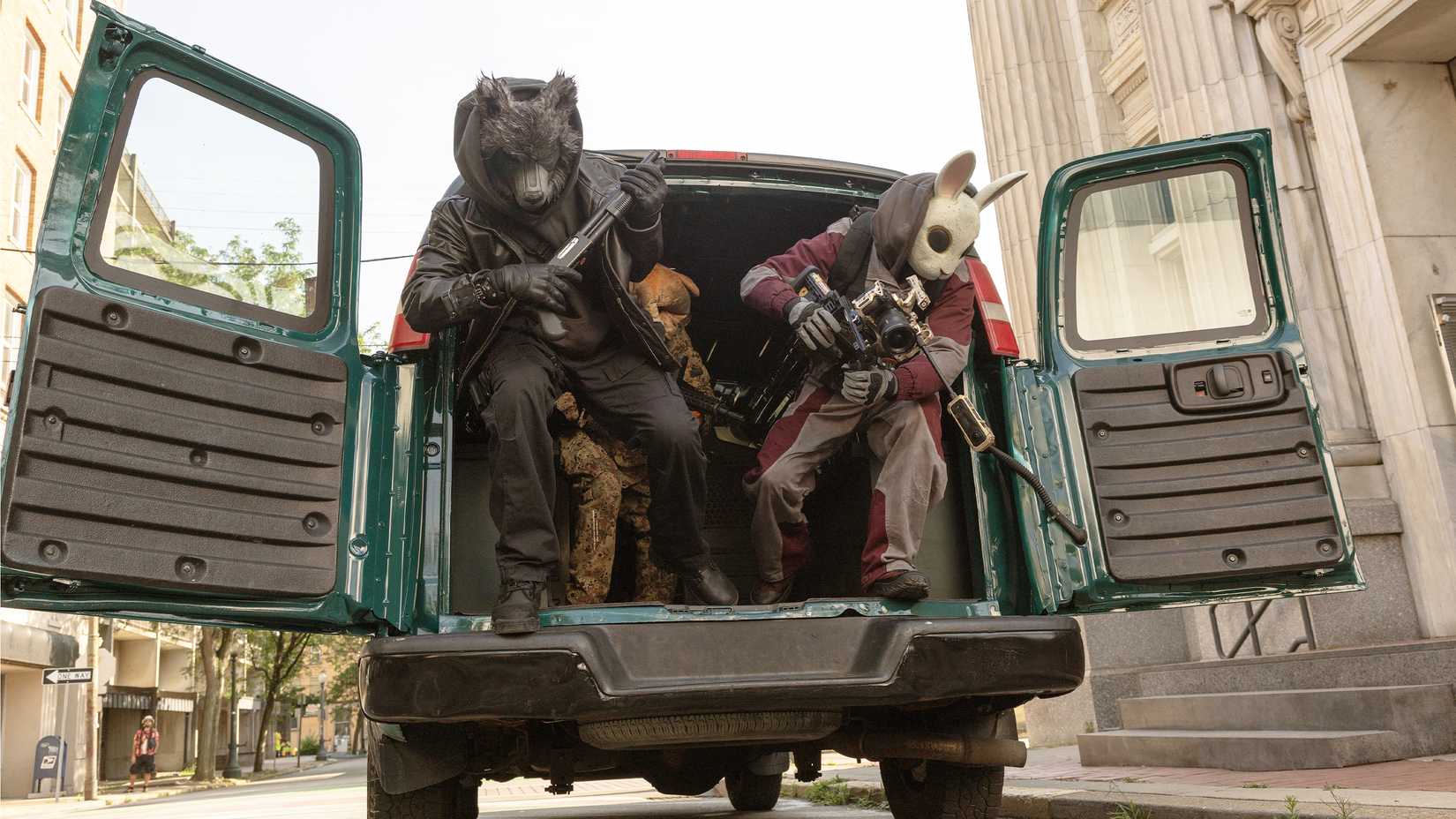
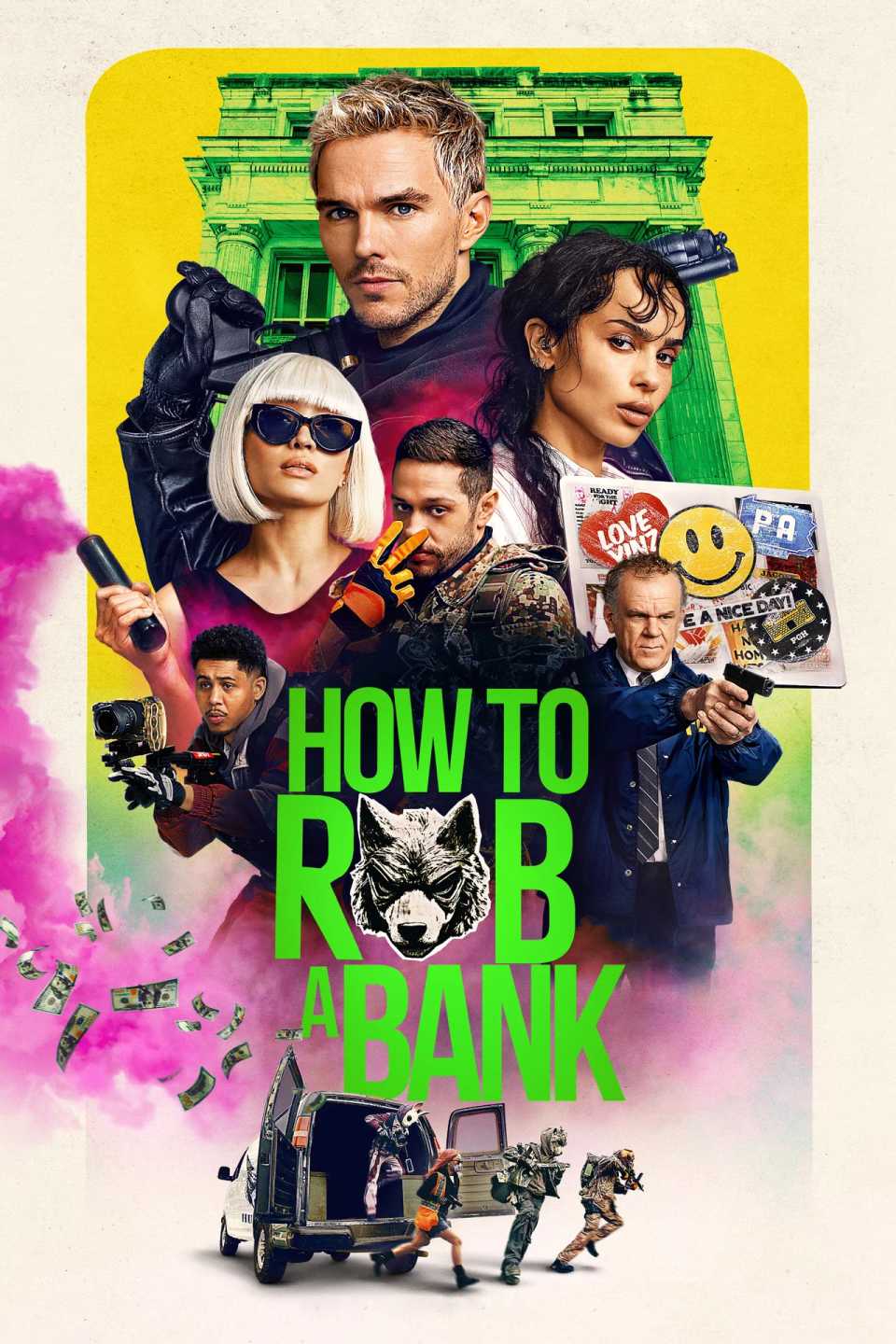
In How to Rob a Bank, Nicholas Hoult is The Wolf, an anonymous YouTuber whose merry band of bank robbers — Pete Davidson, Anna Sawai, and Rhenzy Feliz — go viral broadcasting their heists on their channel. As they continue to garner more views, an FBI agent (John C. Reilly) enlists the help of a hacker under house arrest (Zoë Kravitz) to help track them down.
During this interview, Leitch talks with Collider’s Steve Weintraub about the movie’s social commentary and the techniques he used to give the movie a more grounded approach. He shares his hopes for audiences after seeing the movie, the kinds of conversations that inspired him to make How to Rob a Bank, the crucial element he added that wasn’t in the original script, plus teases his next movie, Jason Statham Stole My Bike. Check out the full conversation in the video above, with a transcript provided below.
David Leitch Used 35mm Film to Ground 'How to Rob a Bank' in Reality
"I hadn't shot film in a while, and coming back to it was great."

COLLIDER: I'm doing a supercut right now of everyone I'm talking to, and the question is, where do you like to sit in a movie theater?
DAVID LEITCH: Me personally, I like to sit halfway up on an aisle.
Is it always an aisle?
LEITCH: It's always an aisle, and it's really just because if I do feel like I have to go to the bathroom, I just want to not disturb anybody. But otherwise, the reason halfway up is I want to see the whole screen. I don't want to get too close where it's not in my peripheral. I like to see the actual edges of the screen. But it's just more of my compositional mind, and as I'm watching it, I'm also watching it as a filmmaker.
What do you want to tell people about the best title of 2027: your next film, which is Jason Statham Stole My Bike?
LEITCH: I want to tell them that it's as fun as the title itself. That's all you need to say. It's as fun as the title itself. The title says it all. It's a blast.
Do you know what you're directing next?
LEITCH: I have a really good idea, but I can't say yet.
Sure. I won't pressure you.
LEITCH: You won’t pressure me? That's your job! No, I do, but I can't.
One of the things I think is really cool about How to Rob a Bank is that you shot a lot of dramatic sequences on 35 millimeter. Talk a little bit about filming the movie on 35 millimeter.
LEITCH: There were two formats going on. You had this crazy content creator story that we were getting to use all the new technology — the Osmo cameras, the Insta360 — to create these fun, subversive edutainment episodes of “The Wolf.” I actually had a blast.
I really wanted to ground the real-life drama, the snapshot of the world we're in right now, and to do that, I chose 35. I think it gives it a completely different look compositionally. I chose a very different style. And juxtaposed, those two worlds got to intertwine somewhere in the middle of the movie.
It was just really a choice, to be honest. I hadn't shot film in a while, and coming back to it was great. There is something that makes you feel like you're capturing reality when you shoot film, even though digital is essentially more real in a sense.
I think there's a different energy on set when you're shooting on 35.
LEITCH: Yeah, yeah, yeah. For sure. Everyone's more on top of it. Everyone's keyed in. You're cutting between takes. You create this sort of atmosphere to deliver on the performance at the given moment. It's just a fact.
David Leitch Wants 'How to Rob a Bank' to Start Conversations
The movie tackles health care debt, the cost of living, and a broken system.
When you were making this film, there was a lot of anger about what's going on in America with the haves and have-nots, but now with the movie coming out, I think that the timing couldn't be better. Can you talk about what the film is leaning into and how it relates to what's going on right now?
LEITCH: That's one of the main reasons I took on the project. I think what the material was talking about felt so now. It was very, very contemporary. I think these characters, although you don't really find out their motivations until the second act, which I've held off that reveal by choice, they're very relatable. People are dealing with health care debt, people are dealing with homes they can't afford, people are dealing with medical issues, and the system is not necessarily working for them.
Then, even though it's a traditional heist movie where it's a cat-and-mouse, you also have an FBI agent who's struggling with his identity. He’s like, “I'm chasing these people, but I understand their problems.” He’s like, “I just want to protect people.” He's altruistic, and the system's not working for him either.
I'd hoped that people could leave the film and have conversations surrounding this. That's what's really important to me. I think we don't talk enough about these issues. I don't think people speak up enough about them. If you can leave this theater and you feel inspired to change something, then that's great. Find a way to change it. You want to go out and vote? You want to go out and have a peaceful protest? You should do it. If you want to have conversations with your friends and change them on their worldview, that's great.
That's what art is supposed to do, and that's what this film is supposed to do, outside of it being a big, fun commercial heist movie. I think I set that up in the first act, but then I'm taking you on a journey.
You know I love talking about editing because it's where it all comes together. So you show the movie to people early. What did you learn from those early screenings that impacted the finished film?
LEITCH: I think we had two early screenings, and you learn things about what's working with the relatability of the characters and what's not. You learn tonally upfront I'm playing with humor at the beginning of the movie, like the subversive show that the Wolf is creating, How to Rob a Bank. Are they engaged enough? Are they laughing at those moments? How do I make those episodes more fun and more irreverent?
So I took away things there, and I took away things about how to just refine these characters so that emotional payoff really lands in the third act, and I don't want to give that away. But there are, again, things you learn in testing where people are tracking the beats you want them to do, and you make those slight adjustments so the audience can go on a ride.
A movie like this is not conventional. I think usually you know the motivations of the robbers up front, right? So you can easily go on this journey with them. Here, I hold it off, hold it off, hold it off, and I turn it on its head towards the second half of the movie. You're in a totally different film at that point, and I think in a great way. But to land that turn took some finesse, for sure.
Nicholas Hoult’s YouTube Sequences Take Aim at America
"Can I change the system or not, and how can I be part of that?"

I really enjoy the YouTube things where Nick [Hoult] is talking to the camera and educating people on how fucked things are, pardon my language. Talk a little bit about putting those sequences together, because those are very important to the movie. Those have to work, or the whole thing doesn't work.
LEITCH: So a lot of that material wasn't in the original script. It was really about a bunch of content creators that were posting a how-to guide to rob a bank, and it was more technical. It was less about joining the resistance and more about, like, these are the technical things you need to do to rob a bank. I got more excited about what would their ideologies be, right? And then how do you, again, educate a population?
So, I created a bunch of episodes inside the scripts that attacked specific things that I think are relatable to people today, things that they're struggling with, commentary that seems relevant for our time, as relevant as the characters that were already on the page — dealing with health care debt, dealing with loss, dealing with medical things they can't control, and the cost of living that's out of control, and this massive transfer of wealth from a generation that is not ever going to see it.
The YouTube show became sort of my big experiment of, like, again, drafting real episodes that had something to say, and that hopefully the audience can talk about later, like if it's going to move the needle on how they feel they want to move forward in their own lives of, like, can I change the system or not, and how can I be part of that?
How to Rob a Bank opens in theaters on November 13.
- Release Date
- November 13, 2026
- Runtime
- 122 Minutes
- Director
- David Leitch
KioskNews shows a cleaned-up reading view extracted from the publisher’s page — the original always lives on their site, not ours.