‘I’m still trying to find out who I am’: the little-understood plight of Forgotten Australians
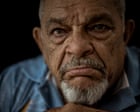
When Judy Leonard entered the orphanage, she was given a bed with a number. That was how the staff would refer to her. Not by her name, or even by one of the cruel nicknames the other children gave her, but by her allocated space in the dormitory: C2.
“I would like the readers to close their eyes,” Judy says now, “and imagine that it was them at age nine.”
Judy’s early childhood, along with those of her brothers and sisters, was spent playing in the streets and beaches in Melbourne’s west. Then the police arrived.
“We were classed as neglected,” Judy says. “Dirty, unwashed, uneducated.” She was bundled into a car with two siblings. “I remember looking back out of the car and seeing my mum and dad cry. And I’d never seen my father cry.”
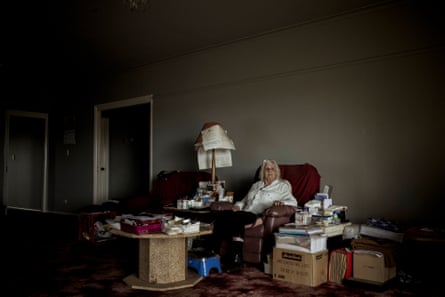
For six months, the three siblings were locked away at Turana, an overcrowded accommodation (or “reception”) centre in Parkville for children in the welfare system. It doubled as a remand facility for “problem” children. Police were said to refer to it as “the rat bins”.
A judge later ordered the three children to an orphanage. They could come out again, he said, when their parents’ circumstances improved.
It would be years before Judy went home. In some ways, she never did.
Judy, now 79, is among the Forgotten Australians: more than half a million people who were placed in orphanages, institutions and other forms of out-of-home “care” before 1990. Many were subjected to physical, emotional or sexual abuse, and neglect. Depression and suicidality are among the wounds many of them carry.
Despite multiple government inquiries and a 2009 apology from then-prime minister Kevin Rudd, Forgotten Australians’ trauma and the ongoing effects of it remain little-known and poorly understood. For those facing the prospect of aged care, the horrors of their institutionalised childhood can rear up again, only to be met with incomprehension by those around them.
Judy
“I want people to look at me as a human being. Because this is not just my story, it’s thousands of people’s stories. I’m no different to you. But I went through life a little different,” Judy says.
“I had my freedom taken.”
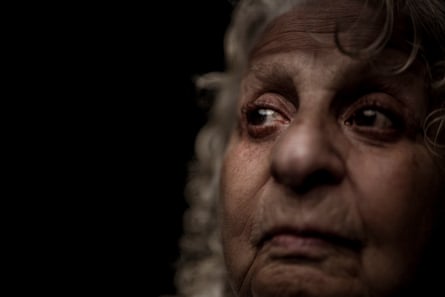
In the orphanage, Judy began wetting the bed, for which she was bullied mercilessly. She had headaches from undiagnosed longsightedness. She also, unknowingly, had dyslexia – and was hit with a ruler every time she misspelled a word.
“You had to be on guard all the time,” Judy says. “When you’re like that, you come out of that orphanage with a type of understanding that is beyond the kids out here.”
Judy was 14 when she was allowed to go home.
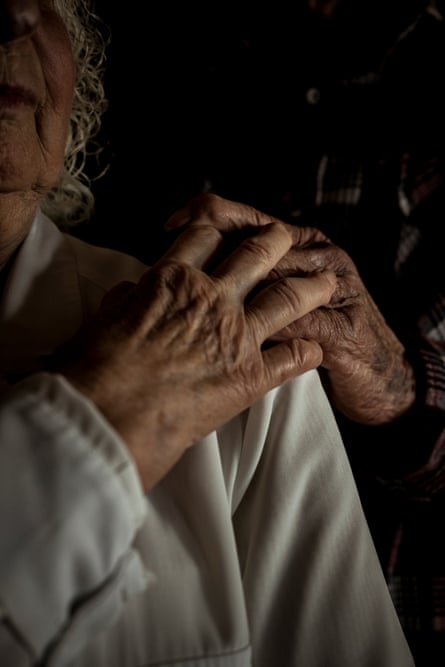
Many years later, Judy and her husband, Henry, became carers of a two-year-old boy – the child of a friend in distress. Two weeks before his eighth birthday, he was taken by authorities.
“I swore I’d never have another kid ever again, because it just tore me to pieces,” Judy says. “The same as when I was in the home, when I left my parents.”
Dean
Dean Wise only recently learned he was a Forgotten Australian. He was in therapy, during a four-year battle with bowel cancer, when he saw a photograph on his psychologist’s computer of one of the institutions he’d been in.
“That was a confronting day, I must admit. I started bawling my eyes out,” Dean says.
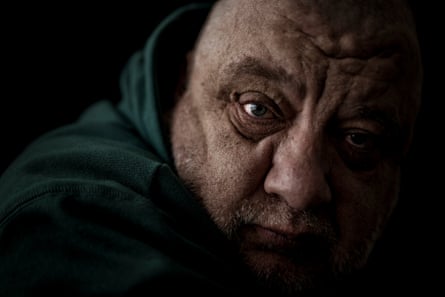
At around age 12, and after repeatedly absconding from their foster home, he was separated from his sister and put into Baltara.
He had been fleeing sexual abuse, perpetrated by a man connected to his school. Being in the “reception centre” didn’t stop it: the man was seen as a trusted figure and allowed in to see Dean or take him on outings.
Dean says he tried to speak up about the abuse. He told his social worker, community services, police and school teachers. But “it fell on deaf ears”. The abuse ceased only when the man suddenly stopped visiting.
Finding other survivors through Open Place, Victoria’s support centre for Forgotten Australians, has given Dean community. But even at 57, “I’m still trying to find out who I am,” he says.
“I’m so tired. I’m physically exhausted. Getting diagnosed with the cancer, that just made it even harder.”
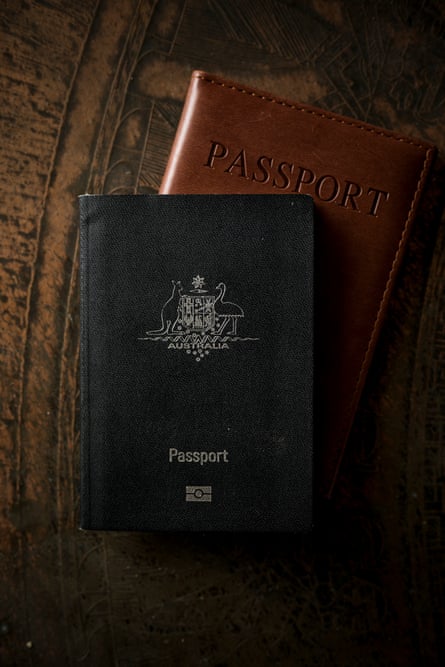
Dean is also angry. That’s partly why he’s telling his story.
“I’m doing it for the kids still going through the system and not being heard. Things have got to change. Simple as that. It’s got to change.”
Toni
Toni Brown always wanted to be like her bikie brother. She “took off from home”, hitchhiking from Melbourne to Sydney at age 12.
“There were bikers up there,” Toni says. “They used to park on Darlinghurst Road. That was all I knew.
“So one of them got hold of me – I’m 12, 13 – I fell in love – and I went to work for him on the streets.”
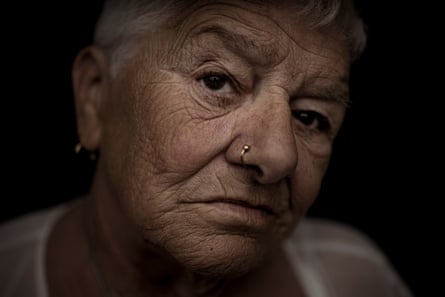
Toni, now 68, isn’t flippant about her experience as an underage sex worker, but her “worst years” came after police caught her. They sent her back to Melbourne and charged her with being “exposed to moral danger” – a “crime” frequently used to send victims of sexual violence to institutions. Toni was sent to a remand centre in Winlaton. It was ostensibly a training and rehabilitation centre for adolescent girls. In practice, it was a prison.
“You walked in the door, escorted by the officer. I had to strip,” Toni says. “They showed me to my room … but it was a cell. I had to sleep on the floor on a mattress because it was overcrowded.” Her bunkmate was a girl charged with the murder of two children.
During her seven months there, Toni was raped by an officer. Another officer witnessed the incident. “She turned her back,” Toni says.
“No wonder I got out and did what I did later. It was almost like I wanted to get back at everybody,” she says.
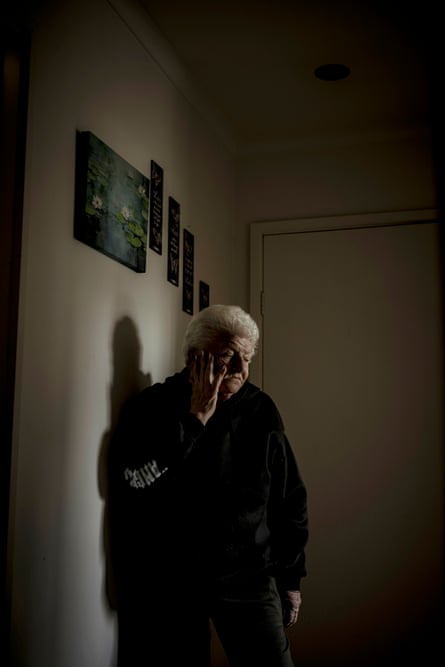
She returned to Sydney, and to sex work. When she was 16, she moved again and worked on a prawn trawler. “I could sit out and just be totally at one with the ocean … I got a drinking habit, a really bad drinking habit. But apart from that, that was what I think really started to make me stop and think about my life and what I’d done in the past. It started to wake me up.”
She came back to Melbourne in her early 20s, where she managed brothels and escort agencies.
Toni found the abuses of her past recurring later in life. They strained and sometimes fractured her relationship with her two sons, one of whom she was unable to see for many years. Still, she persisted. She drove taxis. She trained as a care worker and worked with kids whose challenges were just like hers had been.
These days, Toni dotes on her 11-year-old granddaughter, who she says once made a perfectly timed phone call that stopped her from taking her own life.
Richard
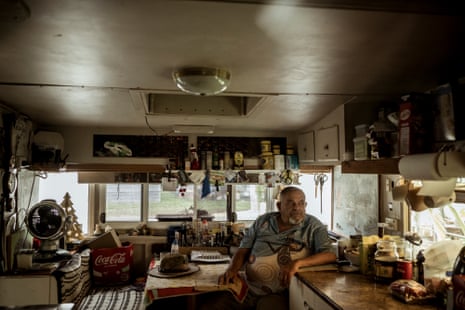
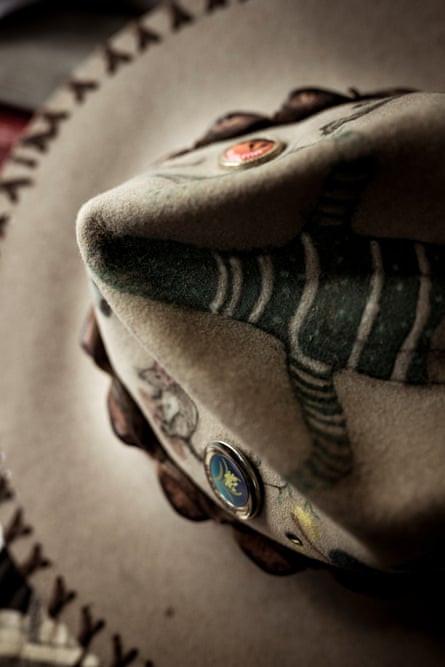
If you spent time in Melbourne’s gay clubs in the late 1990s and early 2000s, it’s likely you saw Richard Payne dancing on a podium. He was known as Grandpa Acid – not for the drugs (he wasn’t into those) but the music. Dancing was how he found euphoria.
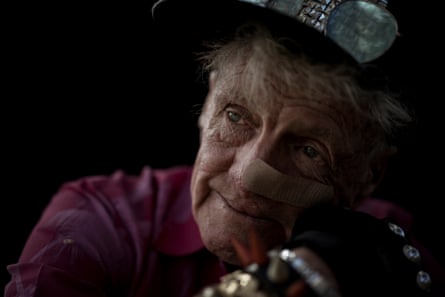
After a decades-long career in agriculture, a marriage, a family and a divorce, Richard realised he was gay. It has been difficult for his family to come to terms with.
Richard was born with a cleft palate. His mother, an unmarried flight attendant, put him into care so she could work to pay for his medical needs. He was shuffled between hospitals and foster homes until he turned eight, when she relinquished his care to the state.
Then a wealthy landowner arrived, looking to adopt a child. “He took me down the street and bought me a great big lollipop,” Richard says. That sweet beginning didn’t last.
“He started doing things like making sure I’d wash myself properly. He’d come in the bathroom and he’d start washing me, and he started doing things,” Richard says. It escalated to violent rape. “He actually physically whipped me from head to toe and then penetrated me,” Richard says.
Confused and terrified, Richard fled back to the group home. He was turned away.
At 14, Richard was burnt in an industrial accident at his agricultural college and kept in intensive care for three months. “While I was there, the head doctor came in to see me,” Richard says. “He said, ‘Richard, how come you haven’t had your speech therapy treatment done?’” His adopted parents were “put on the spot and shamed to do it”.
Eventually, Richard confronted his abuser. “I slammed him up against the back of my ute and put my fist up and said, ‘If you ever touch me again, I’ll kill you.’”
At 21, Richard married into a relationship he describes as loveless, but that he committed to because he wanted a family. After the divorce, he went to his first gay club because a girl he had dated invited him. The men didn’t harass her there, she said.
He kept going back.
Then one night, a young man kissed him.
“I fell apart,” says Richard. “I was aching – I’d been aching all my life for somebody to show that they wanted me for who I am, what I am.”
In a letter he shared with Guardian Australia, Richard wrote that he felt his sexuality had been “robbed” from him in his youth. “This in turn resulted in my trying to dismiss the past and bury it,” he wrote.
“However you always know that one day you will have to relive it and that time is now.”
John
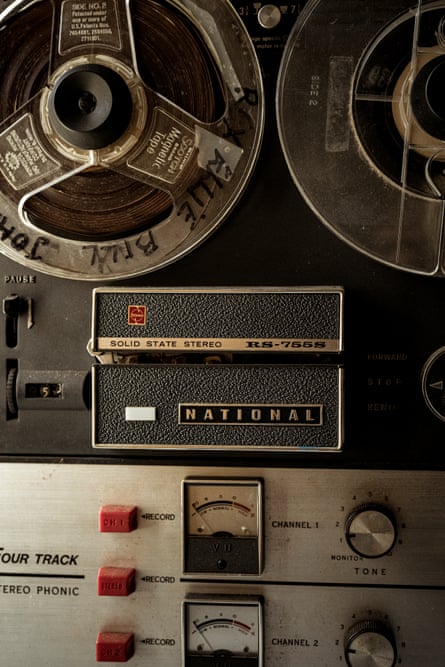
John Pinkard turned 80 this year. He has been attending Open Place for nearly a decade, but identifies as a member of the Stolen Generations. His memory is as sharp as a pin. But while he knows what happened to him in Tufnell Home, he can’t say for sure how old he was when he went in or how long he stayed.
Before Tufnell, John lived on the lam with his foster mother, who he just called “Mum”. His birth mother, a white woman ashamed of having fallen pregnant to an Aboriginal man, had abandoned him at a Brisbane hospital after giving birth.
Ann, the mother-in-law of his nurse, didn’t care about the colour of his skin. But the state government did.
“She told me that they physically tried to take me off her,” John says.
Ann took John home, but a sympathetic official quietly warned her that because she wasn’t married, they would try to take John away. So they fled into outback Queensland.
When things went bad in one place, they’d lob back to Brisbane. As John grew older, he learned how to identify government cars and how to hide. Once, he hid in the bulrushes of a swamp.
One day, John was coming home from school and forgot to look for the red rag on the windowsill that would let him know it was safe. Two men opened the door and grabbed him.
“There [were] lots of tears and carry on,” John says. “[Mum] pleaded with them not to take me like that, but she promised she’d take me up on Monday to the orphanage.”
John is emotional when he describes being left at Tufnell.
“We sat on the steps and Mum said to me, ‘John, I’ve got to leave you at this house for a short while, until I can get you back.’
“I saw Mum walk down the path and I saw her head going above the hedge – and the penny dropped. I made a run for the door and they had locked it.”
Minutes later, he says, “I got my first flogging.”
He remembers nuns erecting a makeshift boxing ring so they could watch the children fight. A priest, who took him behind red curtains, made him undress and sit on his lap. “He’d get me to put my hands down and get me to touch him,” John says. Afterwards, “maybe he’d give me a Mintie.”
He was allowed to return to Ann after she married, when he was about 10. That’s when she told him his father was an Aboriginal man who had raped John’s mother – a story he later learned was false – and said: “Don’t you ever own up to being Aboriginal.”
“I’ve lived a life without identity,” John says. “I’d been brought up as a white person, but I’d been looked upon as a coloured person.”
He also struggled to overcome his time in Tufnell. “I have been insecure with people – my wife, my children. I never told anybody about the abuse I got in the orphanage until I was about 50,” John says. “My wife said to me, ‘It’s like living with somebody in a glass cocoon. I can see you, but I can’t get through to you.’”
John remembers the phone call from his half-brother, about eight years ago, confirming his father was Aboriginal. “I just sat here and cried. Oh, God, at last! It’s out, I know, I know!”
And he found and met his mob: the Bundjalung people.
“I’ve had my recognition. I’m in a good place as far as knowing that I’m Aboriginal, Bundjalung people,” John says.
KioskNews shows a cleaned-up reading view extracted from the publisher’s page — the original always lives on their site, not ours.