Myanmar’s Asean exit talk: a pariah pushes back

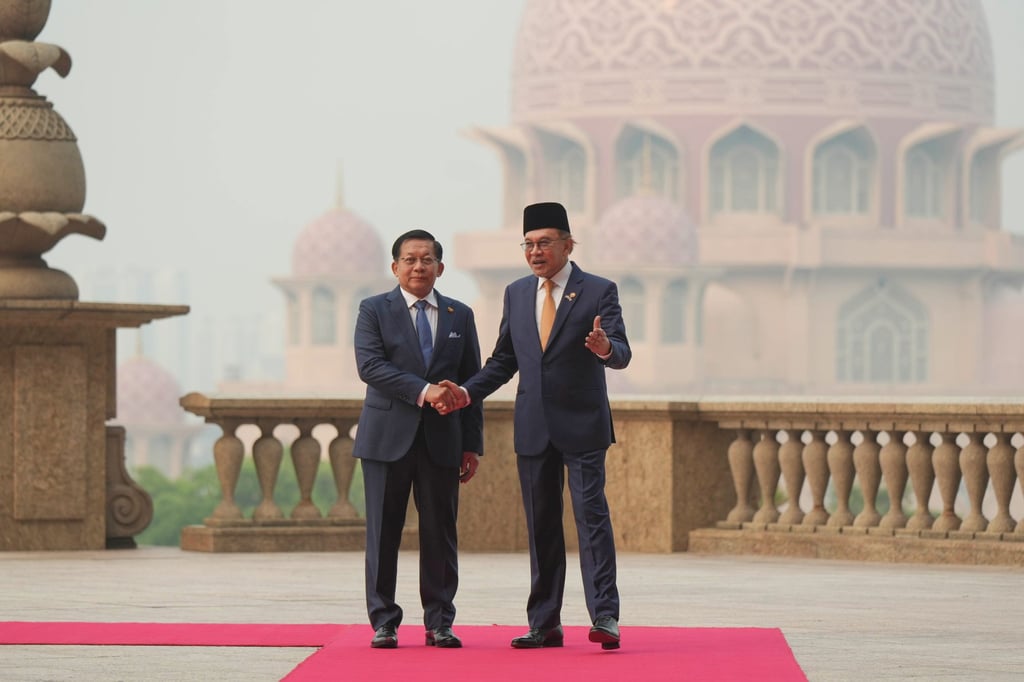
Min Aung Hlaing appears to be bristling at his continued diplomatic exclusion. In recent months, he has visited Bangkok, Hanoi and Kuala Lumpur, as well as New Delhi, Moscow and Beijing, in an effort to cast off his coup-leader past and emerge a legitimate head of state.
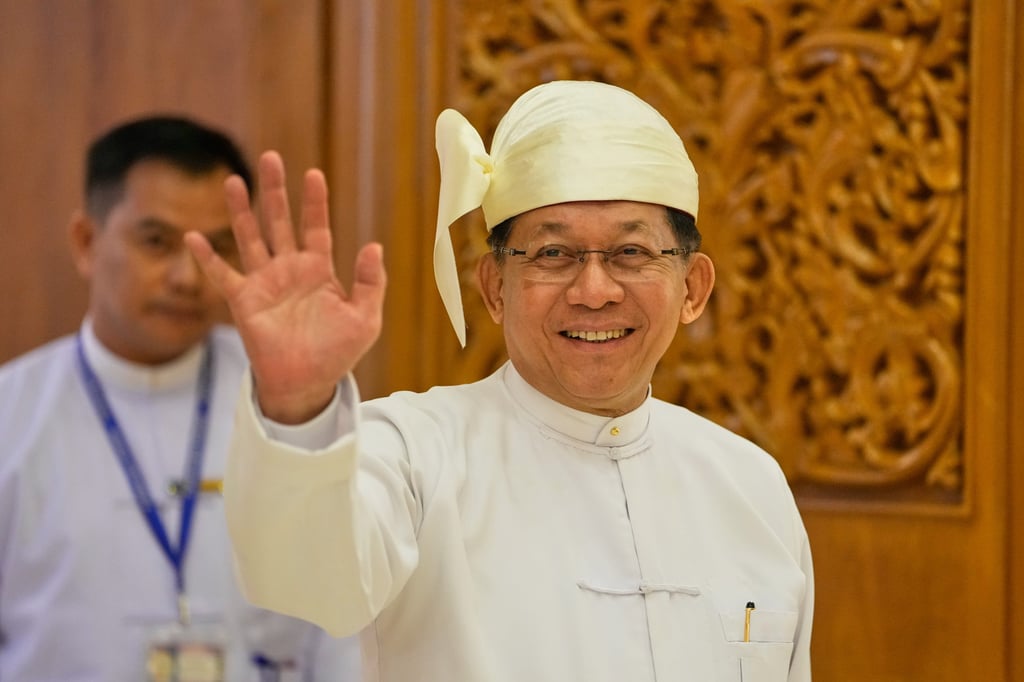
On November 18 – a day before the UN’s top court found that Myanmar had committed genocide against the Rohingya population with its military operations in 2017 – the notoriously stubborn leader said he would “review” Myanmar’s relationship with Asean, complaining that no other member state had had to suffer such an “indignity”.
“They are imposing such pressure only on our country,” Min Aung Hlaing told parliament. “There was never pressure placed on or indignity shown towards an Asean member before. But with Myanmar, they are doing that.”
Days later, state media quoted him telling a government meeting that Myanmar would not comply with those parts of the International Court of Justice’s genocide ruling that it considered “inappropriate”, calling it a “one-sided accusation” that had “seriously affected” the country’s reputation.
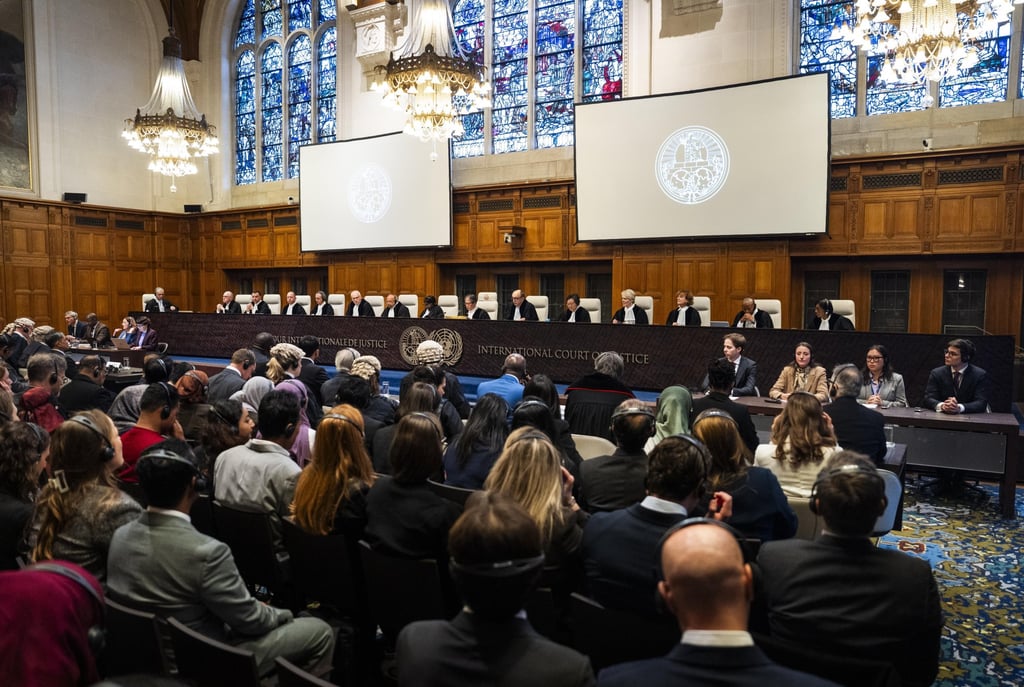
The ICJ found in its ruling on November 19 that at least 10,000 Rohingya civilians, a mostly Muslim minority group, had been killed by Myanmar’s security forces during the “clearance operations” of 2017.
Min Aung Hlaing was commander-in-chief of Myanmar’s military in 2017, a post he held until March this year, shortly before assuming the presidency.
In one such operation in August 2017, the court found that the military had “engaged in the indiscriminate and targeted killing of civilians, including children and persons fleeing; separated and executed men; committed widespread sexual violence; and burned people, bodies and homes”.
Chaos as leverage
Myanmar is far from the first Asean member to experience a military takeover or bouts of violent political turmoil. It is, however, the first to have been found responsible for genocide by the principal judicial organ of the United Nations.
In his remarks to parliament this month, Min Aung Hlaing stopped short of threatening to leave the regional bloc that his country only joined in 1997 – when it was, as now, under de facto military rule.
But as his 2021 coup showed, Myanmar’s president is unafraid of sowing chaos, and analysts say Asean should not be surprised if he and his military-dominated, rubber-stamp parliament decide to take another all-or-nothing gamble.
“If Myanmar left, it would only highlight the bloc’s inability to address serious problems,” said Lucas Myers, a Myanmar researcher and assistant director at the University of Maryland’s School of Public Policy, citing the country’s coup and ensuing deadly civil war as examples of “a series of crises to its [Asean’s] credibility”.
“In that sense, Naypyidaw has leverage that Asean does not,” he said.
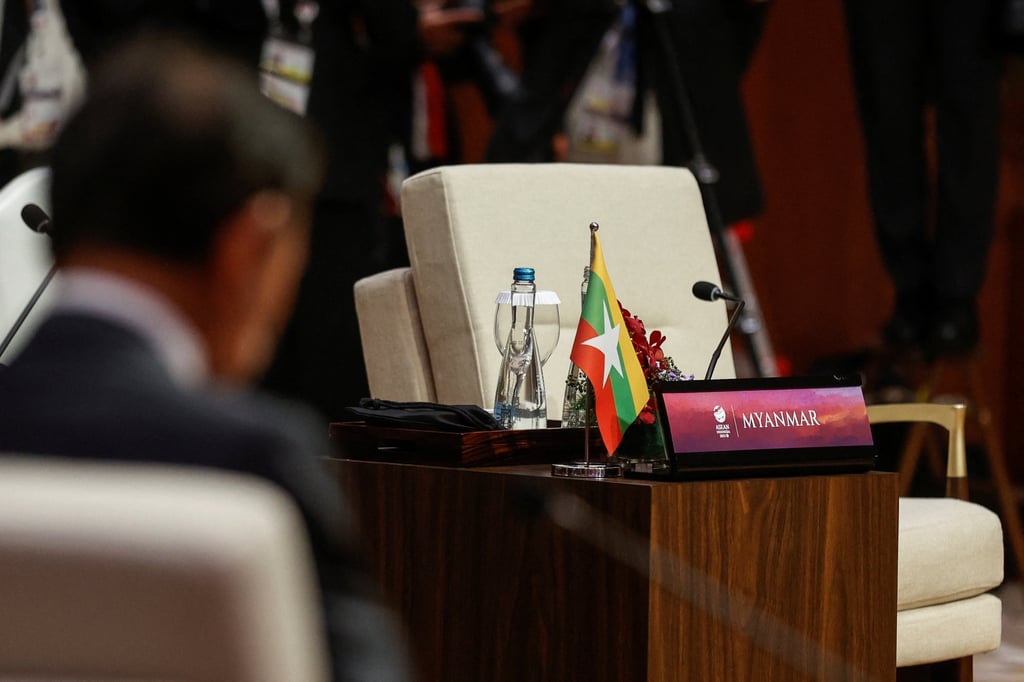
Asean bars Myanmar from sending political leaders to its summits until it makes progress on a peace plan, the “five-point consensus”, that was agreed two months after the coup. It calls for an immediate end to violence, constructive dialogue among all parties and humanitarian access.
Yet in the years since Min Aung Hlaing seized power, mass protests have been met with live fire; homes, hospitals, displacement camps and schools have been bombed; and dissidents – including Aung San Suu Kyi, the figurehead of Myanmar’s brief democratic opening – have been jailed.
Witnesses have provided “horrific accounts of sexual and gender-based crimes, torture, strangulation and electrocution” in detention, according to UN investigators. A UN committee heard last month that more than 100,000 people had been killed in the post-coup conflict, “the vast majority … civilians”.
At their summit in Manila on November 15, Asean leaders restated their “deep concern” over the humanitarian situation in Myanmar, denounced the violence and urged the military to stop its targeted attacks on “civilians and civilian infrastructure”.
They also endorsed “calibrated engagement” – a phrase coined by Thai diplomats this year amid Thailand’s efforts to act as a diplomatic bridge – and pledged to “consider the gradual restoration of Myanmar’s full political representation” subject to sustained and concrete progress on the five-point consensus’ implementation.
Asean’s charter commits its members to non-interference in each other’s domestic affairs. Rights groups say this has left the bloc largely powerless to curb violence by one of its own.
Meanwhile, drugs and arms trafficking – plus scam gangs committing industrial-scale online fraud – have proliferated amid the instability, spilling out of Myanmar’s borders into its neighbours’ territory.
A conscription order has driven tens of thousands of young people to flee the country, many to Thailand and Malaysia, where they provide labour but also add strain to already overstretched public services, fuelling anti-immigrant sentiment.
Myers said that Asean’s priority, in contrast to Myanmar’s, was first and foremost to maintain unity among its members.
“Asean’s incentives as an institution are to hold together with the appearance – if not the reality – of harmony,” he said.
“Min Aung Hlaing simply wants to preserve and consolidate his personal control over the regime. He doesn’t need Asean to do that when he can go to Bangkok, Beijing and Moscow.”
‘Toxic and divisive’
Myanmar’s generals had been “a toxic and divisive force for Asean”, said Bridget Welsh, an honorary research associate at the University of Nottingham Malaysia who studies Southeast Asian politics.
“We will see if, after the ICJ decision, the same sort of acceptance continues,” she said. “If it does, Asean as an institution will suffer.”
Asean had yet to issue a collective statement on the genocide ruling at the time of writing, though the foreign ministries of Singapore and Malaysia have both stated that they respect the ICJ’s judgment.
As for Min Aung Hlaing, he was installed as president in April via a formal vote by the military-backed proxies that dominate Myanmar’s parliament, following widely discredited elections that one UN expert called a “fraudulent” sham.
“Becoming president provided him a modicum of legitimacy,” Myers said. “Giving cover to foreign governments already interested in engagement.”
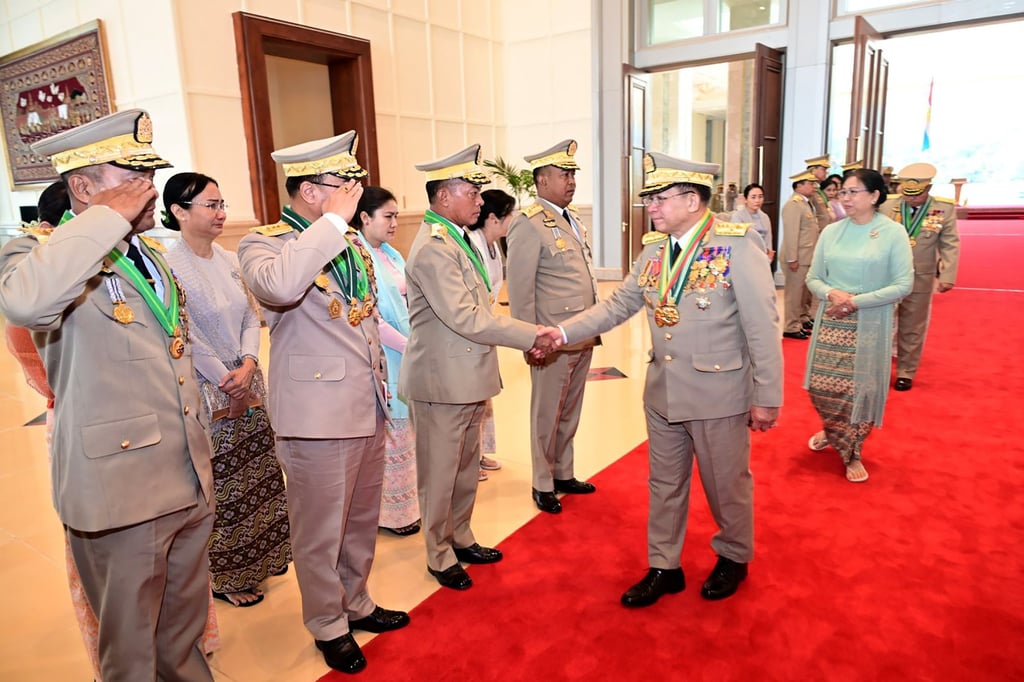
Suu Kyi’s party was banned from taking part in the election and rights groups estimate that 10.5 million voters were excluded, while another 11 million boycotted the vote. More than 50 million people are thought to live in Myanmar, though a comprehensive census has not been carried out since 2014.
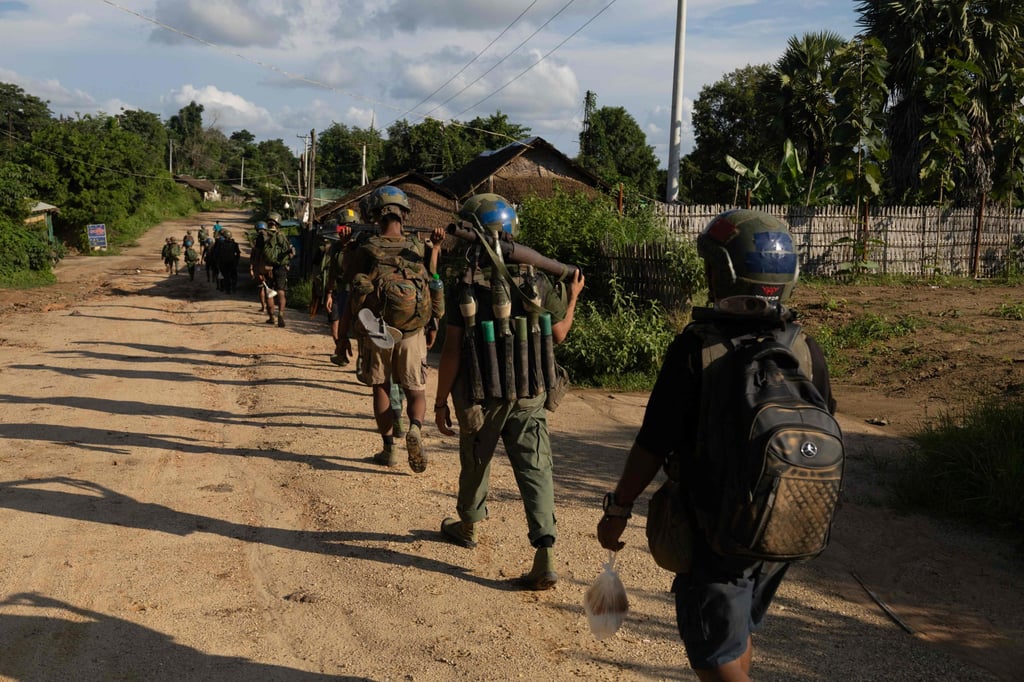
Two years ago, Min Aung Hlaing’s army – or the Tatmadaw, as it is known – was besieged by pro-democracy fighters and ethnic armed groups that briefly seemed close to inflicting a decisive blow.
Air strikes, battlefield gains and diplomatic support from Beijing, Delhi and Moscow helped turn the tide.
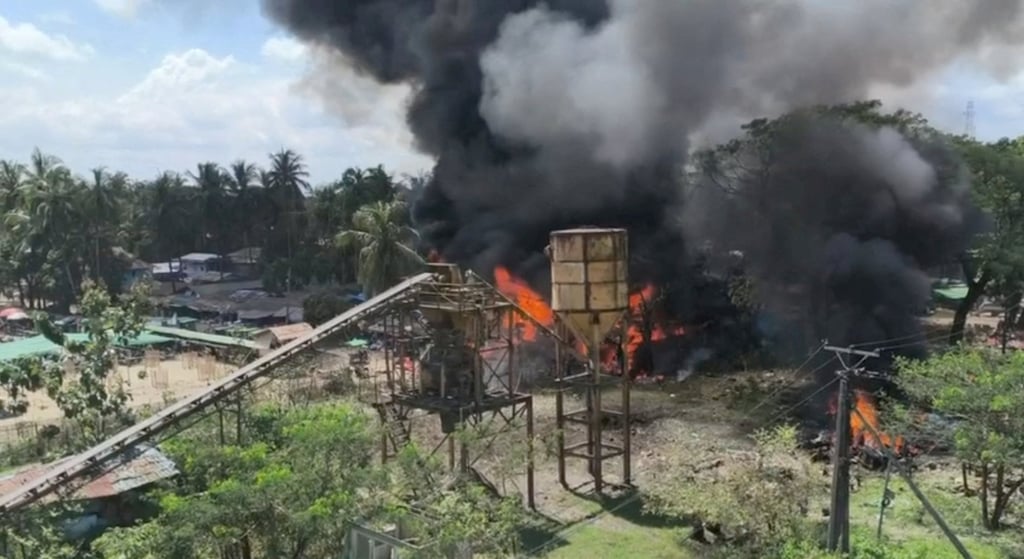
“His reliance on China and Russia helped to change the balance of power internationally,” Welsh said, adding that Myanmar’s president had since been tightening his grip on the military. “He has appointed his loyalists, culling opposition within.”
A report published last month by the ISEAS – Yusof Ishak Institute in Singapore found Min Aung Hlaing’s cabinet was “heavily security-oriented”, with nearly three-quarters of ministers having military backgrounds or links, said Joanne Lin, a senior fellow at the institute who specialises in regional geopolitics.
Power remained “highly concentrated around Min Aung Hlaing”, she said, with the military-backed Union Solidarity and Development Party having little real-world authority, despite dominating parliament, because the armed forces, presidency and key security structures were all “closely connected to his chain of command”.
Capital by capital
Despite his recent rhetoric and veiled threats, few analysts who spoke to This Week in Asia expect Min Aung Hlaing to actually quit Asean for good.
His strategy appeared to be more focused on sidelining the bloc and normalising relations with its members capital by capital, said Vu Lam, a political scientist and Asean observer who writes regularly about regional trade and geopolitics.
The aim was “to make Asean’s collective restrictions look out of step with members’ own behaviour”, he said, adding that each fresh visit “produces images of acceptance that may weaken the bloc’s collective message”.
And its members are divided. Thailand, Cambodia, Laos and Vietnam are among those favouring more engagement, while Indonesia, Malaysia, the Philippines and Singapore have said that they want conditions to be met first.
“Which is why he went to the most receptive capitals first,” Lam said of Myanmar’s president, who has visited no fewer than five Asean member states since July to drum up support. “Malaysia, a long-standing critic, was the fifth stop and the first nation from maritime Southeast Asia to host him.”
Moe Thuzar, coordinator of the ISEAS – Yusof Ishak Institute’s Myanmar studies programme, said it was “still premature to talk about Myanmar leaving Asean”.
The brinkmanship coming out of Naypyidaw was aimed more at “asserting its position, not signalling a decision”, she said, adding that leaving would cost the country “more than its political leadership seems to have calculated”.
Citizens would lose visa-free travel, study and work opportunities, as well as access to regional trade and diplomatic or economic partnerships, she said.
“A seat at the Asean table is one of the few forms of regional recognition it doesn’t yet have,” Lam said of Myanmar’s military-backed post-coup government. “Which is why Min Aung Hlaing has campaigned so hard for it.”
Quitting the bloc would mean abandoning that goal, said Lam, who interpreted this month’s speech to parliament as “a signal of displeasure and an attempt to gain leverage, not a decision to walk out”.
A seat at the Asean table is one of the few forms of regional recognition it doesn’t yet have
An Asean exit would leave Myanmar without its main multilateral source of legitimacy, push it closer to external partners such as China and Russia and make cross-border problems – refugees, scam centres, drugs and border clashes among them – even harder for the bloc to resolve.
Analysts say Min Aung Hlaing’s leverage lies partly in his willingness to crater his own country’s economy and inflict misery upon its population, though this has not always strengthened his hand in bilateral talks.
“Countries like Thailand, China and Malaysia have engaged in pursuit of their own interests,” Myers said, noting that the former general’s post-coup diplomacy with other countries in the region was “always on their terms, not his”.
Singapore chairs Asean next year and will inherit “a more complicated landscape” when it comes to handling Myanmar’s attempted reintegration, according to Lin, as several members are much further along than the bloc in re-engaging with post-coup Naypyidaw.
“I would not expect Singapore to try to reverse those bilateral relationships,” she said.
“Its challenge as chair will be to keep bilateral engagement separate from Asean’s collective decision on political representation, and to ensure that any movement towards reintegration remains tied to demonstrable progress.”
Exiles are less sanguine about Myanmar’s prospects, or the motives of its junta chief turned president.
“Min Aung Hlaing does not care if Myanmar is on its own,” said a Bangkok-based refugee who gave her name only as Moe Moe.
“He wants all the power – and he already has the guns and all the money. He does not care what happens to the economy, the country and the people.”
KioskNews shows a cleaned-up reading view extracted from the publisher’s page — the original always lives on their site, not ours.