Gaming PC GPUs vs. console GPUs: What's the difference between them?
Both have the same underlying tech, but console versions share more with the CPU.
Luke James for Engadget
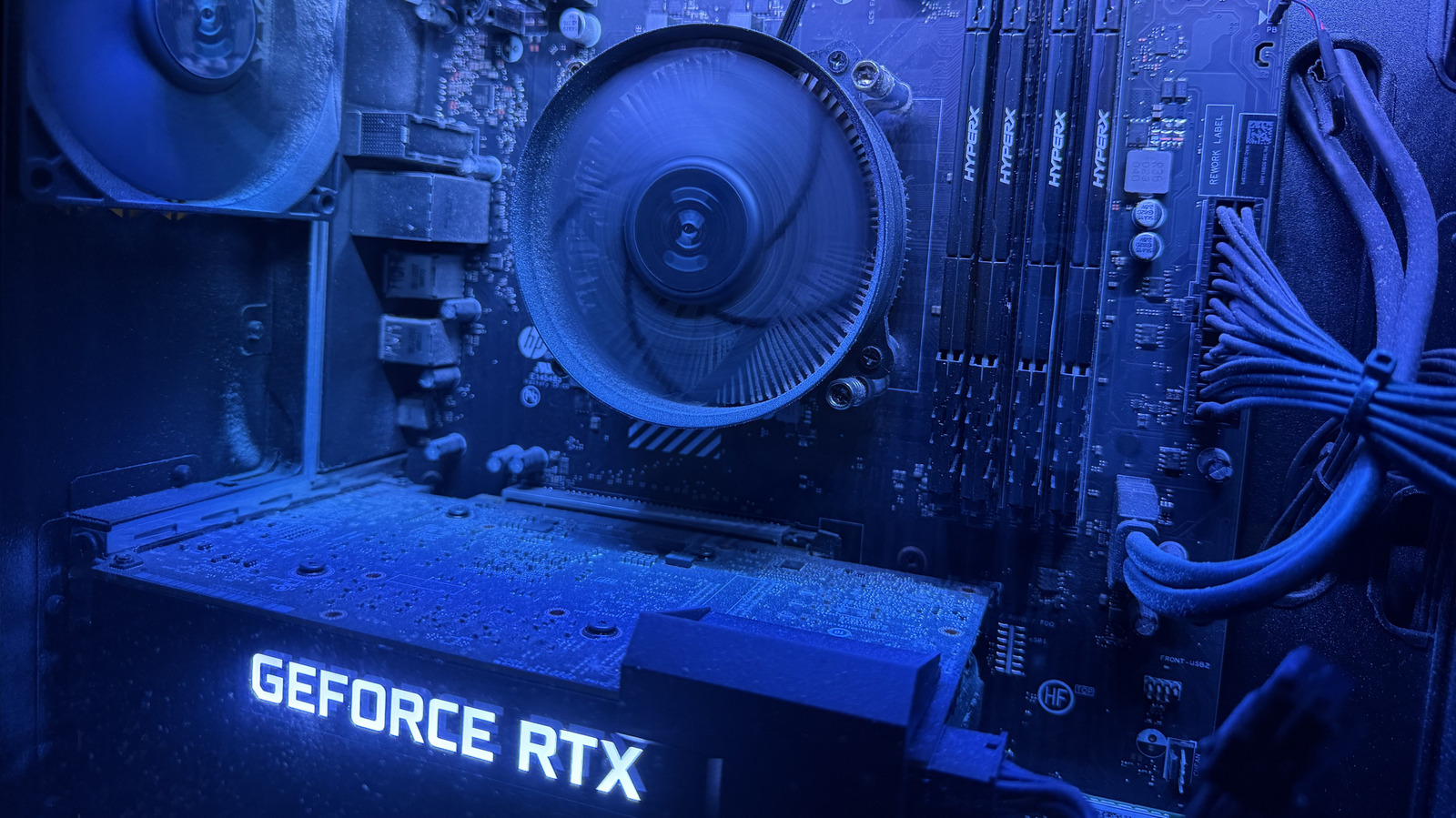
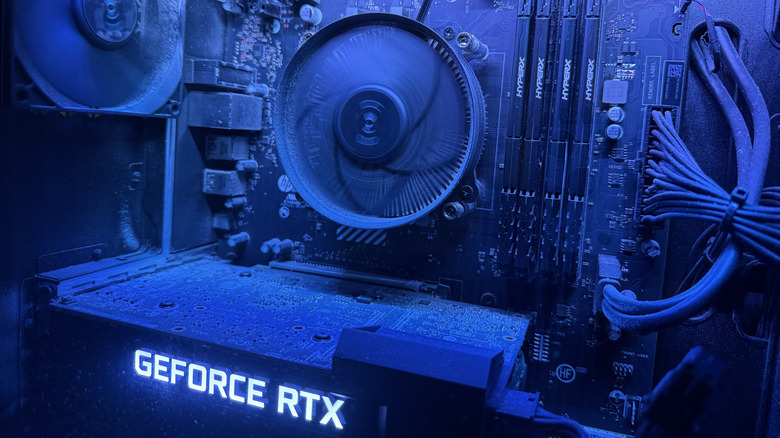
Take the side panel off a gaming PC and the graphics card is the first thing you'll see. It's a slab the size of a hardback book slotted into the motherboard with fans bolted to it. But open up a PlayStation 5 or Xbox Series X and you'll see nothing of the kind. Instead, beneath the heatsink sits an AMD chip doing the work of both processor and graphics card.
Both consoles draw their pictures via the same AMD Radeon technology found in PC graphics cards. The difference is that a console GPU shares one piece of silicon and one pool of memory with the CPU, whereas a gaming PC's GPU gets a card and memory to itself. Console GPUs are also bespoke components built to order for Sony and Microsoft, with every game written for that exact hardware. The closest PC card to the one inside a PS5 is arguably AMD's Radeon RX 6700, although how close depends on the game.
One chip, one pool of memory
Microsoft's spec sheet for the Series X lists an eight-core CPU and a GPU with 52 compute units on a single 360.45 square millimeter piece of silicon called an Accelerated Processing Unit (APU), or a system on a chip (SoC). Compute units are the GPU's processing blocks, and graphics power scales up as you add more of them. In contrast, a PC splits those jobs between a processor and a separate GPU, which is why a PC owner can upgrade the GPU and a console owner can't.
You'll also find 16GB of memory inside a Series X, which the CPU and GPU both draw from. The OS keeps 2.5GB of it and games get the remaining 13.5GB to split between graphics and everything else. In contrast, Valve's Steam Machine is a console-sized PC with a separate CPU and GPU that keeps two stocks instead: It has 16GB of system RAM plus 8GB of VRAM attached to the graphics chip. (A Tom's Guide roundup of launch reviews flagged that the 8GB as a limitation at 4K with ray tracing switched on.)
Game devs decide how much of the shared pool goes to textures and other graphics data on console. But on PC, a game that needs more VRAM than what the GPU has available spills the extra into RAM, which the GPU reaches far more slowly, causing stutter and texture delays.
Semi-custom chips

Miguel Lagoa/Shutterstock
Mark Cerny, lead architect of the PS5 and PS5 Pro, did a deep dive on the PS5 Pro a couple of years back. He called its graphics design RDNA 2.x, a chip that's got no twin in AMD's PC catalog. It builds on the RDNA 2 architecture in the 2020 PS5, borrows features from the RDNA 3 generation that followed and adds ray tracing features that no AMD cards had at the time. It also has 67 percent more compute units than the standard PS5's GPU.
Sony could have built the Pro's GPU entirely on AMD's newer RDNA 3 design, but Cerny said that would have broken compatibility because games are released with their shaders compiled for the PS5's exact GPU and RDNA 3 runs those programs differently, meaning studios would have needed to maintain a separate version of every game for the Pro. With the RDNA 2 base, PS5 games can run on the PS5 Pro without being rebuilt.
Fixed hardware for developers
Since all standard PS5s have the same graphics hardware, studios can prepare their shaders before games are released. PC games can't do that, however, because the right version depends on the GPU and driver inside each machine. Instead, PCs compile them on first launch or mid-game, which is a major cause of long loading screens and stutter.
Testing carried out by Digital Foundry found that the RX 6700 was up to 44 percent faster than the PS5 while playing Hitman 3, whereas the console led by 45 percent in Cyberpunk 2077 with ray tracing switched on. Or, in other words, near-identical hardware produced opposite results because of how each game was built. A high-end PC will still out-draw any console, but a well-tailored console game can get considerably more from a mid-range chip than a PC.
Microsoft is now copying the console approach on Windows with Advanced Shader Delivery, which downloads precompiled shaders alongside the game. According to Microsoft's measurements, Forza Horizon 6 loads in four seconds with it versus almost a minute and a half without. Going the other way, the AI upscaler that sharpens PS5 Pro games came out of Project Amethyst, a Sony and AMD partnership whose work reached PC players first in the form of FSR 4.
AMD CEO Lisa Su told investors back in February that the next Xbox's semi-custom chip is progressing well toward a launch next year, so custom console chips have at least another generation to run. In the meantime, the price gap between consoles and gaming PCs has narrowed, with the PS5 starting at $599.99 since April and the cheapest Xbox Series X at $749.99, while PCWorld has managed to build a PC matching the Steam Machine for just short of $900. Microsoft blamed memory and storage costs for its price rise, and the same shortage has made it difficult to find an affordable GPU.
KioskNews shows a cleaned-up reading view extracted from the publisher’s page — the original always lives on their site, not ours.