Hong Kong lift scandal prompts calls to review checks and engineer accreditation
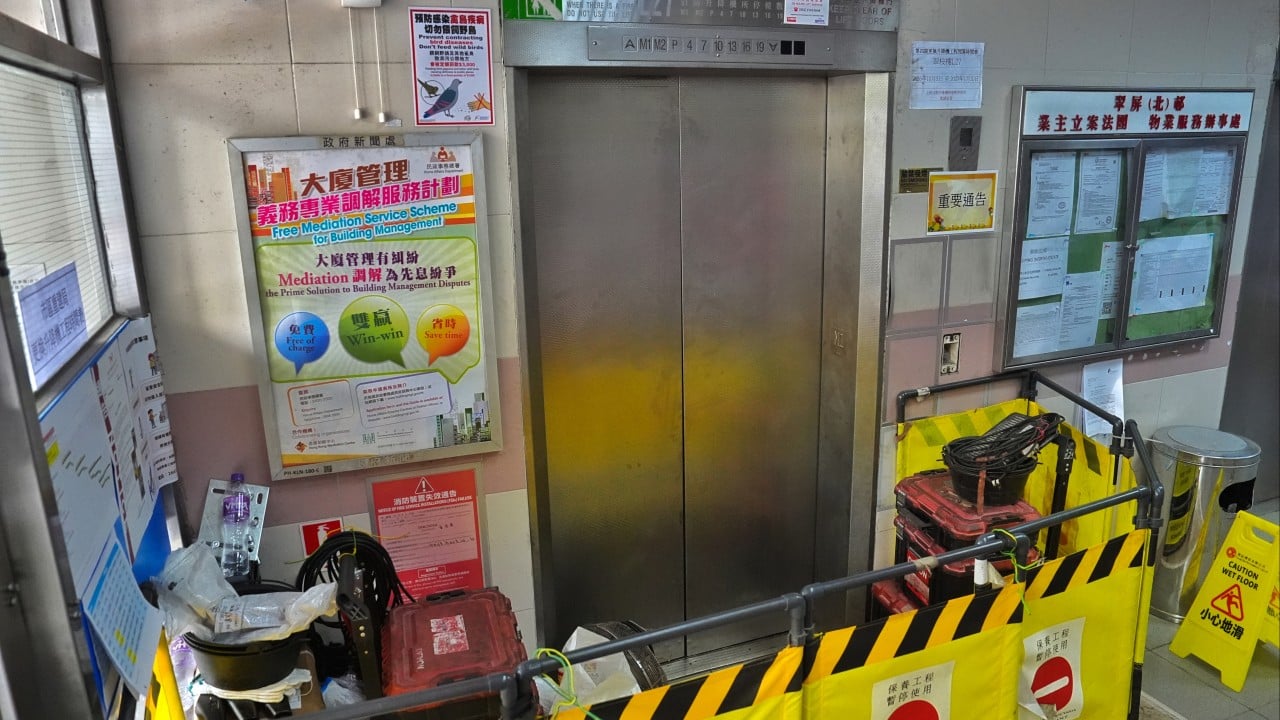
Hong Kong authorities should look beyond reports signed off by registered engineers when assessing lift safety and review accreditation requirements to help prevent contractors from cutting corners, a lawmaker and an expert have urged, after more lifts were found missing a crucial door frame component.
Lawmaker Scott Leung Man-kwong on Monday called on the Electrical and Mechanical Services Department (EMSD) to review whether it was appropriate to rely on reports signed off by registered lift engineers, given a manpower shortage in the industry.
“As to how to avoid determining whether a check passes standards by relying on one information source, I believe the EMSD would need to deploy more manpower on these checks after this incident,” Leung said.
His comments came after authorities revealed on Sunday that lifts installed by contractor Taizoom Elevators at 152 private properties were missing a crucial door frame component designed to prevent fire and smoke from entering the lift shaft. Authorities warned that the number could rise.
Police on Friday arrested a Taizoom director and two registered lift engineers on suspicion of deception over safety certificates allegedly stating that the work had been fully completed.
On Saturday, the EMSD director issued a letter instructing all lift contractors in the city to review the design and construction of landing doors installed over the past 10 years.
Leung said the department currently relied on reports signed off by registered lift engineers to determine whether lifts had passed inspections or met professional standards after repairs.
But he added that a shortage of registered lift engineers in the city had left them with heavy workloads.
“At the site of the check, can these engineers monitor every step to ensure there are no problems before signing off? It really relies on workers onsite to provide relevant information for their judgement,” he said.

Leung said introducing a third party to verify lift safety checks would be ideal. But he acknowledged that finding a suitable party would be difficult because the work required specialist knowledge.
He also suggested establishing an internal communication mechanism between relevant government departments and the Hong Kong Housing Authority, a statutory body that retains ownership rights in some public housing estates.
Under his proposal, departments would privately notify the authority of ongoing investigations into contractors, allowing it to make better-informed decisions when exercising its voting rights as an owner on estate maintenance matters.
“With this internal communication mechanism to give the Housing Authority more information when casting its vote, I think this could be a form of protection too,” he said.
Electrical engineer Ho Wing-yip, an adjunct professor in the Faculty of Engineering at Hong Kong Polytechnic University, said it was too early to determine whether the deficiencies found in Taizoom’s lifts reflected a wider industry problem.
But he added that the large number of defective lifts installed by the contractor suggested the company might have instructed workers to use the installation method in question, possibly to cut corners and boost profits.
“It could be possible that the firm thinks it could save a lot of money by cutting costs in every project,” he said.
Ho said he had found that the reports required under the current system did not cover the missing door frame component, identifying this as an area for improvement.
He added that authorities had little scope to operate the inspection system without relying on the city’s professionals. But the scandal could prompt a review of how engineers were accredited, including the emphasis placed on professional ethics.
“This shows that we haven’t paid attention to professional ethics. This needs to be evaluated or even amended as [accreditation metrics] represent whether the most fundamental tenets of the industry are working properly,” he said.
KioskNews shows a cleaned-up reading view extracted from the publisher’s page — the original always lives on their site, not ours.