Move over Muskoka. Word is getting out about Canada’s new playground for the rich
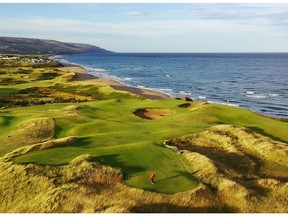
Nova Scotia is undergoing an evolution as Americans and Europeans, as well as Canadians with deep pockets, discover Canada’s new playground for the rich.
Sign In or Create an Account
People flocked to Nova Scotia during the pandemic when they realized they could have more house and a quieter lifestyle, not to mention spectacular scenery, beaches and world-famous golf.
That’s when Fox Harb’r owners decided to expand their exclusive five-star Fox Harb’r Golf Resort on the Northumberland Strait that separates Prince Edward Island from Nova Scotia. Ron Joyce, who helped build the Tim Hortons empire, was among the first entrepreneurs to plunge into high-end tourism in the province where he was born. He opened an 18-hole golf course and resort with a private jet runway in 2000 that receives 200 guests a season.
Now, 26 years later, the current owners have invested another $45 million in a multi-year project that will add two new courses with ocean views, both opening in spring 2027. They are also building 20 luxury housing units a year. The Wallace Townhouses that went up for sale last year at a cool $1.6 million, are already 60 per cent sold, says Kevin Toth, president of Fox Harb’r Resort.
“We have a lot of faith in the luxury and high-end market — that’s what we cater to,” Toth said.
Out-of-country visitors are escaping crowded noisy cities in exchange for a cheaper dollar and high-end vacation experiences in Nova Scotia. Some are buying up oceanside villas as getaways to ski or golf, prompting investors to pump millions into expansion projects over the next several years.

A growing luxury segment of the tourism market in Nova Scotia is experiencing an unprecedented boom. Tourism Nova Scotia reports an uptick in tourism last year of eight per cent — well ahead of the national growth rate of just three per cent.
Jennifer Simpson, CEO of Bespoke Travel Design, a customized travel experience to 31 destinations throughout North America, said their customers who want to come to Nova Scotia are spending between $7,000 to $13,000 during their stay.
“The City of Halifax and the province have done an excellent job marketing to the clientele. There are now five-star restaurants and good air access for people out of country to come directly to Nova Scotia,” she said during a visit to Halifax in October.
Bespoke can arrange for travellers to take a unique historical tour of the city or pay thousands to experience a view they can’t get elsewhere, such as a helicopter to Cape Sable Island where wild horses roam free.
“They want to gain access to a high-end luxury experience with individuals who know the area,” said Simpson.
Halifax kicked off this past summer with the international catamaran racing event Sail Grand Prix sponsored by Emirates and Rolex. Tourists filled grandstands overlooking the harbour and hotels like The Muir, part of the Marriott’s luxury collection. The event generated an estimated $64.7 million in economic impact for Halifax, a nearly four per cent increase compared with the 2024 event, according to a study by Deloitte.

Foodies have more choices than ever before to enjoy a culinary experience. Mystic, a Halifax waterfront restaurant, won North America’s Best New Restaurant in 2025 at the 6th Annual Culinary Awards, beating top competitors in cities like New York, Los Angeles and Vancouver.
From July to September, people paid up to $795 to dine on the ocean floor for a 6.5-hour lunch and dinner experience when the world’s highest tides have receded on the Bay of Fundy. The culinary adventure sold out every day this summer. One company flew its clients on a private jet to feast on lobster and award-winning local Avondale Sky Wine at Dining on the Ocean Floor.
“One Polish couple waited three years to get tickets and then built their Nova Scotia holiday around their dining experience,” shared chef Domenic Padula, who moved to Nova Scotia’s Annapolis Valley from Montreal. He purchased Dining on the Ocean Floor in 2020.
“The potential is endless. The luxury segment of the tourism industry is untouched. We have luxury tourism in Toronto, Vancouver and Montreal, but not Nova Scotia. With its natural beauty, it is ready to explode.”
Million-dollar retirement and summer resorts are being built and sold at unprecedented rates in rural communities once considered drive-through places to stop for fish and chips.
Golf is a huge lure. Golf Magazine ranked two of Nova Scotia’s public courses, Cabot Cliffs and Cabot Links, among the world’s Top 100 (2025-2026) — a distinction no other province can claim.
With its natural beauty, (Nova Scotia) is ready to explode
The company named after the famous Cabot Trail in Cape Breton announced in September it will add a third luxury resort and residential golf course destination. Cabot Wilds is set to open late 2027 in the middle of the world’s largest blueberry farm. A curated collection of outdoor experiences will immerse guests in the surrounding maple forests, wild blueberry fields and salmon-rich River Philip, promises the description of the unique, environmentally sustainable project.
Cabot CEO and co-founder Ben Cowan-Dewar is partnering with his mentor, John Bragg, founder of Oxford Frozen Foods, who built his billion-dollar empire selling blueberries world-wide.
“A course along the river wrapping around a blueberry field is the idyllic location,” said Cowan-Dewar enthusiastically in an interview from Toronto after he just returned from Nova Scotia. “The grass for the new course is starting to grow, as is the appetite for even more luxury golf.”

His passion and vision for golf opportunities haven’t dimmed since he was 25, when he began work on the Cabot Cape Breton course that opened in the tiny seaside town of Inverness in 2012.
“People certainly thought it was outlandish and I wore rose-coloured glasses,” he recalled of his days promoting the area as more than a place to hike or drive around in a day. “But it’s a field of dreams, and once people saw this amazing place and people, it became among the best in the world.”
Demand is high for the spectacularly designed course, even if it costs up to $565 Canadian for 18 holes (Nova Scotians pay $450 a round). Cowan-Dewar said every tee time was sold out during this summer’s peak season — a clear sign people now respect his vision 15 years later.
Golf is so popular, his company has built about 300 beds in high-end accommodations, including a $1.5-million two-bedroom Hillside Home villa overlooking the ocean that can be rented for $1,845 a night. A-list guests including comedian Adam Sandler, singer Billy Joel and NHL player Mitch Marner have played and stayed. But that’s not the main target market, said Cowan-Dewar.
“Whether you are famous or not, people who work here treat them the same way with the warm Maritime hospitality at a place where they can create magical memories. That’s our goal every day and we’ve just had a record year in Cape Breton.”
The attraction to invest in luxury tourism goes beyond summer activities. Former Czech alpine skiers Martin Kejval and Olympian bronze medallist Jan Hudec, a Czech-Canadian, are pouring millions into an old ski hill by adding three new lifts and new villas at the base of Cape Smokey Mountain. They’ve already added a new gondola and are in the midst of developing a marina for yachts to expand the experience beyond skiing.
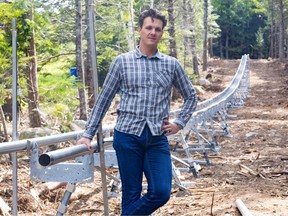
“Over the next five years, we will develop the skiable area adding to the base of the hill to the terrain so you can ski on the back country and ski out. This year and next year, we are cutting the trees and putting in snow-making pipes,” said Martin Kejval, CEO of Cape Smokey Holding Ltd.
“People move somewhere for the experience, raw beauty and intangibles that give us peace inside and that’s what we are doing at Smokey — we want to make sure everybody sees what it can be, not just a drive through around the Cabot Trail,” he said.
Staying in a villa at the base of a ski hill across the road from Ingonish Beach (population 1,250) offers recreational options like winter surfing in the Atlantic after skiing — something they can’t easily find elsewhere, as Kejval compared the destination as superior to Iceland.
Turns out people will also pay for silence marked by the regular crashing of waves and a view locals take for granted. With the help of European investors, they’ve sold 21 of 27 villas at roughly $1.9 million each.
“Sometimes, it takes somebody from elsewhere to have what you have. If you wake up every day and see ocean and cliffs, it is just there. What I see is 10 Puffins a day here.”
The word is getting out, said Fox Harbr’s Toth, who is also the chair of Tourism Industry of Nova Scotia. “Nova Scotia has been discovered as a luxury destination and we’ve been promoting that the last decade. It’s anchored by natural beauty and Maritime hospitality.”
Join the Conversation
This website uses cookies to personalize your content (including ads), and allows us to analyze our traffic. Read more about cookies here. By continuing to use our site, you agree to our Terms of Use and Privacy Policy.
KioskNews shows a cleaned-up reading view extracted from the publisher’s page — the original always lives on their site, not ours.