"No Nation Was Better Fit": Former PM Shinzo Abe's Aide On India-Japan Ties
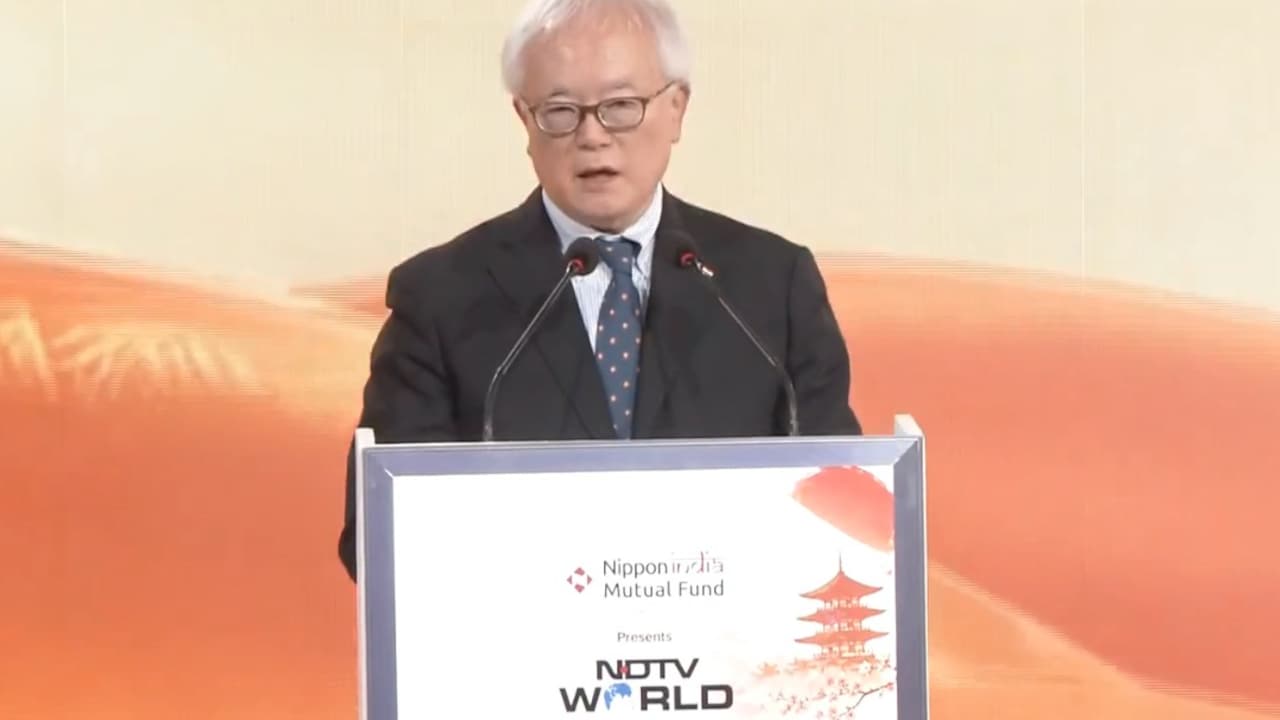
India and Japan must work together to protect trade routes, maintain peace in the Indo-Pacific region, experts said at the NDTV Indo-Japan Summit in New Delhi. They said both countries should also work with other major countries to deal with growing tensions in the region.
The discussion, titled From Friendship to Future, focused on the vision of former Japanese Prime Minister Shinzo Abe, the future of the Quad and China's influence in the region.
Tomohiko Taniguchi, former special adviser to late Japanese Prime Minister Shinzo Abe, said the PM wanted Japan to build stronger ties with other countries as China's military power grew. "He wanted to expand Japan's network of partner nations and expand Japan's own strategic space," Taniguchi said.
He recalled that Abe spoke about the connection between the Indian and Pacific Oceans during his address to the Indian Parliament in 2007. He described them as seas of freedom and prosperity. His speech later became an important part of the idea of a free and open Indo-Pacific.
Taniguchi explained that India was a natural partner for Japan because it was a democracy, had a young population and was growing quickly. India was also making progress in technology and innovation.
"No nation was better fit than India, seen from that perspective," he said. Taniguchi added that Abe wanted to build a strong relationship with India that would benefit both countries in the years ahead.
Former Indian Ambassador to Japan Sanjay Kumar Verma said India's approach to the Indo-Pacific has changed in several years as it now covers more than just security at sea.
He explained that India first focused on its Act East policy to build better ties with countries in East and Southeast Asia. It later introduced SAGAR, which focused on security and growth in the region.
India then launched the Indo-Pacific Oceans Initiative (IPOI), which also covers trade, technology, connectivity and the environment.Prime Minister Narendra Modi later introduced the MAHASAGAR vision to build stronger links between different regions.
"We have evolved from an Act East to Mahasagar," Verma said.
The future of the Quad was another key topic at the summit. The grouping includes India, Japan, the United States and Australia.
Verma said the Quad should not focus only on protecting sea routes. It should also help countries deal with problems related to trade, supplies and economic growth.
"Quad is an instrument of Indo-Pacific. It is not Indo-Pacific," he said. He explained that the Quad should help countries get a steady supply of important minerals and other goods. These supplies are needed to make products such as electronic devices and batteries.
Taniguchi spoke about Abe's idea of an "Asia's Democratic Security Diamond", which linked India, Japan, Australia and the United States. He said these four countries could work together to protect their interests across the Indian and Pacific Oceans.
They also discussed attacks on ships and the threats to important trade routes, including those in the Strait of Hormuz and the Red Sea. Verma said India and Japan depend heavily on trade with other countries. If ships cannot travel safely, both countries could face problems. China also depends on international trade, he added.
"The only way in which such violation of international rules-based order could be safeguarded is a united collective action," Verma said. He added that countries must also decide how to respond when others continue to break these rules.
Taniguchi also spoke about China's ambitions regarding Taiwan and how they could affect Japan.
"If Taiwan becomes an integral part of China, Japan's strategic space is going to be squeezed," he said. He warned that the next 10 years could be difficult for Japan as it deals with China's growing power and the future of Taiwan.
KioskNews shows a cleaned-up reading view extracted from the publisher’s page — the original always lives on their site, not ours.