Who Is Prem Watsa? Canadian Billionaire Who Left India With $8, Now Betting Rs 52,878 Crore On IDBI Bank
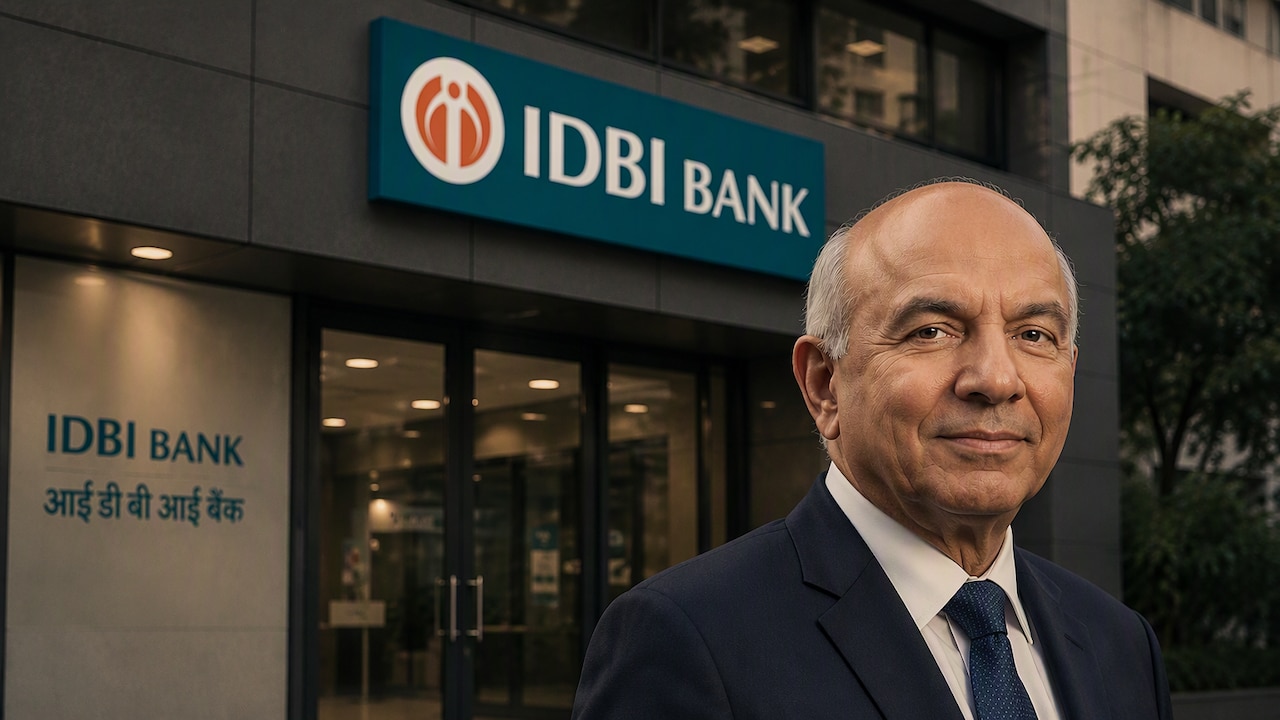
'Canada's Warren Buffett': A man who left India for Canada in 1972 with just $8 in his pocket is now preparing to take control of one of India's major IDBI Bank. Prem Watsa, the Hyderabad-born billionaire who built Fairfax Financial Holdings into a global insurance and investment group, is making a Rs 52,878-crore bet on IDBI Bank.
The Canadian company's proposed acquisition of a 60.72 per cent stake in IDBI Bank has received the Union Cabinet's approval. It is one of the biggest foreign investments in India's banking sector and marks a major step in the government's long-running effort to sell its controlling stake in the lender.
For Watsa, the deal is about more than acquiring a bank. It is a bet on India's economic future, and a chance to expand a financial empire that has been built over four decades. But who is the man behind Fairfax, and how did an engineer from Hyderabad become one of Canada's most influential investors?
Also Read | Layoffs Are Rising In Tech, But These Skills Are Helping People Unlock Better Pay
From Hyderabad To Canada: A Journey That Began With $8
Born in Hyderabad in 1950, Watsa grew up in a family of schoolteachers. He studied at Hyderabad Public School before pursuing chemical engineering at the Indian Institute of Technology (IIT) Madras.
His move to Canada was not necessarily part of a grand business plan. Watsa had little desire to leave India. But his father encouraged him to pursue higher studies abroad. At the age of 22, Watsa moved to Canada in 1972 to pursue an MBA at the University of Western Ontario, now known as the Ivey Business School at Western University.
Money was tight. To support himself during his studies, he sold air conditioners and furnaces door to door. It was a far cry from the world of billion-dollar acquisitions that he would eventually enter.
After completing his MBA, Watsa joined Canadian insurer Confederation Life in 1974 as a research analyst. The job introduced him to the world of investments and the discipline of assessing businesses for their underlying worth.
His mentor, John Watson, introduced him to the investment philosophy of Benjamin Graham. Graham, widely regarded as the father of value investing, believed investors should look for businesses trading below their estimated worth rather than chase market excitement. The approach would become central to Watsa's career.
How Prem Watsa Built The Fairfax Empire
Watsa did not become a billionaire overnight. His rise came through years of investing, acquiring businesses and looking for opportunities others might overlook. In 1984, he co-founded Hamblin Watsa Investment Counsel, an investment management firm. A year later, he assembled a group of investors to take control of Markel Financial, a struggling Canadian insurance business.
The company became the foundation of Fairfax Financial Holdings. It was renamed Fairfax in 1987, with the name derived from the words "fair, friendly acquisitions". Watsa has led Fairfax as chairman and chief executive since 1985, according to the company's official website.
Fairfax is now a global insurance and investment group. Its main business is property and casualty insurance, which covers risks such as damage to homes, businesses and vehicles, along with other losses. The group also has reinsurance operations, which means it provides insurance to other insurance companies.
The insurance business is important to understanding Watsa's investment strategy. When customers pay insurance premiums, the company collects money before it knows the full cost of the claims it may have to pay. The funds held in the meantime are commonly called insurance float. Insurers can invest this money, subject to their obligations and regulatory requirements.
This gives Fairfax a pool of capital that it can deploy across financial markets and businesses. Watsa's approach has often been compared with that of Warren Buffett, the American investor who built Berkshire Hathaway into a global conglomerate. Both have used insurance businesses as a source of investment capital and are associated with long-term, value-oriented investing. That is why Watsa is frequently called "Canada's Warren Buffett".
Why India Has Become A Big Part Of His Plans
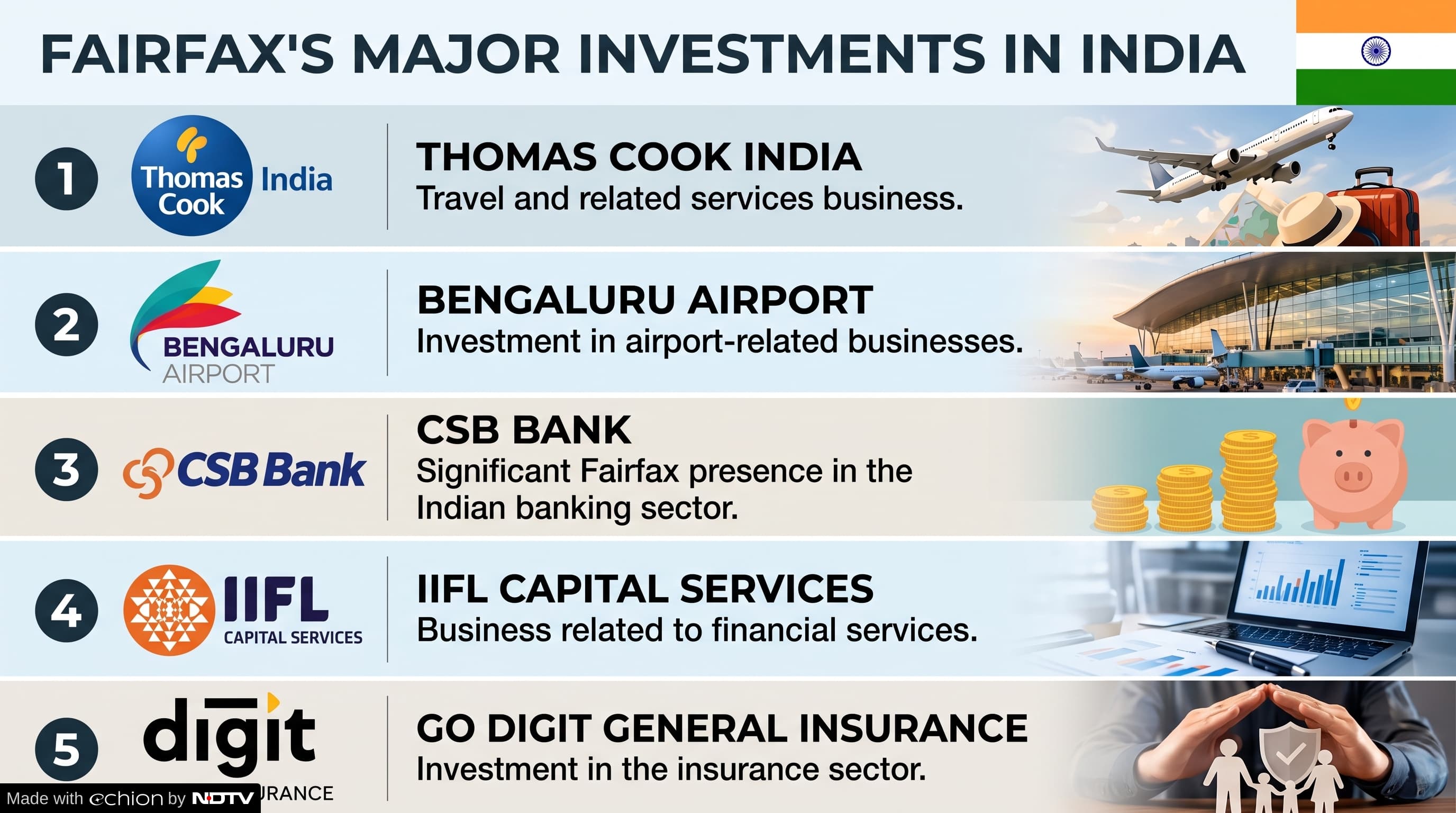
Watsa's connection with India did not end when he moved to Canada. Over the years, Fairfax has built a substantial presence in the country through investments in financial services and infrastructure. Fairfax was a partner in the creation of ICICI Lombard General Insurance in 2001. Its India investments have also included Thomas Cook India, CSB Bank and Bengaluru International Airport.
In 2014, Fairfax established Fairfax India Holdings, a Toronto-listed investment company focused on opportunities in India. The platform gave investors a way to participate in Indian businesses through a company listed in Canada. The IDBI Bank transaction is the latest, and one of the biggest, additions to that portfolio.
In 2022, Watsa had spoken about plans to invest billions of dollars in India over five years. His interest reflects a broader belief that the country's expanding economy and financial needs will create opportunities for businesses willing to invest for the long term.
India is now Fairfax's largest country exposure. According to Watsa, the group spent more than four years pursuing the IDBI Bank deal. His investment thesis is straightforward: a growing economy needs a strong banking system to finance businesses, households and infrastructure. A bank that can expand responsibly could benefit as that demand rises.
Why Fairfax Wants IDBI Bank
IDBI Bank is not a straightforward acquisition of a healthy business. The lender has had a difficult history. It faced financial stress and restrictions on lending and expansion after its asset quality deteriorated. In 2019, Life Insurance Corporation of India (LIC) became its largest shareholder as part of efforts to stabilise the bank. The Reserve Bank of India later lifted the restrictions after the lender's financial position improved.
The recovery is central to Fairfax's bet. According to Watsa, IDBI Bank had not expanded as much as it could have because of its past problems. He believes the lender now has room to grow. Under the proposed transaction, Fairfax will acquire a 60.72 per cent stake for Rs 52,878 crore. The government and LIC will reduce their holdings but remain shareholders, with their respective stakes expected to fall to 15 per cent and 19 per cent.
The structure gives Fairfax management control while allowing the government and LIC to retain a financial interest in the bank's future. The acquisition is also part of a larger shift in India's banking sector, where the government has sought to reduce its ownership in certain public-sector businesses and bring in private capital and management.
However, the transaction still needs to meet the applicable regulatory and other requirements. Fairfax's existing interest in CSB Bank also raises questions about how the group will structure its banking interests under regulatory rules. For Watsa, the challenge will be to turn his confidence in the Indian economy into sustainable growth at IDBI Bank.
What The Deal Means For India's Banking Sector
The IDBI Bank sale is significant not only for Fairfax but also for India's efforts to attract long-term foreign investment into financial services. Manish Aggarwal, Partner and Leader - Financial Services and Infrastructure Transactions at Deloitte India, told NDTV that the disinvestment is one of the most significant structural reforms in the country's banking sector.
"The deal is structured very well where in the foreign investor gets management control, brings in capital, expertise to grow the bank, and govt rides this upside through their residual stake," Aggarwal said. The arrangement allows Fairfax to take charge of the bank while the government and LIC continue to benefit if its value increases. It also gives the lender access to a private investor with experience in insurance, investments and financial services.
Aggarwal said the transaction could help attract more long-term foreign capital into a sector that will be important to India's next phase of economic growth. Still, the success of the deal will depend on what happens after the acquisition. Fairfax will need to expand the bank without weakening its financial position, improve its ability to compete and maintain customer and employee confidence.
KioskNews shows a cleaned-up reading view extracted from the publisher’s page — the original always lives on their site, not ours.