China unveils AI-powered robot designed to help farmers breed better strains of wheat
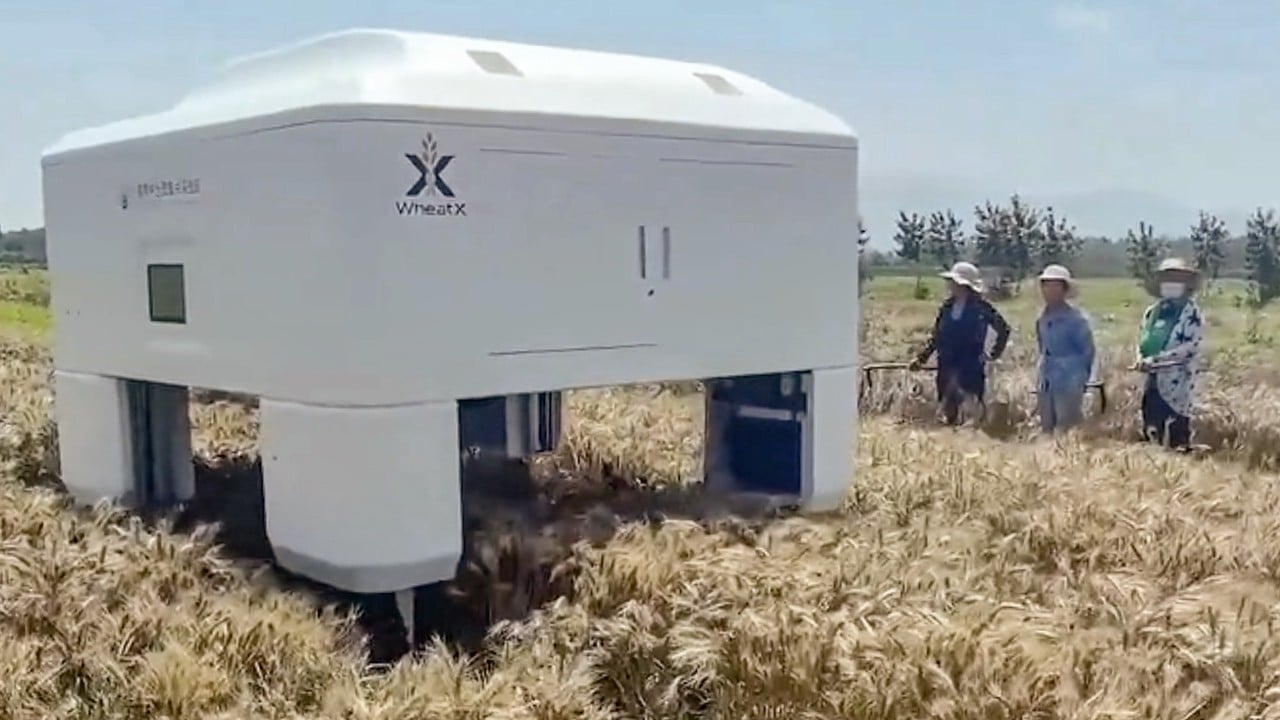
China has unveiled a smart robot prototype designed to assist with wheat breeding in the latest step in its ongoing drive to advance agricultural technology and bolster food security.
The robot made its public debut at a recent seminar on wheat breeding, state-run China Science Daily reported on Friday.
Traditional wheat breeders rely on a wealth of accumulated experience to identify and select strains with superior traits from tens of thousands of hybrid offspring.
But this requires manual assessment in the field – a process that is both labour intensive and subjective.
The robots are designed to reduce this workload using an advanced navigation system, high-definition cameras and vision algorithms.
Crucially, the robot is not merely a passive scanner. According to the research team, it has been trained to exercise autonomous judgment similar to that of a human breeder.
The seminar heard that in trials the smart machine – measuring over 2 metres (6.5 feet) in length, width and height – had successfully halted in front of the crop it was inspecting.
It then used its robotic arm to envelop a single wheat ear, allowing eight micro-cameras to capture detailed images from multiple angles.
Moments later, a full suite of quantitative data, including grain count and ear length, was generated.
Wang Hongwei, a scientist at Shandong Agricultural University’s state key laboratory of wheat breeding and co-leader of the project, told the newspaper that a defining feature of the robot was the integration of “a vast amount of breeder experience” into its training model.
To achieve this, the research team planted 2,000 diverse wheat genetic materials in a range of different environments.
Each plant was photographed individually and breeding specialists were then brought in to score and assess the images.
The results were then fed into the system and translated into machine-readable data.
This information was then used to build an intelligent decision-making model for the robot, which carried out rapid, large-scale screening as well as the evaluation and marking of crops that could be used for future breeding.
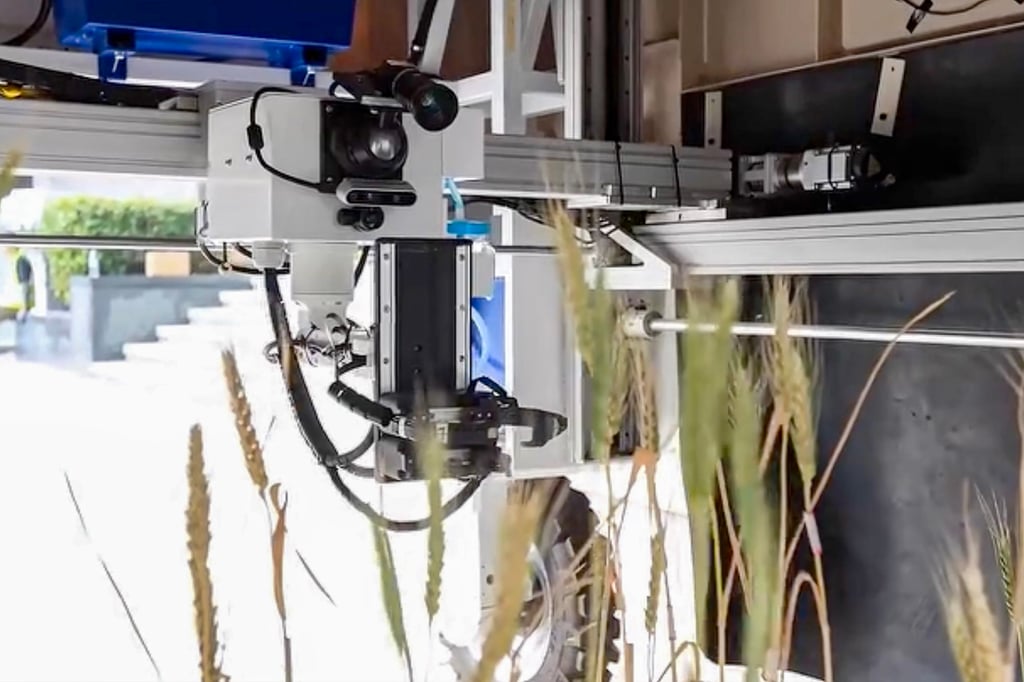
This model and its advanced imaging system were first used to carry out the preliminary screening of individual plants in the field, identifying candidates worthy of further investigation.
Then it sprayed paint on the target plants to be inspected by a human.
The research team has reached a preliminary agreement with Shandong Jizhi Biotech, a firm specialising in gene technology and intelligent breeding applications, to develop a commercialised AI wheat-breeding robot, the report said.
Earlier this year, the central government unveiled a blueprint for overhauling China’s vast agricultural sector over the next five years using cutting-edge technology.
The State Council, China’s cabinet, pledged to significantly strengthen research and development within the sector and set targets for increasing the contribution of technological advances to farm output.
KioskNews shows a cleaned-up reading view extracted from the publisher’s page — the original always lives on their site, not ours.