ECOSYSTEM THREAT: Gill nets galore in Kosi lakes, despite illegal fishing clampdown
Kosi Bay, a chain of four clear-water lakes on the border between KZN and southern Mozambique, is one of the most unspoiled lake and estuary systems in the country. Legally protected as a nature reserve since 1987, it also home to a rich variety of marine and freshwater fish that have been harvested in traditional fish traps by the local community for hundreds of years.
But population growth and rising unemployment levels in the surrounding region have increased pressure on the fish populations of the four lakes over recent decades, along with a steady increase in illegal gill-netting.
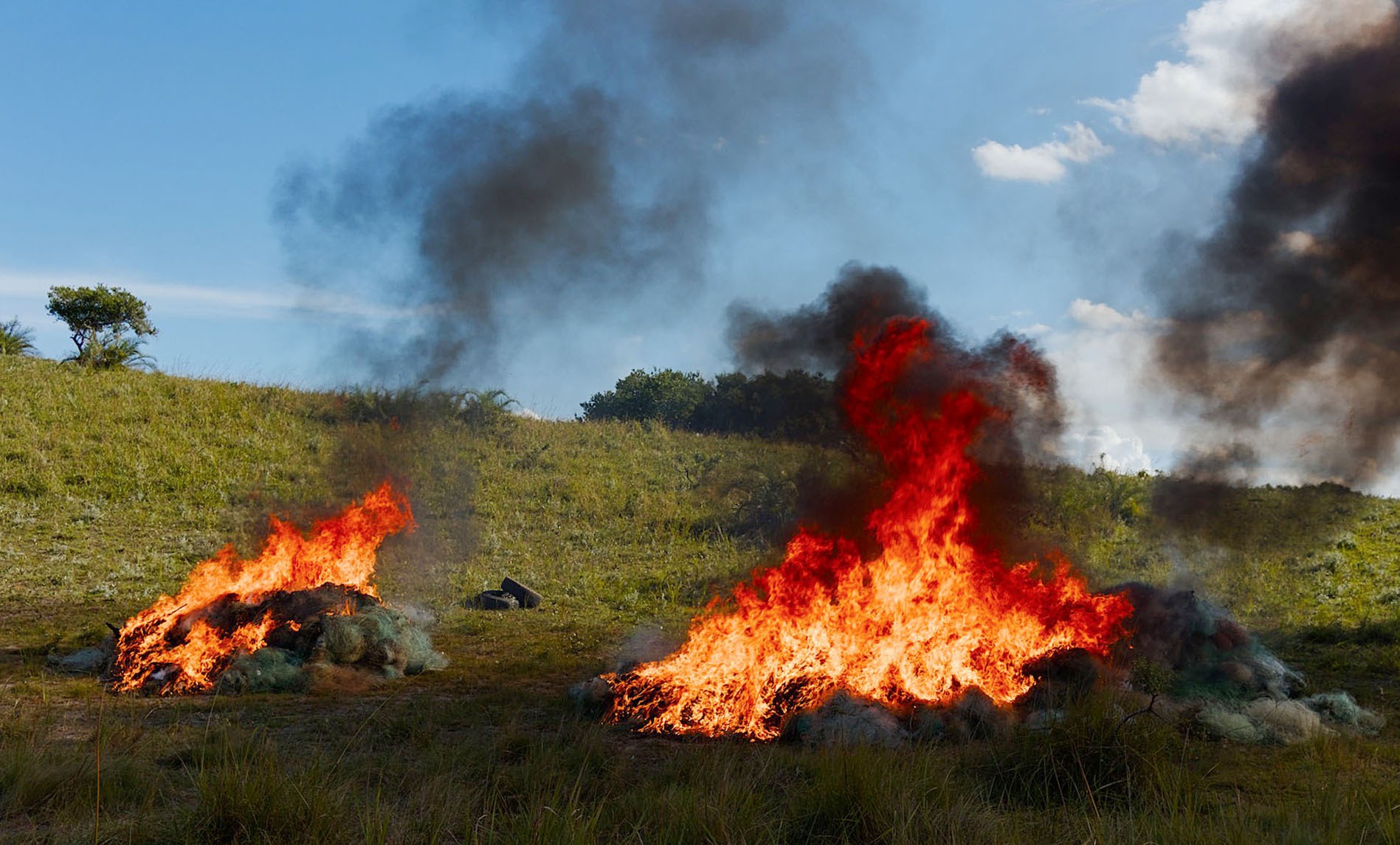
Over the past year alone, anti-poaching officers have removed nearly 300 gill nets from the lakes. With a combined length of almost 23km, this wall of nylon netting is long enough to stretch from Sandton City to Midrand, or from the Durban City Hall to Pinetown.
Unlike the traditional wood and reed fish traps that allow juvenile fish to escape, gill nets form a virtually impenetrable curtain of synthetic netting which targets fish indiscriminately – catching all species and all sizes of fish in large numbers.
Last month, in a joint operation involving nearly 60 police and other law enforcement officers, a supermarket owner and at least one local resident were arrested in the nearby town of eManguzi as part of a government clampdown on illegal fishing syndicates in the Kosi Bay area.
/file/attachments/orphans/KOSI2fishtrpsimageiStock_198202.jpg "The Kosi Bay lake system includes four interconnected lakes (Makhawulani, Mpungwini, Nhlange and Amanzimnyama) (Photo: iStock)")
In response to queries from Daily Maverick about the arrest of several illegal fish syndicate suspects, the national Department of Forestry, Fisheries and the Environment (DFFE) said it had “prioritised this issue for further investigation and targeted enforcement”.
“We can confirm that arrests were made but given that investigations are still ongoing, will not disclose further details at this stage.”
However, the department did confirm that at least two arrests following the recent operation involving the SA Police, Department of Forestry, Fisheries and the Environment, iSimangaliso Wetland Park Authority, Ezemvelo KZN Wildlife, Border Management Agency, Customs Department and SA Defence Force.
One of the suspects, from KwaMahlungulu village, was arrested in the centre of eManguzi after he was found selling nearly 700 fish (including tilapia, stumpnose, catfish, and silver bream). They also confiscated three chest freezers and charged him for alleged offences under the Marine Living Resources Act.
“On the following day, a Chinese national, the owner and/or manager of One by One Supermarket in eManguzi, was issued with an admission of guilt fine of R5,000. The suspect and her son were also arrested for alleged contraventions of the Immigration Act.”
Another four written warnings were issued to people transporting fish and to women selling fish in front of Shoprite Supermarket in eManguzi.
However, the department acknowledged that large joint operations like these were “not sustainable due to cost implications”. Sources in the area have reported that women were still selling fish in central eManguzi the day after the operation ended.
Over the past few weeks, several images have also circulated on social media showing some of the fish alleged to have been caught in gill nets at Kosi Bay. These included large hauls of giant kingfish (also known as giant trevally or “GTs”) – an iconic predatory fish that can reach lengths of 170cm and 80kg in weight.
/file/attachments/orphans/kosi3supplied_103050.jpeg "Visitors peer at a canoe piled to the gunwales with giant kingfish (giant trevally). While it is not clear what method was used to capture these fish, the illegal use of gill-nets has raised renewed concern about their impacts on the Kosi Bay lake system in Maputaland. (Photo: Supplied / Source)")
/file/attachments/orphans/Kosi4supplied_654153.jpg "A pile of KZN stumpnose caught in the Kosi Bay lakes. (Photo: Supplied / Source)")
/file/attachments/orphans/kosi5supplied_988411.jpeg "Four massive GTs caught recently in the Kosi lakes. The removal of large numbers of adult breeding fish has raised concern. (Photo: Supplied / Source)")
Dr Robert “Scotty” Kyle, a former Ezemvelo fish researcher who was based at Kosi Bay from 1980 to 2018, says gill nets at Kosi Bay remain a “major problem”.
“Seeing those photos on social media is quite upsetting... You just can’t keep pulling out fish that size on a sustainable basis.”
According to Ezemvelo, anti-poaching units have seized and destroyed gill netting stretching for more than 20km, each year, for the past four years.
/file/attachments/orphans/kosi6netremovaltablesourceEzemvelo_784333.jpg "A table of recent gill-net seizures points to the scale of the problem. (Source: Ezemvelo)")
/file/attachments/orphans/kosi9gillnetsphotosupplied_139745.jpg "A pile of gill netting hauled from the Kosi lakes by anti-poaching units. (Photo: Supplied / Source)")
“Everyone knows about the gill-netting,” says Kyle. “It’s been a problem for decades and it remains a major problem. This is all about a lack of political will to provide Ezemvelo with adequate funding and the resources to do their jobs, including sufficient staff, vehicles and patrol boats.”
Kyle recalls that he drew attention to the problem in his Ph.D thesis back in 1986.
/file/attachments/orphans/kosi7ScottyThesisongillnettingatKosi_592862.jpg "An extract of Dr Scotty Kyle’s 1986 thesis, flagging the impacts of gill-netting. (Source: R Kyle)")
In a separate scientific report almost 30 years later, Kyle repeated his concerns, stating that: “While traditional trapping and other fisheries in Kosi Bay likely coexisted sustainably in the past, there is now compelling evidence that overall catch rates for many species are unsustainable... Action is now required to reduce catches to levels that appear to be wise, sustainable and appropriate for this World Heritage Site, to the mutual benefit of local trappers and other fishers.”
He noted that the number of traditional traps remained fairly similar from 1981 until 1994, but thereafter they had more than trebled by 2001. Although numbers decreased after this, they remained well above earlier levels.
/file/attachments/orphans/kosi8trapphotoRKyle_858574.jpg "Traditional Tsonga fish kraals in Kosi Bay are normally built by pushing two parallel rows of wooden poles into the sand, about 50 cm apart. These fenced enclosures are shaped to lead fish into a trapping area. Historically, the binding material used in fence construction came from wild bananas. Because these leaves are quite thick, there was a substantial gap between the poles, allowing fish narrower than about 3 cm to escape. (Photo: R Kyle)")
/file/attachments/orphans/kosi10trapsandnettersphotoRKyle_297199.jpg "Legally protected as a nature reserve since 1987, Kosi Bay was later added to the Ramsar list of internationally important wetlands in 1991 and also incorporated into the iSimangaliso World Heritage Site. (Photo: R Kyle)")
He has pointed to another emerging concern – the increasing volume of poorly treated sewage and effluent seeping into the lakes from expanding residential areas.
Kyle notes that historically, the lakes were regarded as nutrient deficient, whereas they were now moving towards eutrophic conditions in some places. This increasing nutrient enrichment has created a risk of sudden oxygen depletion and major fish kills.
“The sand in the feeder streams used to be white. Now you are finding sludge there.”
While the iSimangaliso Wetland Park Authority did not respond to requests for comment, the authority issued a statement last year calling on all community members, fishers, and visitors to report illegal gill-netting or fishing activities.
The Department of Forestry, Fisheries and the Environment has also asked the public to report illegal fishing to Mzondeleli Dlulane, the department’s director of monitoring and surveillance at mdlulane@dffe.gov.za
Information can also be reported to the Environmental Crimes and Incidents Hotline at 0800 205 005 or the nearest Fisheries Compliance Office. DM
KioskNews shows a cleaned-up reading view extracted from the publisher’s page — the original always lives on their site, not ours.