Can Adidas really own stripes – and did White Fox copy them?
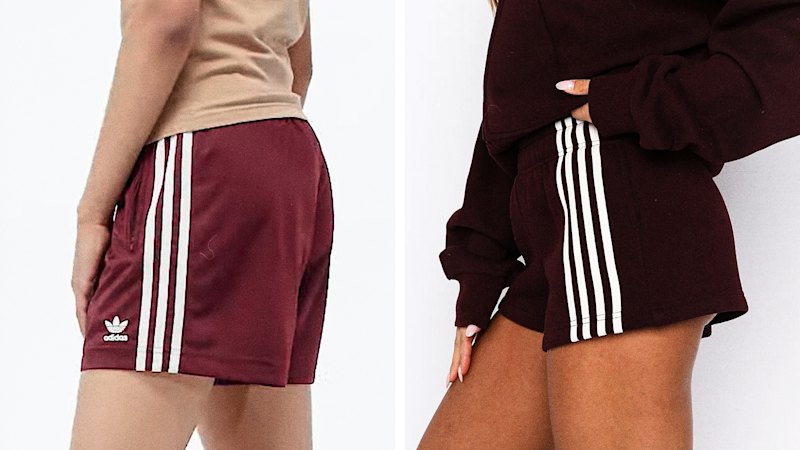
Four white stripes: that’s what Adidas is suing Australian fast fashion player White Fox over.
Early next year, the German sportswear giant will argue in Federal Court that White Fox’s use of four stripes on its clothing is “substantially identical with or otherwise deceptively similar” to Adidas’ three parallel, equidistant stripes, which it has made a distinctive and trademarked feature of its clothing and shoes around the world for 75 years, and in Australia for 65.
Adidas’ argument is built on a few parts: that White Fox used the stripes as a trademark; that the four stripes are “substantially identical with or otherwise deceptively similar” to its own; that White Fox took advantage of Adidas’ reputation and broke consumer law by passing off its products as Adidas’.
In its own court filings, Adidas conceded there’s nothing stopping other brands from using one or two stripes – but “there’s nothing in the registration about four,” said University of New South Wales intellectual property and trademark professor, Michael Handler.
“What we’re seeing against White Fox is consistent with their pattern of enforcement: where they see someone using four stripes, they will take action.”
Adidas has been proactively trying to quash other brands’ attempts to use four stripes in their designs across the world.
In 2013, the German sportswear brand took Australian company Pacific Brands Footwear to court over a four-stripe design on budget athletic shoes, to mixed success. The judge ultimately ruled that shoes where the four stripes were parallel and equidistant were indeed deceptively similar to Adidas’ trademark, while shoes where stripes were broken up – two stripes and another two, with a wider gap in the middle – did not infringe.
Then in 2021, Adidas sued luxury designer Thom Browne for using a four-stripe detailing in his high-end collections after Adidas objected to a three-stripe design in the mid-2000s. Two years later, a Manhattan federal jury ultimately ruled in Browne’s favour and found there was likely zero confusion in the consumer’s mind.
“Adidas are going to fight like demented wolverines to keep these three stripes,” said trademarks and patent attorney Simon Kneebone. “But the question is: does the three stripes stop people using four or five stripes?”
White Fox, which is yet to file a defence but has engaged law firm Gilbert + Tobin, has so far defied legal letters from Adidas’ lawyers and continued selling tracksuit pants and shorts of varying colours with the “impugned signs”.
For Adidas to claim infringement, it will have to prove White Fox used four stripes as a trademark. But the company will argue that it is using the stripes merely as decoration.
Adidas faces a potential hurdle in that stripes, unlike Nike’s ‘Swoosh’ tick and Apple’s minimalist logo, are “not terribly distinctive trademarks in themselves,” Kneebone.
The evidence Adidas provides in court – consumer surveys, for instance – will be crucial in demonstrating how consumers actually perceive the product, said both Kneebone and Handler.
“Is there a tangible risk, danger or deception of confusion, of people thinking there’s a connection between those shorts and the Adidas shorts? That’s the question the courts are going to have to answer,” Kneebone said.
Shoppers tend to know what they’re looking for, he said. “If I want to buy an Adidas shirt, I’m not going to buy a White Fox shirt with four stripes and think I’m wearing an Adidas shirt.”
‘Sailing close to the wind’
Part of Adidas’ argument lies in an Instagram post made by a White Fox “student ambassador” wearing a White Fox maroon hoodie and shorts set – but styled with genuine Adidas Sambas.
Adidas is arguing this amounts to misleading or deceptive conduct as consumers may draw an association between the two brands, or confuse the two.
“Even in the absence of a logo, a consumer might interpret it as Adidas’ product because of the designs being close,” said consumer behaviour researcher and University of NSW professor Nitika Garg.
White Fox advertised the offending items of clothing on buses and bus stops, and continue to sell them online. One listing saw pink and white socks styled with pink Adidas shoes that had been digitally altered to remove one or all stripes, Adidas stated in court documents.
Had White Fox used four lines in a different part of the garment, or horizontally instead of vertical lines at the seam, for instance, the reasonable consumer might not be confused, Garg continued.
White Fox has continued to sell four-striped shorts or sweatpants in maroon, light blue, grey, white, black, and even animal print, each of which bears striking resemblance to Adidas’ own maroon, light blue, grey, white, black, and snake print products.
“It definitely seems like a deliberate strategy to have that halo effect of Adidas rub off onto White Fox’ products,” said Garg.
“It seems to be a case where the smaller brand is trying to be a little naughty and use strategies which are skimming the legal lines, with the full knowledge that look, this is going to be construed in a certain way.”
White Fox and Adidas’ legal representatives declined requests for comment. A case hearing for the matter has been listed for early 2027.
The Business Briefing newsletter delivers major stories, exclusive coverage and expert opinion. Sign up to get it every weekday morning.

KioskNews shows a cleaned-up reading view extracted from the publisher’s page — the original always lives on their site, not ours.