Many K-9 dogs are now too old for duty. Can the PNP train new ones fast enough?
Already have Rappler+?
to listen to groundbreaking journalism.
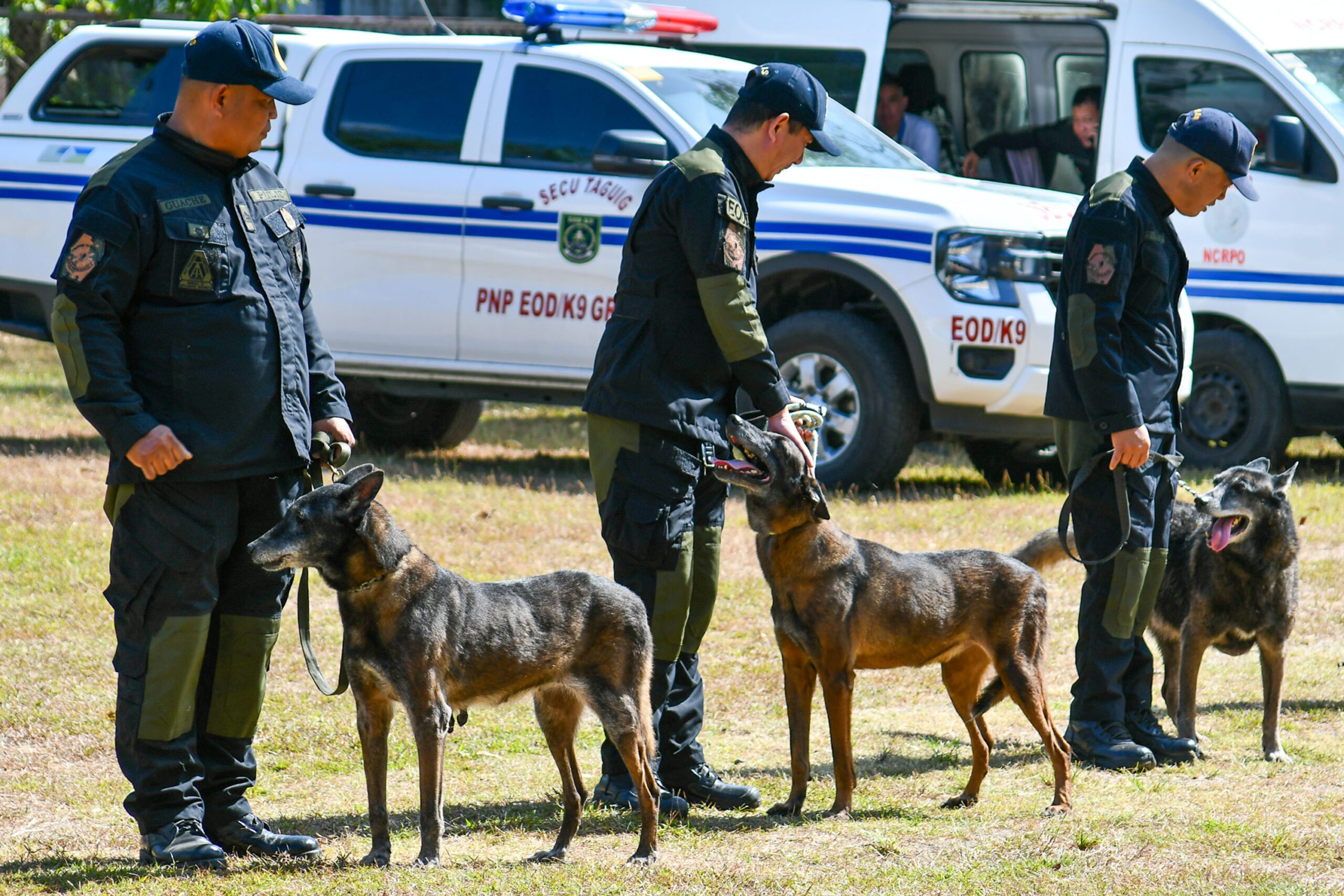
Members of the Philippine National Police–Explosive Ordnance Disposal and Canine (EOD/K9) Unit line up with their handlers at Camp Bagong Diwa in Taguig City on March 10, 2026. A total of 26 explosive detection dogs that served in the police force for around eight years are set to retire and will be available for adoption to qualified individuals. Interested adopters who can provide proper care and a suitable home for the retired service dogs may contact PMSgt Manny Molina at 0946-409-0044 for details on the screening and adoption process.
Rappler
Only 347 out of the required number of 510 police service dogs remain active, with even more set to retire by the end of 2026
AT A GLANCE
- The Philippine National Police's K-9 units are crucial for detecting bombs and hazardous materials, but there is a significant shortage of active service dogs.
- Currently, only 347 out of the ideal 510 police service dog slots are filled, with some units, like protection and security patrol, having no dogs available.
- The Commission on Audit warns that the ongoing shortage and delays in training new dogs could hinder the PNP's ability to perform its essential functions.
This is AI-generated. Read the article for full context. Report any errors.
MANILA, Philippines – If you’ve seen a police dog on duty lately, you’ve likely come across one of the few ones left in active service.
Dogs are the stars of the Philippine National Police’s Explosive Ordnance Disposal (EOD) and Canine Group — using their sniffing superpowers to catch subtleties on the scene that their human counterparts may miss.
K-9 dogs are most commonly deployed to detect bombs and any chemical, biological, radiological, or nuclear hazards. By the National Police Commission’s (NAPOLCOM) standards, there should be at least 310 dogs of this type.
There should also be at least 80 dogs assigned to sniff around for narcotics and illegal substances. Meanwhile, units like search-and-rescue, combat-tracking, and protection and security patrol should get 40 dogs each.
Clearly, these furry heroes play an important role in the safety of Filipinos, but as of late, there are no longer enough of them due to old age.
The Commission on Audit’s (COA) report on the PNP on Wednesday, October 28, found that only 347 of the ideal 510 police service dog slots remain filled across all five specializations.
Most alarming is the protection and security patrol unit, which no longer has any dogs at all to deploy.
It doesn’t stop there. COA stated that 19 more dogs are set to retire by the end of the year, with a whopping 285 more projected to hang up their gears for good come 2030.
While the PNP’s EOD and Canine Group has already gathered a new batch of 148 trainable dogs, they have yet to actually be prepared for service as the PNP has to adjust its testing parameters.
COA warned that the severe shortage of active police service dogs would affect the PNP unit’s ability to fulfill its mandated functions. But with delays in training new canine recruits, can the PNP fill all 510 slots in time? – Rappler.com
KioskNews shows a cleaned-up reading view extracted from the publisher’s page — the original always lives on their site, not ours.