Netanyahu's UNGA speech pushed Israel's military prowess over its desire for peace - editorial
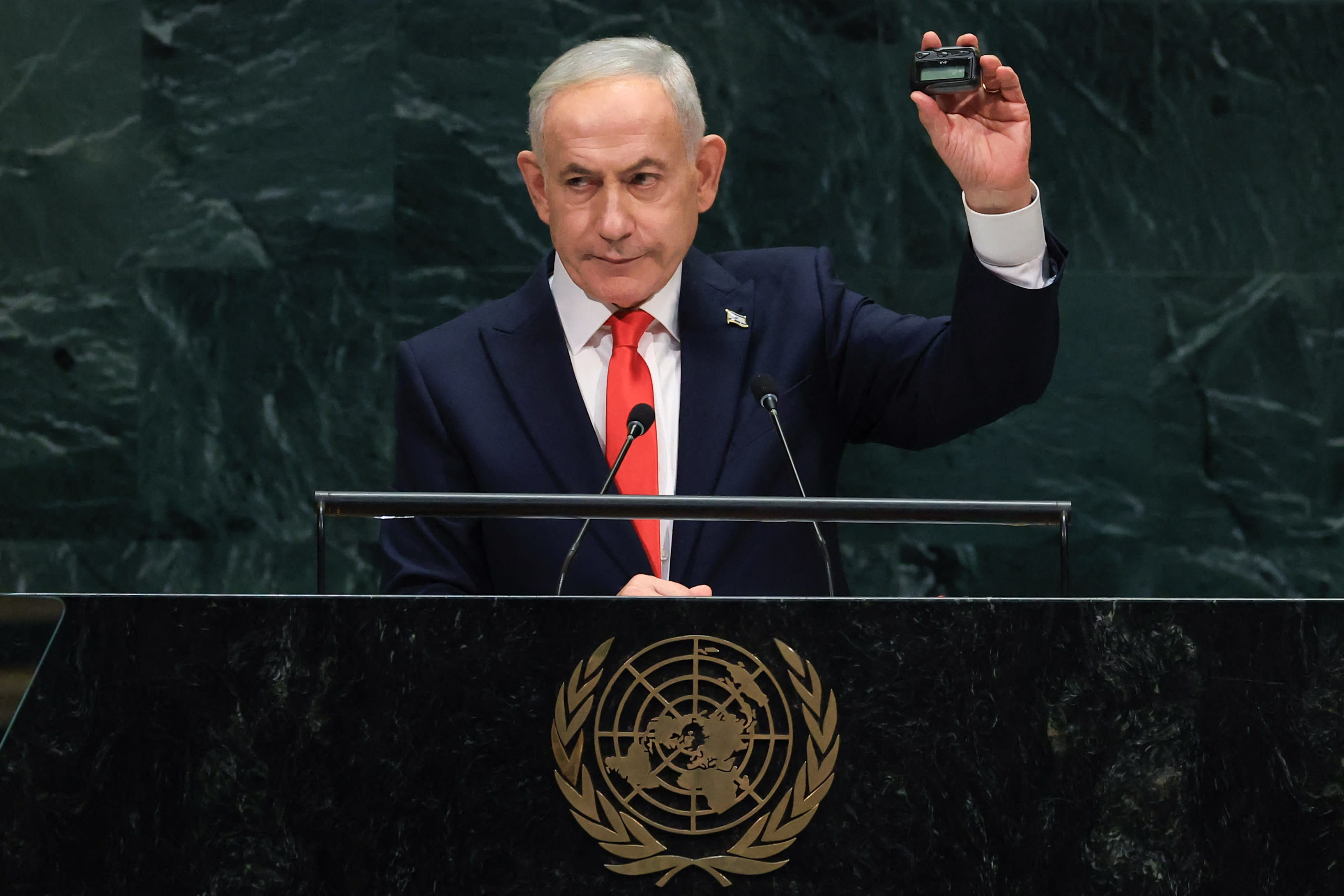
Might Netanyahu not have found room for another prop besides a bee that could begin rebranding Israel not only as a formidable war machine, but also as a country dedicated to peace?
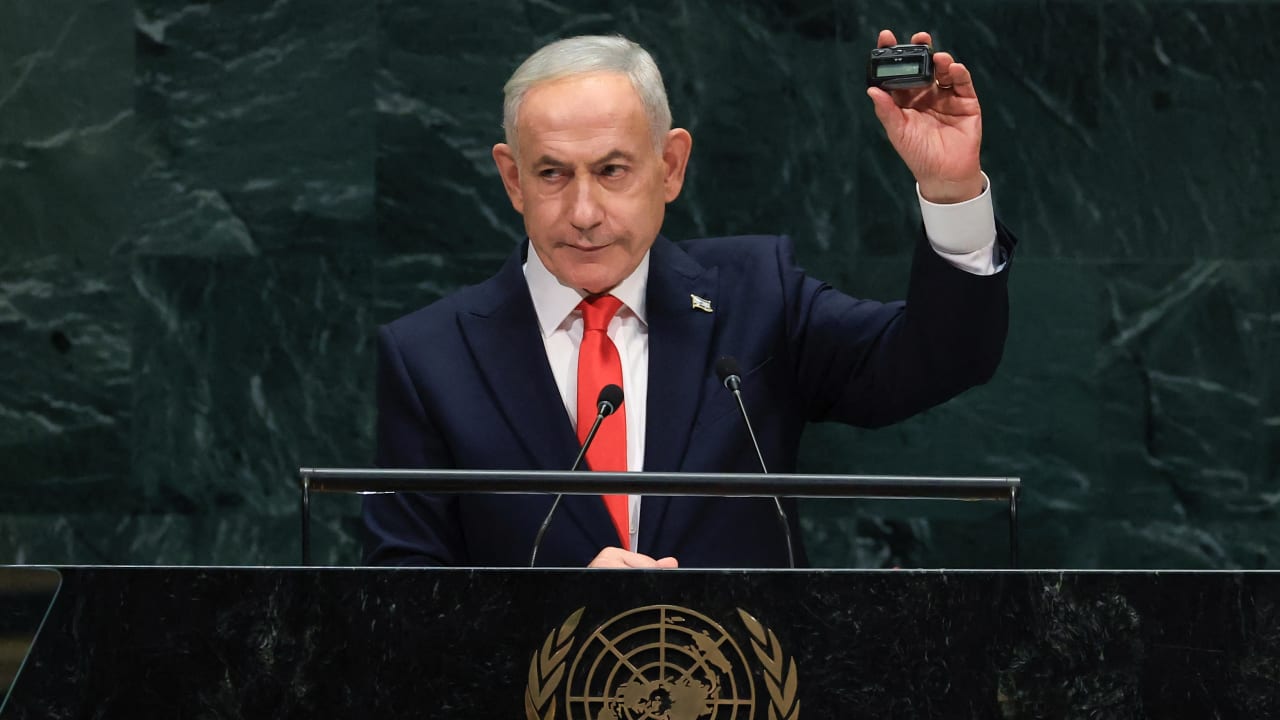
Prime Minister Benjamin Netanyahu channeled his inner Golda Meir in his Thursday speech to the United Nations General Assembly in New York City.
He began with a story about visiting his brother Yonatan shortly before the Six-Day War. Netanyahu asked whether Israel would win. His older brother replied that it would because it had no choice.
That theme – Israel fighting because it has no choice – ran throughout Netanyahu’s 40-minute speech.
And what does that have to do with Golda?
One of the stock stories that former United States president Joe Biden recounted innumerable times was about meeting an unfazed Golda shortly before the Yom Kippur War. After hearing her describe the threats facing Israel, Biden asked why she seemed so unconcerned.
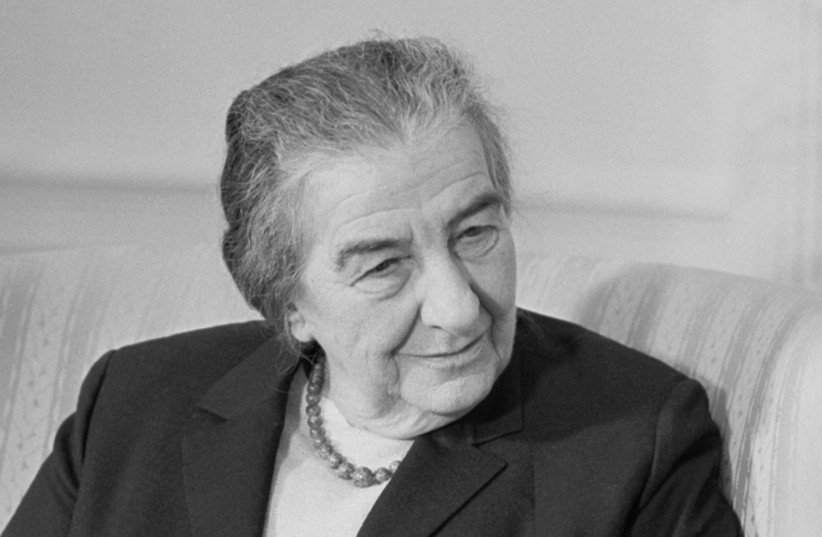
Israel, she told him, had a secret weapon: “We have nowhere else to go.”
Both Yonatan and Golda’s statements remain true, and it is worth reminding the world that on occasion, Israel will fight because it must – because it has no other choice and no place else to go.
But that was only one part of Golda. There was another part as well, one Netanyahu did not channel in his speech, but would have done well to.
The Golda of Sparta vs the Golda that humanizes Israel
There is another Golda, the one who famously said: Israel can forgive the Arabs for killing its sons but can never forgive them for forcing it to kill theirs.
Whether one agrees is immaterial. This line presents an empathetic Israel, one that regrets the destruction it must inflict on those seeking its elimination. It humanizes Israel.
Yet the Golda that Netanyahu opted to channel was the Golda of Sparta.
The Golda that he left out was the Golda of Athens, the one who expended extensive effort in diplomacy.
Right now, it is the Spartan image of Israel that is losing support around the world. The UN provided Netanyahu with a tremendous opportunity to highlight the country’s Athenian side as well.
That doesn’t mean downplaying Israel’s need to fight and win or ignoring the world’s blind hatred and staggering hypocrisy – two elements that dominated Netanyahu’s speech.
It means complementing that message with some vision of the better future Israel wants.
That future may not arrive tomorrow, next year, or even in the next generation. But Israel must offer some horizon – explaining not only what it is fighting against but what it is fighting for.
It is clear why Netanyahu showcased the Israel of Sparta. His primary audience was an Israeli public tired of being the world’s punching bag and of being libeled as child killers and perpetrators of genocide.
Netanyahu pushed back, calling out some of the most egregious offenders by name: Qatar, French President Emmanuel Macron, Turkish President Recep Tayyip Erdogan, and New York City Mayor Zohran Mamdani.
He took them on with characteristic confidence and rhetorical force. For many Israelis, that was satisfying.
But Israelis were not the only audience listening.
Israel losing American public support
Israel has precipitously lost public support in the US. Powerful cultural, demographic, and political forces in America are at work that Israel cannot change.
What it can change, however, is the perception that it is merely a modern-day Sparta.
Israel can demonstrate that its softer side exists and has always longed for peace – the Israel not jubilant over its constant need to fight and defend itself but genuinely anguished by it.
Like previous Netanyahu UN speeches, this one, too, had props. He held up a Starlink satellite internet dish to illustrate Iran’s repression, as well as a beeper similar to those that exploded in the possession of Hezbollah terrorists in 2024.
The beeper plays well in Israel. It elicits pride in the country’s ingenuity, daring, and ability to strike its enemies in ways they never anticipated.
But is that the only image Israel wants the American public to carry away?
Might Netanyahu not have found room for another prop, image, or passage that could begin rebranding Israel not only as a formidable war machine – which it must be to survive – but also as a country dedicated to peace?
Israel must be capable of being Sparta. The world it lives in has given it little choice. But Israel is not only Sparta, and it does itself no favors by presenting itself solely that way.
Netanyahu’s speech explained forcefully why Israel must fight. What it failed to convey – and what Israel must begin conveying – was the future it hopes that this fighting will ultimately make possible.
KioskNews shows a cleaned-up reading view extracted from the publisher’s page — the original always lives on their site, not ours.