10 Books That Are a Masterclass in Hard Sci-Fi Writing

Luc Haasbroek is a writer and videographer from Durban, South Africa. He has been writing professionally about pop culture for eight years. Luc's areas of interest are broad: he's just as passionate about psychology and history as he is about movies and TV. He's especially drawn to the places where these topics overlap.
Luc is also an avid producer of video essays and looks forward to expanding his writing career. When not writing, he can be found hiking, playing Dungeons & Dragons, hanging out with his cats, and doing deep dives on whatever topic happens to have captured his interest that week.
Sign in to your Collider account
Hard sci-fi refers to the subgenre that leans into scientific accuracy. These stories typically strive to be at least theoretically plausible, grounded in genuine concepts and real-world physics. In other words, their speculative elements come with limits and technical details, rather than working like pure magic (as the Force pretty much does in Star Wars).
With that in mind, this list looks at the very best hard sci-fi books, from foundational 1950s classics to modern 2010s gems. Rather than treating science as window dressing, the titles make it fundamental to the plot without sacrificing any entertainment value or philosophical inquiry, resulting in some of the most thoughtful and rewarding entries into the genre.
'Blindsight' (2006)
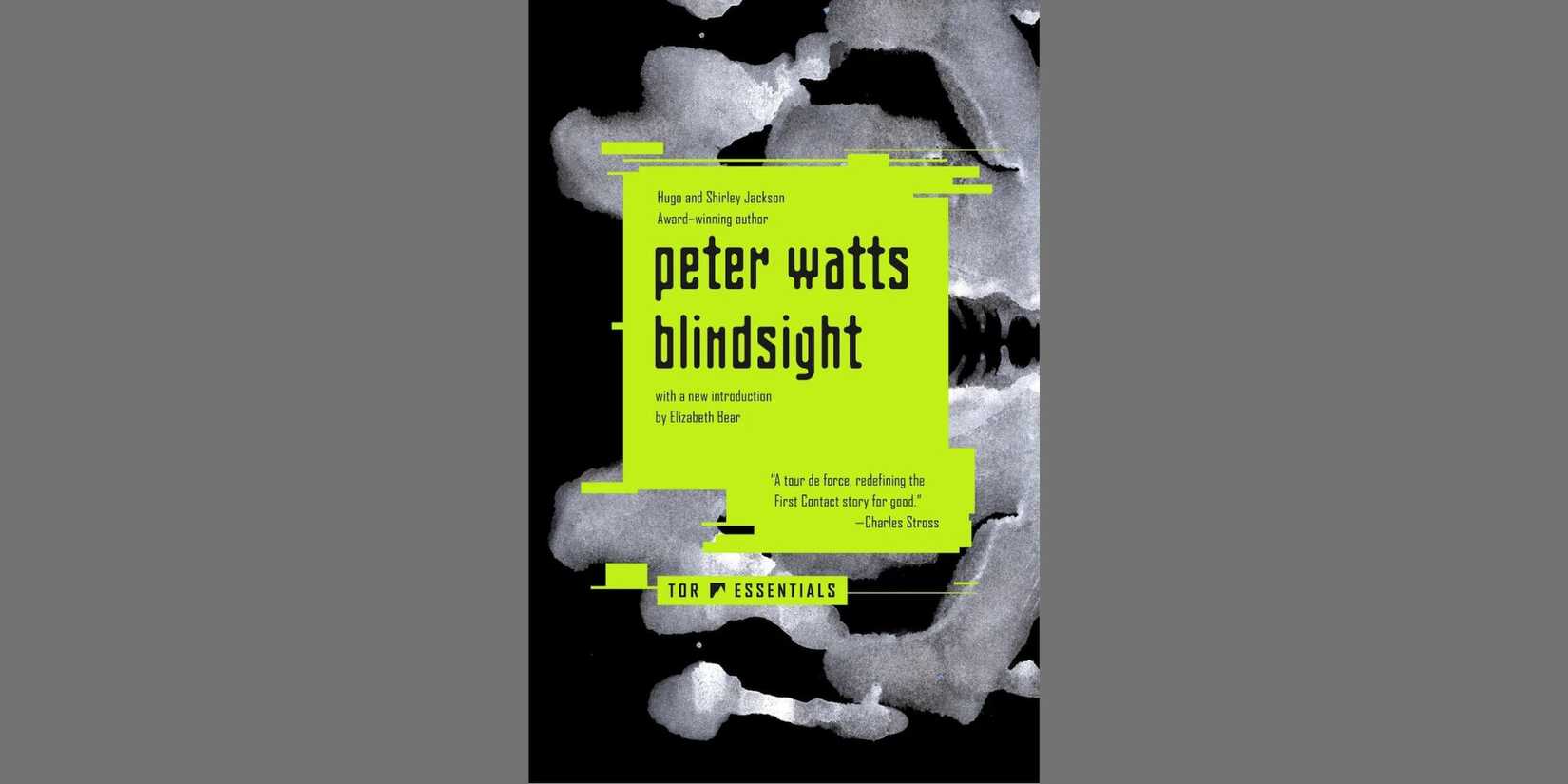
“Imagine you are Siri Keeton.” This is a meticulous, rigorous, borderline cosmic horror story with a lot to say about the nature of consciousness. Set in the late 21st century, Blindsight follows Siri Keeton and the crew of the Theseus (one of whom happens to be a vampire) as they investigate an alien presence at the edge of the Solar System. Nicknamed "Scramblers," these extraterrestrials are super-smart and hyper-advanced but have absolutely zero self-awareness or inner monologue.
In other words, these aliens lack the kind of conscious experience we normally associate with intelligence, throwing all the characters' assumptions into disarray. Worse still, their success and frightening machinery suggest that human individuality and subjectivity may just be a flaw, an evolutionary misstep rendering us helpless in the face of superior alien threats. Author Peter Watts, a marine biologist by training, supports these bleak themes with ideas drawn from neuroscience and evolutionary biology.
'Red Mars' (1992)

“That's one small step for a man, one giant leap for mankind.” Ranking among the finest hard sci-fi of the 1990s, Red Mars (the first installment in a trilogy) approaches the colonization of Mars as an enormous scientific, technological, environmental, and political project. In it, we follow the first hundred permanent settlers sent to the red planet Mars in 2026 (lol). There, they face a host of potentially deadly practical problems, from habitat construction to planetary geology and even genetic engineering.
As if that weren't tricky enough, the usual human foibles also rear their head: politics, factionalism, clashing beliefs, the lust for power, fear, division, animosity. Tribalism and ethical debates become major stumbling blocks. In the end, the colonists themselves pose as much of a threat to their mission as the toxic atmosphere surrounding them, and all the major characters are given psychological depth and contradictions.
'Rendezvous with Rama' (1973)

“Sooner or later, it was bound to happen.” One of the defining books by genre legend Arthur C. Clarke. In Rendezvous with Rama, astronomers detect an enormous cylindrical object passing through the Solar System, but it's no asteroid. A nearby spacecraft is dispatched to investigate, giving its crew only a limited amount of time to explore the mysterious object before its trajectory carries it beyond their reach. What follows is essentially one enormous scientific mystery.
Clarke resists the temptation to fill Rama with conventional villains or constant action sequences. Instead, suspense comes from observation. The book gives us one mind-bending sight after another. The explorers measure the object's dimensions, contend with its unusual gravity, study its internal structures, and gradually attempt to deduce why it exists, but the cylinder resists them. Here, Clarke tells us some cosmic answers will forever remain tantalizingly out of reach.
'Seveneves' (2015)

“The moon blew up without warning and for no apparent reason.” Seveneves opens with the Moon suddenly shattering into pieces, a firecracker of a prologue if there ever was one. The book then spends much of the next several hundred pages exploring the terrifying consequences. Scientists soon determine that collisions between the fragments will create an exponentially worsening cascade, eventually bombarding Earth with debris and making its surface uninhabitable.
Humanity therefore faces an engineering problem on a civilization-ending scale: somehow establish a viable population in space before time runs out. Author Neal Stephenson (probably most well-known for writing Snow Crash) gets granular with the technical details. Crucially, rather than inventing speculative sci-fi concepts, he relies on real-world theories. Seveneves digs enthusiastically into orbital mechanics, spacecraft design, robotics, resource limitations, genetics, and the generally brutal logistical problems of keeping human beings alive outside Earth.
'Project Hail Mary' (2021)

“What's two plus two?” Project Hail Mary broke into the mainstream this year thanks to the fun movie adaptation, yet the book is worth reading even if you've seen the film. It's even "harder," in a good way, showing how techy, detail-oriented sci-fi can be entertaining rather than intimidating. In the book, our protagonist Ryland Grace wakes aboard a spacecraft, soon learning that Earth faces a catastrophic threat from an extraterrestrial microorganism that is draining energy from the Sun.
From here, he must contend with an endless stream of scientific puzzles across almost every conceivable domain: biology, chemistry, physics, astronomy, and engineering. In this, the book has strong parallels with author Andy Weir's breakout novel The Martian. Most of the fun comes from watching Ryland attempt to MacGyver his way out of a tight spot. In the second half, his heartwarming dynamic with the alien Rocky adds another satisfying, more emotional element to the tale.

“For small creatures such as we, the vastness is bearable only through love.” Although primarily known for nonfiction and science education, Carl Sagan also penned one of the very best first-contact stories ever. Contact centers on radio astronomer Ellie Arroway, who discovers an unmistakably artificial transmission arrives from Vega. Instead of green-skinned aliens or killer tripods, we get extraterrestrial messages within layers of information.
What follows is as much about the scientific process as the discovery itself. The signal must be verified, decoded, debated, and understood, while governments, scientists, religious groups, and ordinary people react to evidence that humanity is no longer alone. In the process, Contact becomes deeply philosophical, occasionally veering into speculative territory but always staying committed to rationality. Sagan was brilliant at communicating big scientific concepts, and here he repeatedly turns astronomy and physics into sources of genuine awe.
Collider Exclusive · Sci-Fi Personality Quiz Which Sci-Fi Hero Are You Most Like? Paul Atreides · Captain Kirk · Princess Leia · Ellen Ripley · Max Rockatansky
Five iconic heroes. Five completely different ways of facing an impossible universe. One of them shares your instincts, your values, and your particular way of refusing to back down. Eight questions will tell you which one.
🏜️Paul Atreides
🖖Capt. Kirk
✊Princess Leia
🔦Ellen Ripley
🔥Max Rockatansky
01
How do you lead when the stakes couldn't be higher? The way you lead under pressure is the most honest thing about you.
02
What is your greatest strength in a crisis? The quality that keeps you alive when everything else fails.
03
What is the thing you'd sacrifice everything else for? Your deepest motivation is your truest compass.
04
How do you relate to the people around you? Who you are to others under pressure is who you really are.
05
You're facing a threat that no one else believes is real. What do you do? How you respond when you're the only one who sees it defines everything.
06
What has your heroism cost you personally? Every hero pays. The question is what — and whether they'd pay it again.
07
How do you feel about the rules of the world you're in? Every hero has a relationship with the system. What's yours?
08
When everything is on the line, what keeps you going? The answer is the most honest thing about you.
Your Hero Has Been Identified Your Sci-Fi Hero Is…
Your answers point to the iconic sci-fi hero who shares your instincts, your values, and your particular way of facing the impossible.
Paul Atreides
You carry a weight most people would crumble under — the knowledge of what you're capable of, and the burden of what you might have to become.
- You see further ahead than others and you plan accordingly, even when the vision frightens you.
- You are driven by loyalty to your people and a sense of destiny you didn't ask for but can't escape.
- Paul Atreides is not simply a hero — he is someone who understands the cost of power and chooses to bear it anyway.
- That gravity, that willingness to carry what others won't, is exactly you.
Captain Kirk
You lead with instinct, warmth, and an absolute refusal to accept a no-win scenario — because you've always believed there's a third option nobody else has thought of yet.
- You take the mission seriously without ever taking yourself too seriously.
- Your crew would follow you anywhere, not because you demand it, but because you've earned it.
- Kirk's genius isn't tactical — it's human. He reads people, bends rules with purpose, and wills outcomes into existence through sheer conviction.
- That combination of warmth, audacity, and relentless optimism is unmistakably yours.
Princess Leia
You are the kind of person who holds the line when everyone else is losing faith — not because you're fearless, but because giving up simply isn't something you're capable of.
- You lead through conviction. Your voice carries because your belief is unshakeable.
- You gave up everything ordinary the moment you chose the cause, and you've never looked back.
- Leia is not a supporting character in her own story — she is the moral centre of the entire rebellion.
- That same fierce, principled, unbreakable core is what defines you.
Ellen Ripley
You are not reckless, not grandiose, and not particularly interested in being anyone's hero — you just refuse to stop when it matters.
- You see threats clearly, you document the truth even when no one listens, and when the time comes you handle it yourself.
- Ripley's heroism is earned, not performed. She doesn't have a speech — she has a flamethrower and a plan.
- You share her composure under the worst possible pressure, and her refusal to pretend the monster isn't there.
- When it counts, you don't flinch. That's everything.
Max Rockatansky
You have been through fire that would break most people — and what came out the other side is something the world underestimates at its peril.
- You don't ask for help, don't need validation, and don't wait for anyone to tell you the rules no longer apply.
- Your loyalty, when it finally arrives, is absolute — but it's earned in silence and tested in action, not in words.
- Max is not a nihilist. He is someone who lost everything and found, against his will, that he still has something worth protecting.
- That bruised, stubborn, ultimately human core is exactly yours.
'Foundation' (1951)
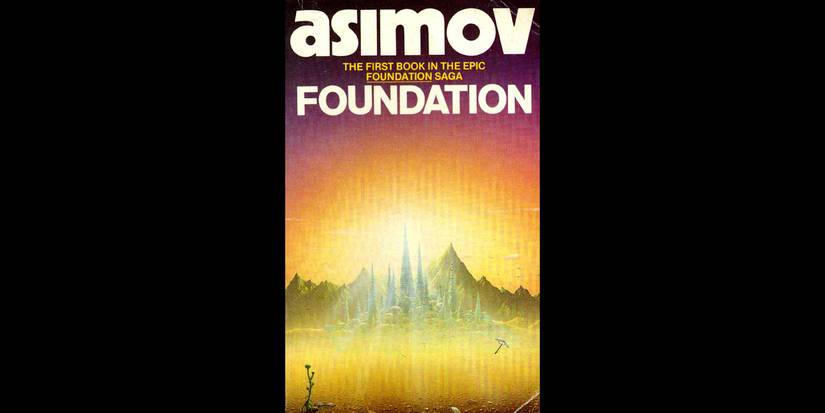
“Violence is the last refuge of the incompetent.” Here we have another cornerstone of the whole genre. Foundation revolves around the concept of psychohistory, a mathematical discipline supposedly capable of predicting the behavior of enormous populations. Using this method, mathematician Hari Seldon calculates that the Galactic Empire is approaching an unavoidable collapse that will plunge humanity into 30,000 years of barbarism. He can't prevent the collapse, but he can reduce the interregnum to just 1,000 years by establishing the Foundation.
From there, Foundation becomes a succession of intellectual problems. Its protagonists rarely triumph because they're the strongest people in the room; instead, they win by understanding economics, technology, politics, demographics, and the larger historical forces acting upon civilizations. That emphasis gives the book a distinctively analytical character, one that influenced not just future sci-fi writers but also scientists and tech entrepreneurs.
'The Three-Body Problem' (2006)

“Physics has never existed, and will never exist.” Probably the strongest work of hard sci-fi published in the 2000s, and now the basis for a solid TV show, as well. The Three-Body Problem begins with the trauma of China's Cultural Revolution before expanding outward into an ambitious first-contact story. Here, humanity learns of an alien civilization inhabiting the chaotic three-star system of Alpha Centauri, where the notoriously difficult three-body problem has existential consequences.
To help with the suspension of disbelief, author Liu Cixin incorporates astronomy, theoretical physics, nanotechnology, string theory, quantum entanglement, and countless other cutting-edge concepts into the plot, handling all of it in a way that feels plausible. Among the most memorable of these ideas is the Sophon, a single proton that has been unfolded from eleven dimensions down to two dimensions, used by the aliens as a kind of supercomputer. Heady but compelling stuff.
'The Andromeda Strain' (1969)

“The survival value of human intelligence has never been satisfactorily demonstrated.” The Andromeda Strain is the book that put Michael Crichton on the map and established the blueprint for the scientifically grounded techno-thriller. The plot kicks into gear after a military satellite crashes near a small Arizona town, and nearly everyone in the area suddenly dies. Scientists soon discover that the satellite has brought something back from space, forcing an elite team into an underground laboratory to determine what it is before the situation becomes catastrophic.
In contrast to most sci-fi that had come before, Crichton presents the investigation with almost documentary-like precision. The researchers work through hypotheses, conduct tests, interpret contradictory evidence, and repeatedly find that their assumptions are incomplete. Crichton also manages to make the pathogen feel believable but still profoundly alien. For instance, it's non-carbon-based, contains no DNA or RNA, and replicates by directly converting matter into more of itself.
'The Moon Is a Harsh Mistress' (1966)

“There ain't no such thing as a free lunch.” This is one of the strongest books by Robert A. Heinlein, the massively influential writer behind the likes of Starship Troopers and Stranger in a Strange Land. The Moon Is a Harsh Mistress imagines a lunar colony populated largely by descendants of transported prisoners. However, discord and rebellion begin to simmer when the moon-born population realizes that Earth depends upon their resources far more than the Moon depends upon Earth's authority.
Amid all the revolutionary tumult, we focus on lunar technician Manuel Garcia O'Kelly, who becomes involved with a self-aware supercomputer named Mike. Some of the best hard sci-fi elements come through in the implications of spending extended periods of time on the Moon. For instance, it has one-sixth of Earth's gravity, meaning that, within a year, your bone density drops. and if you ever return to Earth, your skeleton will shatter. Hardcore stuff.
KioskNews shows a cleaned-up reading view extracted from the publisher’s page — the original always lives on their site, not ours.