Taiwan study shows ongoing natural selection shaping disease susceptibility
A study by researchers at National Yang Ming Chiao Tung University (NYCU) has documented ongoing natural selection shaping disease susceptibility among Taiwan’s contemporary population.
The study analyzed genetic data from 72,635 Han Taiwanese individuals using the Taiwan Biobank, a national biomedical research database, NYCU said in a news release issued Tuesday.
By comparing frequencies of genetic variants (known as allele frequency) across different age groups, the team identified 168 variants that appeared to be undergoing natural selection, including 159 variants that showed a gradual decline or disappearance across generations, the university said.
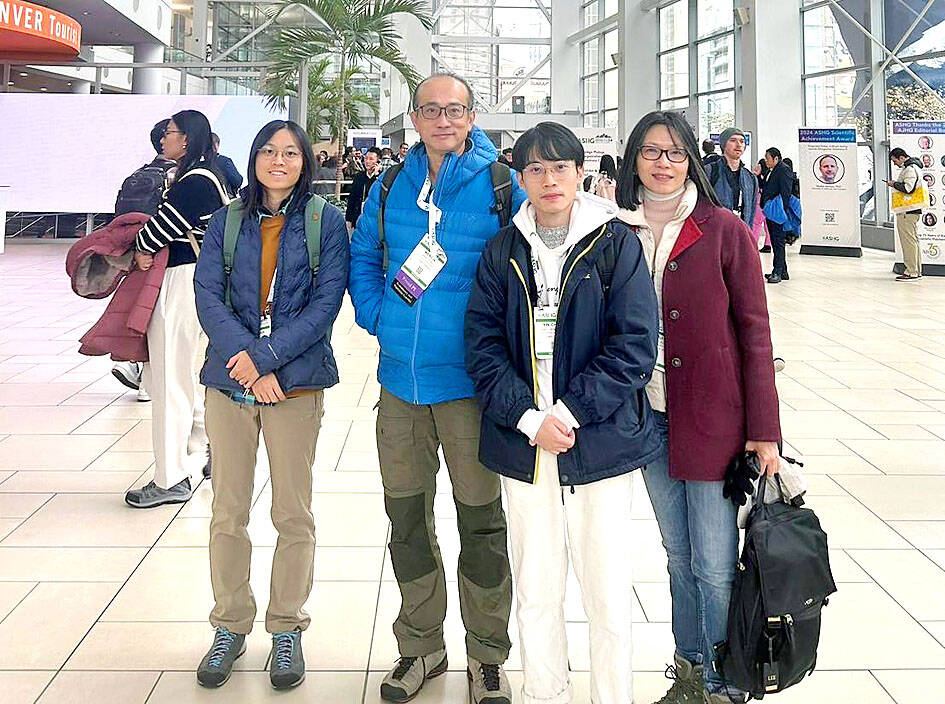
Researchers at National Yang Ming Chiao Tung University (NYCU) pose in an undated photo. The research team has documented ongoing natural selection shaping disease susceptibility among Taiwan’s contemporary population.
Photo courtesy of NYCU
Researchers noted a "consistent signal" involving red blood cell traits, with 149 variants that were decreasing in frequency among younger age groups associated with larger red blood cell volume and lower hemoglobin concentration, NYCU said.
Such a consistent pattern, it said, suggested that natural selection was progressively reducing the prevalence of genetic variants associated with larger red blood cell volume.
Researchers hypothesized that this trend was related to historical adaptation to infectious diseases like malaria, which was widespread in Taiwan until about 60 years ago.
This type of natural selection, in which genetic variations detrimental to survival are gradually removed over successive generations, is known as "purifying selection," NYCU said.
Meanwhile, the team also identified traces of natural selection in genes related to DNA repair and cancer, according to the press release.
One of these, a BRCA1 haplotype carrying multiple pathogenic (disease-causing) variants, was found to be decreasing in frequency among younger generations, NYCU said.
Knowledge of such rare and population-specific pathogenic variants could bring benefits in areas such as disease risk assessment and precision medicine, it added.
The study was led by Ko Wen-ya (可文亞), associate professor in NYCU’s Department of Life Sciences and Institute of Genome Sciences, in collaboration with Yoko Satta of the Graduate University of Advanced Studies in Japan.
It was published in the American Journal of Human Genetics in July.
KioskNews shows a cleaned-up reading view extracted from the publisher’s page — the original always lives on their site, not ours.