What Australia could learn from its Southeast Asian neighbours about power and the changing global order
Successive Australian governments have reacted with alarm at China’s influence-building activities in Southeast Asia and the Pacific. They have passed foreign interference laws, tightened foreign investment regulations, and regulated university collaborations with institutions overseas.
They have executed a Pacific Step-Up and a plan for greater trade and investment with Southeast Asia.
And they have tightened security partnerships with the United States, aligning closely with the US strategy of balancing, deterring and containing China. Australia’s two major foreign policy initiatives of the past decade – AUKUS and the Quad – are intended to implement these strategies.
But as I noted in my Quarterly Essay earlier this year, there’s a paradox bedevilling Australian foreign policy. Our closest neighbours in Southeast Asia have reacted to China’s growing power and influence in very different ways to how Australia expects they should react.
While polling data and research shows many people in Southeast Asia worry about China’s growing influence and distrust its intentions, their governments have shown no interest in joining a coalition against China.
This represents a profound challenge to the way Australian policymakers understand the world.
A hedging strategy
In the realist school of foreign policy, a collection of small, relatively weak states facing a rising and threatening great power would be expected to react decisively.
This means Southeast Asian nations should be responding to the rise of China in one of two ways. The first is aligning with Beijing in the expectation that benefits will flow to China’s allies. The alternative is looking to “balance” China’s power by joining a countervailing coalition of nations.
However, Southeast Asian countries have done neither. Instead, they have elected to hedge. They are engaging China while simultaneously building closer links with a range of other powers, namely the US, Japan, India and Russia.
This has resulted in the most significant strategic divergence between Australia and its closest neighbours in how to deal with China’s rise – the most profound challenge to regional order since the second world war.
Understanding the roots of this divergence, and its implications, will be one of Australia’s more urgent priorities in the near future.
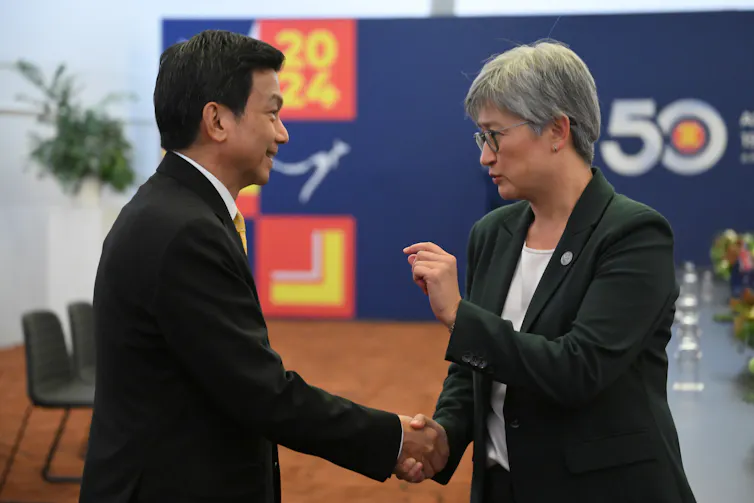
How Australia sees the world
As a mid-sized, free-trading, developed democracy, Australia is a strong supporter and beneficiary of the post-second world war international order. This order is based on:
- the sovereign equality of states
- healthy and authoritative multilateral institutions
- open and rules-based trade and investment
- universal and binding international law.
Australia has traditionally seen this order as part of the evolution away from the power- and conflict-driven decades of the early 20th century.
Australians have also viewed international power through a moral lens. When the most powerful country in the world shares and upholds the values Australia believes in – as has been the case since the arrival of the First Fleet in 1788 – power is an inherently moral force.
When this power is wielded by states that do not share, or actively oppose the values Australia believes in, it is seen as inherently dangerous and immoral.
As a result, Australia’s strategic policy is animated by a consistent urge to help uphold moral power against the challenges of immoral power.
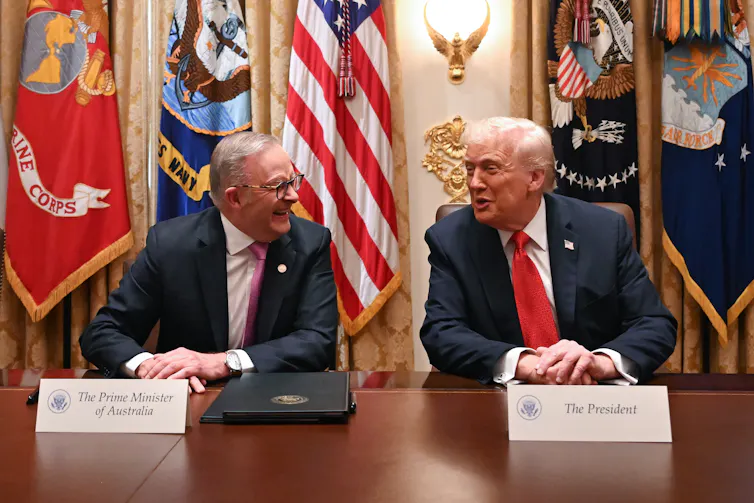
The key dilemma for Australian policymakers is when this moral power acts against the international rules and order.
The consistent choices they have made in these situations tell us much about Australia’s “strategic imaginary”. This is the set of implicit understandings about how the world works and where a country fits into that world.
In supporting NATO’s bombing of Serbia in the late 1990s, the US-led invasion of Iraq in 2003, the NATO-led military intervention in Libya in 2011, and the recent US balancing against China, Australia’s leaders are making a clear judgement: the long-term preservation of America’s inherently moral strategic primacy is more important than the short-term morality of its actions.
Australia’s strategic imaginary mandates that it must – by its words and actions – ensure the US prevails, even if it can see the immediate damage the US is doing to the international order it supports.
How it differs from Southeast Asia
This all shapes which countries Australia looks to for guidance and solidarity as it navigates global affairs.
Australian diplomats and policymakers constantly refer to “like-minded” nations that share similar strategic imaginaries and support for the post-second world war order. These include the United Kingdom, western European states, New Zealand, Canada and Japan.
The strategic imaginaries of Southeast Asian countries, however, are very different.
Of course, this region is made up of countries of varying size, composition, wealth and type of government. Despite these differences, however, I would argue these states have relatively aligned strategic imaginaries arising from their common location, colonial and post-colonial histories, and record of regional solidarity.
In their journeys toward nation-building and development, these nations have had to be entrepreneurial and pragmatic. They’ve had to adopt political and economic strategies that work, rather than prioritise universal philosophical principles.
Southeast Asian nations also have a more ambivalent attitude to the post-second world war international order. It was created by countries that colonised them; they had no role in its development. Despite this, all will admit that, by and large, it has been conducive to their nation-building objectives.
What these countries object to is the US or other Western nations trying to impose their human rights and neoliberal economic principles on them.
Southeast Asian states do not see power through the lens of morality. To them, power simply exists in the world and must be dealt with.
In their view, the greatest threat to the region is the instability brought about by great power competition.
There is a shared belief that smaller, developing states are more genuinely committed to global stability and a just international order. This explains why Southeast Asian countries have reacted negatively to US actions that contravene international rules, particularly when carried out against weaker, developing countries. It’s seen as hypocritical. The US claims to uphold the rules-based order, but brushes it aside when it suits its interests.
This is why there’s been astonishing reluctance among Southeast Asian states to condemn Russia’s invasion of Ukraine.
It’s also why there’s been a rise in solidarity between Southeast Asian nations and the rest of the Global South. Many believe there is an opportunity for the Global South to work together now to construct an alternative global order.
And it helps explain why Indonesian President Prabowo Subianto has become close with Russian President Vladimir Putin. At an economic forum in Vladivostok in September, in fact, he described his country as Russia’s “gateway” to Southeast Asia.
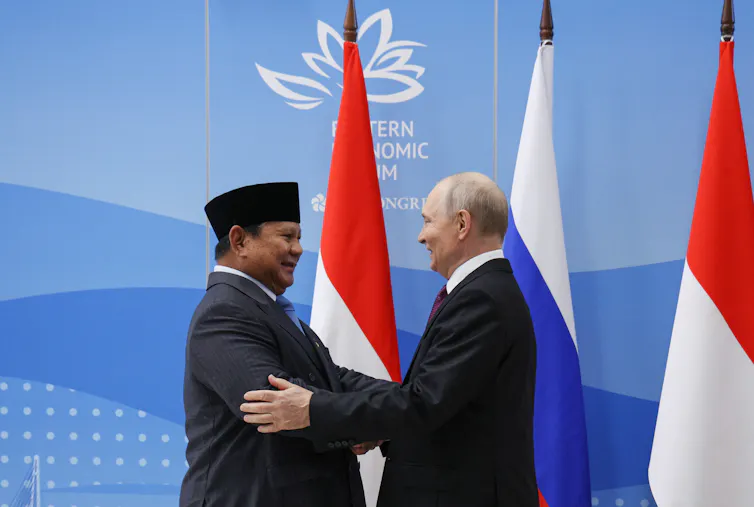
As a result of these differences, Australia’s anxieties about the erosion of the post-second world war order are not as intensely shared by Southeast Asian states.
Their pragmatic view of the world means they will adopt low-key, solidarity-driven actions to preserve the elements of the order that matter to them. But they’ll remain silent on Western concerns about the rupturing of the entire system itself.
Will Australia’s view of the world change?
For Southeast Asian countries, the country that wields power is less important than the way power is wielded. And at the moment, US President Donald Trump’s use of power is seen as being just as dangerous to international stability – if not more so – than Chinese leader Xi Jinping’s.
It is time for Australia to start understanding its northern neighbours in much greater depth. And it may be time for Australia to learn from its neighbours’ more pragmatic view of power as the world becomes more multipolar than it’s ever been.
Underpinning all of this is the question of whether Australia’s strategic imaginary will compel it to continue defending the old international order, rather than a pragmatic adaptation to a new one.
Can strategic imaginaries change? This is perhaps the most crucial question Australia faces today.
This is an edited version of the 2026 Menzies Lecture delivered at Kings College London earlier this year.
KioskNews shows a cleaned-up reading view extracted from the publisher’s page — the original always lives on their site, not ours.