As ex-IAS officer Divya Mittal launches party, how 5 others fared in politics: Kejriwal made it, Shah Faesal returned
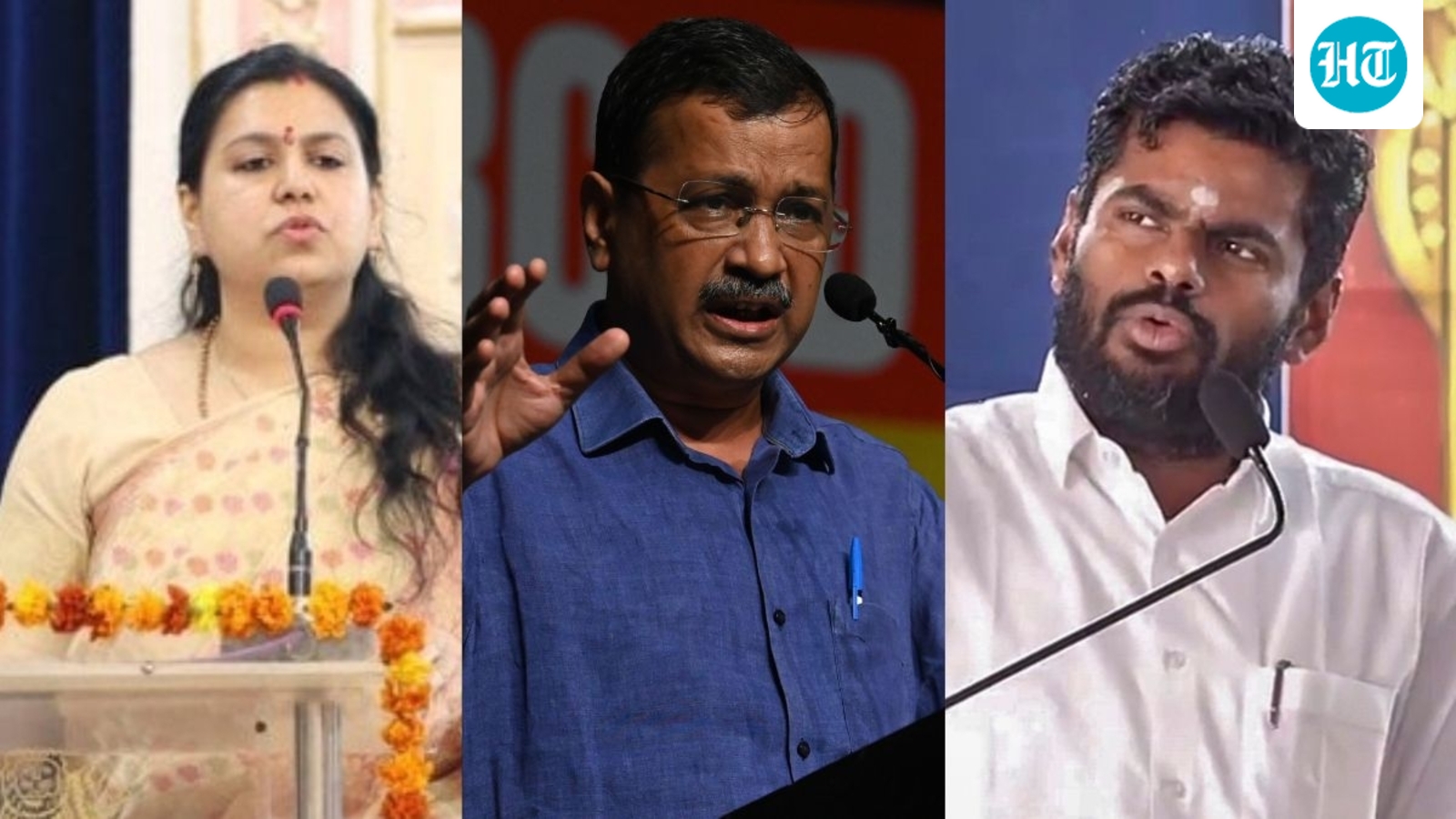
Quitting the civil services for politics is one leap; making a success of it is another. Former IAS officer Divya Mittal, who launched her party Jan Neeti Bharat on Thursday after finding “no intent” in the system, is the latest bureaucrat to take that route.
Five others — Arvind Kejriwal, Sasikanth Senthil, Kannan Gopinathan, K Annamalai and Shah Faesal — have made similar exits, but their political journeys have taken sharply different turns.
One is a national party chief, one is a member of Parliament, one is still waiting for the Centre to process his resignation, one is building a new political movement, and one has returned to government service.
“Everything was available, but there was no intent,” Mittal said of her 13 years in the service, explaining a resignation that took effect on September 15 and a party that she says will contest the 2027 Uttar Pradesh Assembly elections. Her reason is personal and specific, and so are those of the officers who went before her.
Kejriwal quit to work full time on citizens’ rights and now leads the AAP. Senthil left over what he saw as the weakening of democratic institutions and is a Congress MP. Gopinathan resigned over the curbs in Jammu and Kashmir, joined the Congress and is still waiting for his resignation to be processed. Annamalai quit the BJP over strategy and is building a new movement, while Faesal gave up politics and returned to government service.
Officers moving from the civil services into politics is not new, and parties have long courted them for their administrative credentials and clean image. What happens after the move tells a different story. The five cases below show that a strong reason to leave gets an officer noticed, but it does not by itself deliver a seat, a party or a second career.
Arvind Kejriwal: From anti-corruption movement to AAP
Kejriwal is the benchmark. The Indian Revenue Service officer resigned in 2006 to devote himself to activism, the same year he won the Ramon Magsaysay Award for his work on the right to information. Six years later, he launched the Aam Aadmi Party out of an anti-corruption movement that targeted the UPA government, and the AAP won 67 of 70 Delhi seats in 2015, about 96 per cent. He served as chief minister until 2024, and the party lost power in the capital in 2025.
Also Read: Mamata Banerjee, Arvind Kejriwal among 4 ex-CMs detained in Delhi's anti-CEC protest crackdown
Today Kejriwal remains the AAP’s national convener, a post he has held since 2012, and he was unanimously re-elected on September 9. “Under your guidance, we are ready for every struggle,” party media in-charge Anurag Dhanda said after the vote. His case shows the rare sequence in which a movement came first and a party followed.
Sasikanth Senthil: From IAS officer to Congress MP
Senthil took the opposite route and joined a party that already had a machine. The 2009-batch Karnataka cadre IAS officer resigned in 2019, saying the building blocks of democracy were being compromised, according to reports at the time. He worked with grassroots groups first, joined the Congress in November 2020, ran its war room in the 2023 Karnataka campaign and later its national one, and won Tiruvallur in the 2024 Lok Sabha polls.
He now sits in Parliament and heads the Congress’s National War Room, and he credits the organisation for his win. “It was the cadre who campaigned and the people who blessed me,” Senthil said after the result. Last year he fasted over ₹2,152 crore in Samagra Shiksha funds withheld for Tamil Nadu, saying “no one should politicise education”.
Kannan Gopinathan: A resignation still in limbo
Gopinathan’s story shows how a resignation can outlast a career. The 2012-batch IAS officer, then energy secretary in Dadra and Nagar Haveli, quit in 2019 over the abrogation of Article 370 and the communication blackout in Jammu and Kashmir, citing curbs on freedom of expression. He then became a prominent critic of the Centre, at the front of protests against the Citizenship Amendment Act.
He joined the Congress on October 13, 2025, saying, “I realized that only the Congress could lead this country in the right direction.” He is a party member, but he said in a March post that the Centre has not processed his resignation in over six years, leaving him without salary or release and, he says, unable to contest. He calls the delay “pure harassment”, and the Centre has not publicly explained it in the reports reviewed.
K Annamalai: From BJP state chief to a new movement
Annamalai’s journey has two exits. The 2011-batch Karnataka cadre IPS officer quit the police in 2019 and joined the BJP in August 2020, becoming its Tamil Nadu president in July 2021, a post he held until April 2025. On June 5 this year, nearly six years after joining, he resigned from the party’s primary membership and called it “a new beginning”.
His reason was disagreement. In his resignation letter he cited differences with the national leadership over political strategy in Tamil Nadu, and reports link the break to the BJP’s alliance and seat-sharing choices in the recent Assembly elections. The BJP’s national president accepted the resignation, and Annamalai said he wanted to leave with respect.
He now leads a movement called We The Leaders, which he says will contest the next Assembly elections and is built around new ideas and youth engagement. The test is steep, because the BJP’s vote share in Tamil Nadu is reported to have stayed in the low single digits despite his padayatras and heavy social media push. Whether a movement can do what a national party could not is the question his next campaign will answer.
Shah Faesal: From political debut back to government service
Faesal had the shortest run. The first UPSC topper from Jammu and Kashmir resigned in January 2019 citing “rising intolerance” in the country, and floated the Jammu and Kashmir People’s Movement in February that year. He was detained under the Public Safety Act after Article 370 was abrogated, and stepped down from the party’s leadership on August 10, 2020, about 18 months after founding it.
He later said the resignation did “more harm than good” and called the phase “chasing a chimera”. The government accepted the withdrawal of his resignation in April 2022 and reinstated him in the service, making his the only case among the five in which an officer went back.
The reasons fall into two groups. Kejriwal, Senthil and Gopinathan left over a cause or a perceived threat to freedoms, and each ended up inside or at the head of an organisation built around it. Annamalai and Faesal left over a political experience and found the party route harder than the service they had quit. The officers’ own accounts of their exits are the main source for these reasons.
The pattern holds for those who relied on an organisation. Kejriwal built one and Senthil joined one, and both have held office, while those who relied on personal reputation, Faesal in Kashmir and Annamalai outside the BJP, are either out of politics or yet to be tested. Gopinathan sits between the two, held back by process rather than by voters.
Taken together, the five stories show that the real measure of an officer’s leap is not the day of the resignation but what comes after it. Of the five, only Senthil holds an elected post today, Kejriwal is out of government in Delhi, Gopinathan is yet to contest, Annamalai is yet to face voters under his new banner, and Faesal is back at his desk. “Chasing a chimera” is how Faesal described his own run, and for the rest the question is whether they are chasing one too.
KioskNews shows a cleaned-up reading view extracted from the publisher’s page — the original always lives on their site, not ours.