EU open to creating ‘kill switch’ weapon to kick Chinese firms out of market
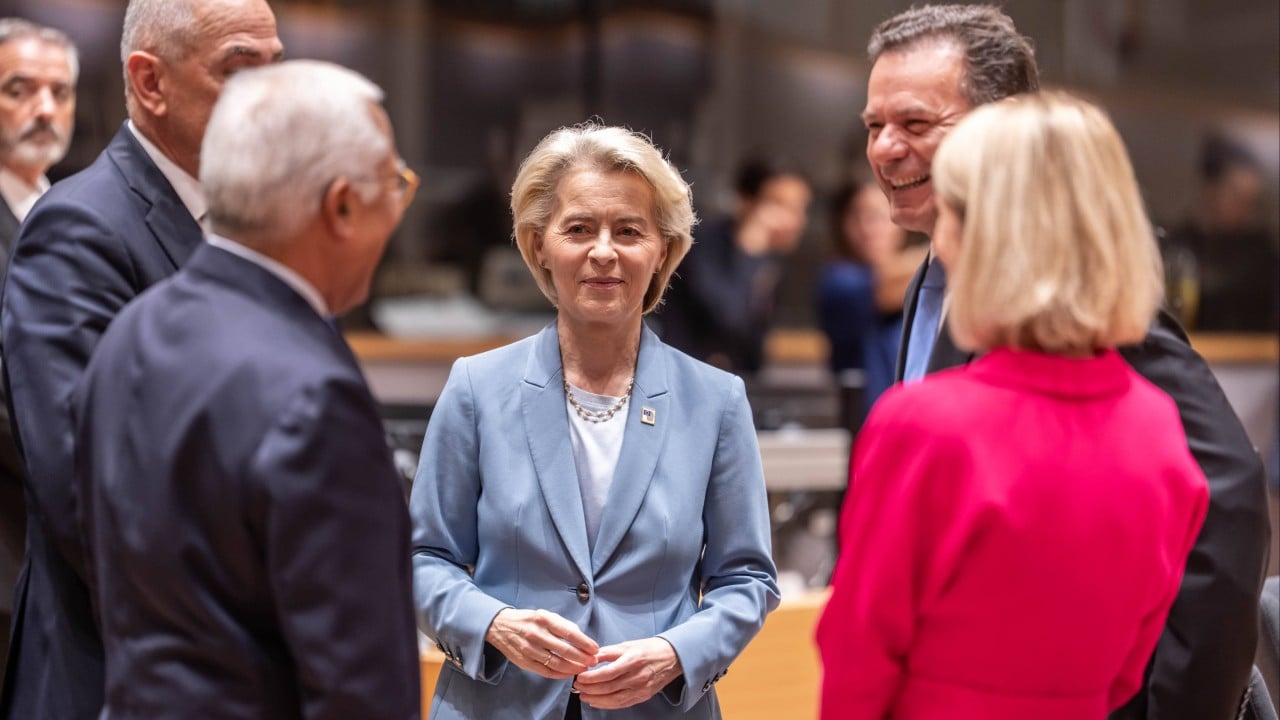
Chemicals and industrial machinery were identified as the top priority industries the EU needs to shield against Chinese imports during a meeting between the EU’s top leaders in Brussels on Thursday.
European Commission President Ursula von der Leyen told the bloc’s 27 member states that the EU should consider quickly introducing safeguard measures, which can involve import quotas and tariffs, to shield these sectors from a wave of cut-price alternatives from China, according to people familiar with the discussion.
Her motion was endorsed by influential member states, including France, Germany, Belgium and Denmark, while the wind turbine industry was also mentioned during the debate as one that needs intervention to alleviate pressure from Chinese imports, one of the people said.
The bloc is currently running the numbers on these sectors using a monitoring mechanism it created to identify surges in imports.
The discussion happened over a nearly two-hour lunch at the European Council summit in the Belgian capital, during which von der Leyen presented the results of several rounds of talks with the Chinese government, including an agreement that will see the EU cap imports of Chinese hybrid cars at 350,000 a year from 2027.
The South China Morning Post reported on Thursday that the EU was planning to open safeguard investigations in the chemicals, pharmaceuticals and machinery industries in the coming weeks. Politico first reported von der Leyen’s recommendation to EU leaders at the council summit.
02:41
EU leaders debate new China trade policy over ‘systemic threat’
Multiple sources said that member states had lent “unanimous support” to the commission’s current approach – a two-pronged strategy of negotiating with Beijing while at the same time sharpening its own trade weapons.
The dialogue is seen to have delivered results and working level talks with Beijing continue. Meetings are set for their respective trade chiefs in January and March. But officials believe that the bloc cannot wait that long before acting to protect certain industries, sources said.
This has led to a groundswell of support for more immediate intervention. Conclusions from the summit called for the commission to “urgently enhance the EU toolbox with new instruments to better address these imbalances”.
In the meantime, safeguards are the preferred form of trade defence, since they can be implemented relatively quickly and can target more than one product at a time.
There was also broad support for a Franco-German paper, released last week, which urged a revamp of how the bloc uses its trade instruments, namely to make the process faster. Currently, it can take months or even years before a trade investigation is concluded, by which stage the damage is already done.
The sum total is that members generally support further action against China, which could see a new spike in tensions, less than a week after the sides reached an agreement in Beijing that many thought would act as a salve.
One of the people said that all of the member states who took the floor during the debate – during which the leaders dined on a main course of veal with a dessert of fig tart – spoke supportively of using caps to prevent a flood of Chinese exports in important sectors, such as that agreed in the hybrid car sector.
KioskNews shows a cleaned-up reading view extracted from the publisher’s page — the original always lives on their site, not ours.