Chinese business visit to Russia-held Kuril Islands prompts protest from Japan
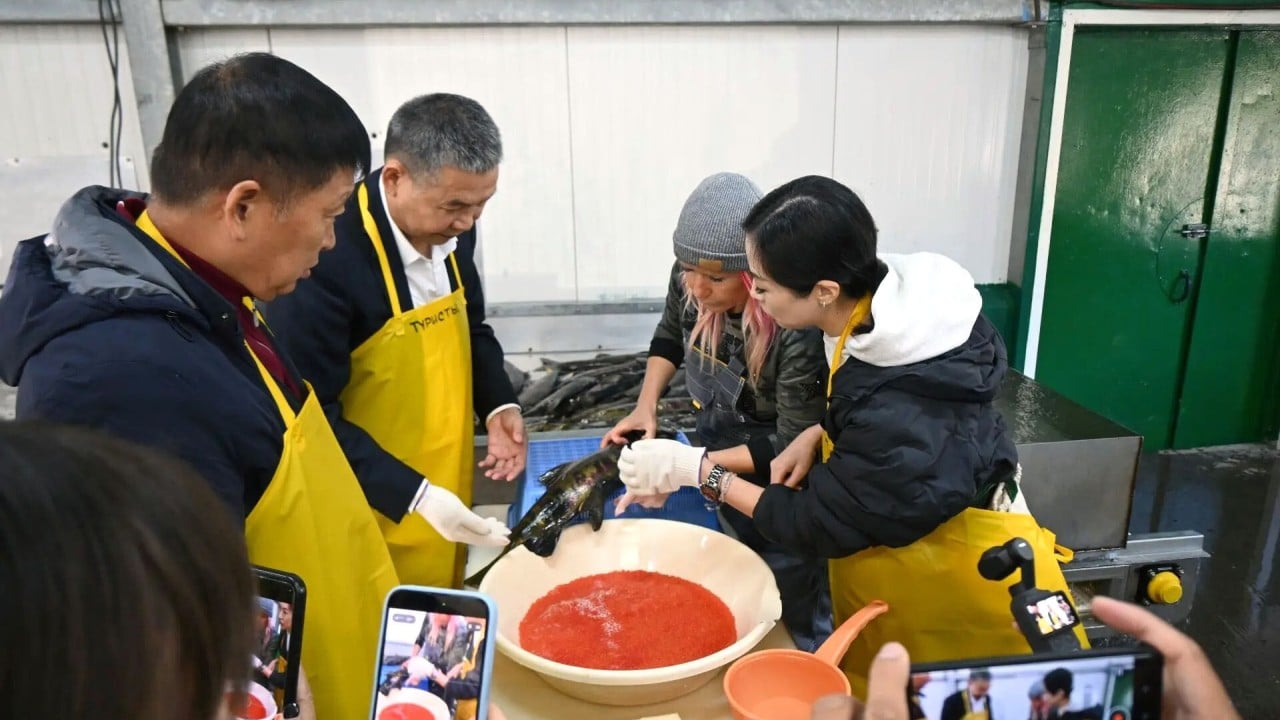
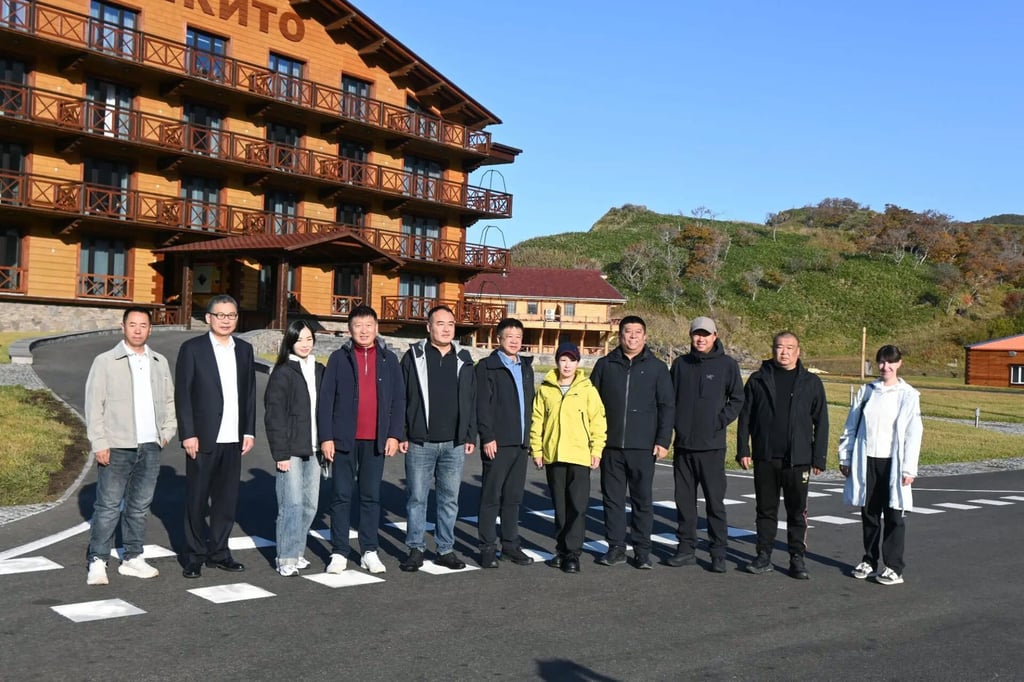
A business delegation from northeastern China has visited a Russian-controlled, Japanese-claimed island off Hokkaido to explore joint economic projects, a move that has prompted protests from Tokyo.
Officials and business leaders from Heilongjiang province, which borders Russia’s far east, travelled to Etorofu – known to Russians as Iturup – to survey potential investment opportunities, according to the Sakhalin Oblast government, which oversees the island.
Etorofu is the largest island in a disputed archipelago that Moscow administers as the Southern Kurils and Tokyo claims as the Northern Territories, situated off Hokkaido in northern Japan.
The delegation explored opportunities in aquaculture, seafood processing and tourism development, the announcement on Tuesday said. The visitors showed particular interest in cultivating sea urchins and sea cucumbers, it added.
Tokyo and Moscow have long-standing territorial disputes over the four southernmost islands of the archipelago – called Etorofu, Kunashiri, Shikotan and the Habomai islets by Japan – which were seized by Soviet forces after Japan's World War II surrender.
Japan renounced claims to the Kuril Islands and southern Sakhalin in the 1951 San Francisco Peace Treaty, which the Soviet Union did not sign.
Tokyo maintains the four southern islands were never part of that territory. A joint declaration between Japan and the Soviet Union in 1956 that ended the state of war and restored diplomatic relations did not resolve the territorial dispute over all four islands.
Tokyo strictly rejects third-country investments or visits conducted under Russian regulatory procedures, a stance reiterated on Wednesday by Toshimitsu Motegi, the Japanese foreign minister.
Japan had conveyed its position to both China and Russia through diplomatic channels and strongly urged them to respond properly, Motegi added.
When asked about the Japanese government’s response, Chinese foreign ministry spokeswoman Mao Ning said on Wednesday that the victorious outcome of the anti-fascist war should be “respected and safeguarded”.
She added that she had no comment on the business activities conducted by private companies during the visit.
The Chinese visit follows Russian President Vladimir Putin’s travel to Etorofu in August, on his first inspection of the disputed islands since assuming the presidency in 2000. He reviewed deep-sea fish processing operations and met municipal administrators.
Tokyo condemned Putin’s visit to the island as “absolutely unacceptable” and summoned the Russian ambassador Nikolay Nozdrev to issue a formal protest.
The latest development may deepen Tokyo’s concerns that Beijing and Moscow are coordinating efforts to solidify Russian control over the islands, presenting Japan with an increasingly unified Sino-Russian front.
04:47
Why have Takaichi’s Taiwan comments sent China-Japan ties into a tailspin?
Japan’s relations with both China and Russia are strained. Ties with Beijing soured after Prime Minister Sanae Takaichi said in November that a conflict over Taiwan could pose an existential threat to Japan, triggering nearly a year of diplomatic impasse.
Meanwhile, Japan-Russia relations collapsed after Tokyo joined Western sanctions over the war in Ukraine, prompting Moscow to suspend peace negotiations and suspend visa-free visits for former Japanese residents of the disputed Kuril Islands.
Opposition politicians voiced stronger objections over the Chinese visit. Yuichiro Tamaki, leader of the Democratic Party for the People, called it an unacceptable step towards normalising Russian control.
“We absolutely cannot tolerate China openly entering the area on the premise of Russia’s illegal occupation,” Tamaki wrote on social media. “Prime Minister Takaichi must promptly lodge protests with both China and Russia.”
China’s interest may be driven by Russia’s 2022 creation of a special economic zone for the Kuril Islands, established after Western and Japanese sanctions over Ukraine.
The framework offers domestic and foreign investors a 20-year exemption from corporate income tax, transport, land and real estate taxes as part of Moscow’s push to develop its far east.
KioskNews shows a cleaned-up reading view extracted from the publisher’s page — the original always lives on their site, not ours.