Saifullah To Lateef Bhat: How Security Forces Wiped Out Kashmir's Terror Faces
If 2025 was the year Pakistan tried to rebuild its terror network in Kashmir, 2026 will be remembered as the year Indian security forces dismantled it — commander by commander, hideout by hideout, with surgical precision.
The killing of Lateef Bhat in Kulgam on Wednesday was not an isolated encounter. It was the final chapter of a year-long, intelligence-driven campaign that has left Lashkar-e-Taiba and Jaish-e-Mohammed without a single top local commander in the Valley.
Officials attribute this success to an unprecedented synergy between Jammu and Kashmir Police, the Army, CRPF and intelligence agencies — and to precise information provided by locals who are now refusing to shelter terrorists and are instead alerting the forces.
The campaign began in the snow-bound forests of Kishtwar on February 22, when security forces killed Saifullah, a notorious Jaish-e-Mohammed commander who had infiltrated five years ago and had become the mastermind of several attacks, including the July 2024 attack in which four soldiers were killed. His elimination in Operation Trashi-I sent the first clear signal that 2026 would be different.
The pressure continued through the summer. On July 8, forces killed senior Lashkar commander Zakir Ahmad Ganai in Shopian, cutting off a key link in LeT's south Kashmir network.
September proved to be the turning point. On September 4, Pakistani national Yasir — one of the four senior LeT commanders who had been operating in Jammu and Kashmir since 2022 and a key figure linked to the Pahalgam attack group — was killed in Budgam during Operation Asdhar.
Less than a month later, on September 29-30, security forces delivered the biggest blow of the year. In an intelligence-led operation at Gurwatkalan in Budgam, under Operation Sheruwali, Musa alias Asif Fauji, also known as Hashim Musa was killed. A former Pakistan Army SSG Havildar and the key plotter of the Pahalgam attack, Musa was the last of the four senior LeT commanders seen together in the viral photograph after the Pahalgam attack. With his death, that entire group — active since 2022 — was wiped out.
The success was not confined to the hinterland. On October 12, top LeT commander Muhammad Faizan was killed along with three others in Poonch's KG Sector along the Line of Control when a landmine exploded during an infiltration bid from PoK, thwarting yet another attempt by Pakistan to push in fresh terrorists.
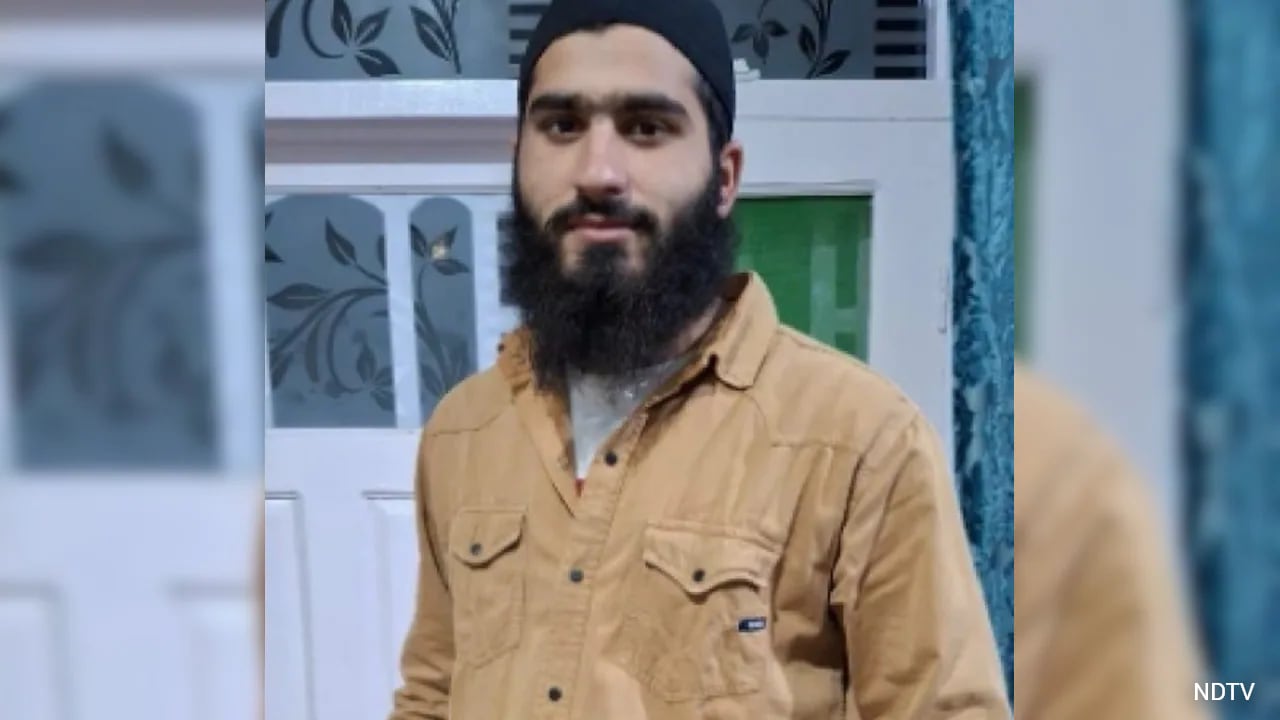
On November 18, came the culmination. Lateef Bhat, the last surviving local LeT commander and the mastermind of the November 11 CRPF attack in Kulgam, the July killing of migrant workers in Kulgam and the July killing of a Police Head Constable in Anantnag, was killed in Zangalpora, Devsar.
With Musa's killing in September, the entire group of four senior LeT commanders active since 2022 was wiped out. Lateef Bhat's killing today has completed that decimation.
What makes 2026 different, according to officers, is not just the number of kills, but the manner in which they were achieved — long, patient operations based on human intelligence, technical surveillance and local cooperation, with minimal collateral damage and maximum restraint, even when terrorists took shelter in mosques and civilian areas.
The result is a Kashmir where, officials say, not a single listed local terrorist remains active, and where Pakistan's attempt to revive terror through online radicalisation has failed to find a single new recruit this year.
KioskNews shows a cleaned-up reading view extracted from the publisher’s page — the original always lives on their site, not ours.