Biodiversity plan seeks to revive Ifugao Rice Terraces
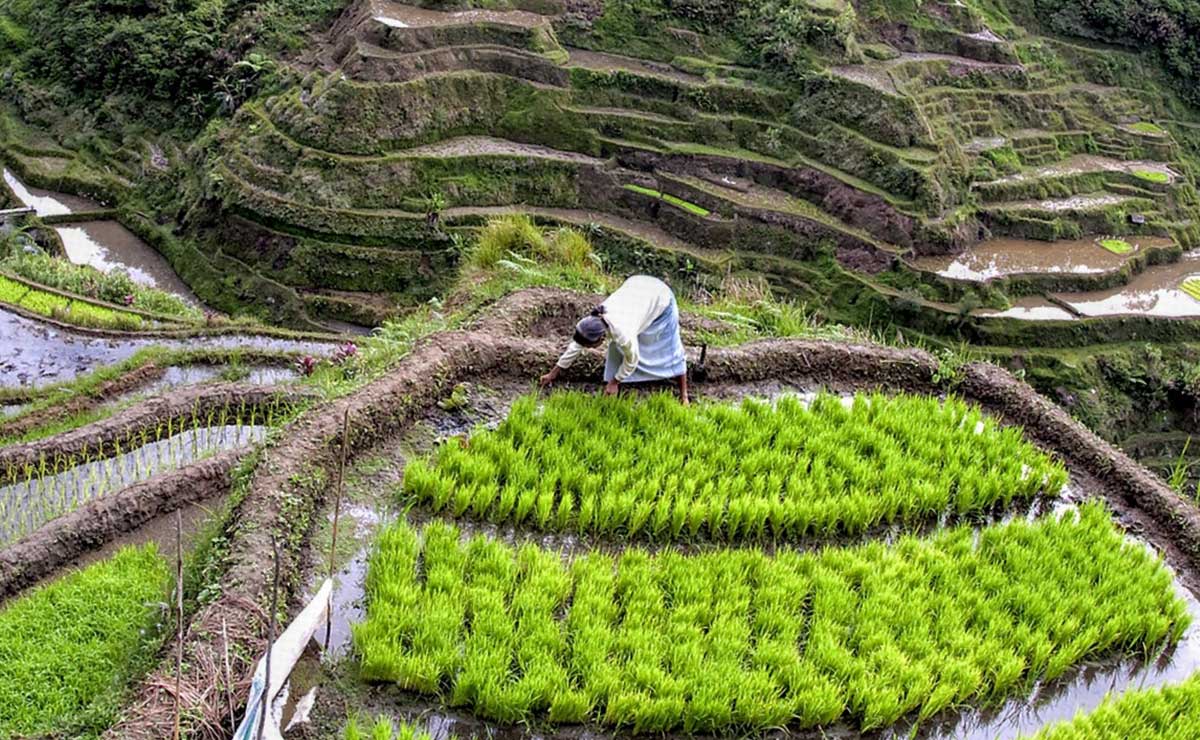
BAGUIO CITY, Philippines — The centuries-old Ifugao Rice Terraces, inscribed as a World Heritage Site in 1995, are confronting biodiversity losses as more Ifugao youth abandon the mountain-carved rice farms amid the continuing decline in the economic viability of traditional farming.
A proposal to integrate biodiversity conservation into the economic plans of Ifugao ancestral domains could help reverse what proponents describe as a “precipitous biodiversity decline driven by economic displacement” and protect the “280 plant species and 93 animal species” that thrive in still-functional terrace farms carved into the mountains hundreds of years ago.
The proposal is part of a new project submitted to the Global Environment Facility, a global financing mechanism that supports environmental initiatives addressing threats, including those exacerbated by climate change.
Article continues after this advertisement
READ: Cordillera body pushed to oversee all rice terraces
FEATURED STORIES
NEWSINFO
NEWSINFO
NEWSINFO
The Ifugao project is a joint undertaking of the United Nations Development Programme, the National Commission on Indigenous Peoples, and the provincial government of Ifugao, according to documents accessed by the Inquirer.
It proposes helping Ifugao clans integrate ecosystem management programs into their Ancestral Domain Sustainable Development and Protection Plans, which serve as master plans for the social, economic, cultural, and environmental use and management of ancestral domains.
Unsolicited proposal
Unlike ancestral lands, which refer to individually owned indigenous properties recognized by the government through Certificates of Ancestral Land Title, ancestral domains covered by Certificates of Ancestral Domain Title are vast tracts of communally owned and administered indigenous territories that may encompass entire towns.
READ: DA to revive abandoned Cordillera rice terraces
Article continues after this advertisement
Last month, Malacañang entertained an unsolicited proposal from eminent urban planner and 76-year-old architect Felino Palafox Jr. to develop a comprehensive master plan for preserving the Ifugao Rice Terraces. His proposal similarly linked the deterioration of the terraces to economic challenges.
Scholars have long documented the indigenous engineering system that regulates water flow from communal forests at the tops of the mountains, allowing water to irrigate each rice paddy, or “payao,” before flowing down through succeeding terrace levels and eventually into natural streams and the lowlands.
Article continues after this advertisement
These microwatersheds have been maintained by generations of Ifugaos who continue to practice a traditional and spiritual rice culture.
But extreme weather events have disrupted rainfall patterns, altered natural water flows, and eroded terrace walls. These environmental pressures have outpaced community restoration efforts, which began on a province-wide scale after massive terrace landslides in 2001.
Some families have been unable to afford the cost of repairing their terrace farms and have abandoned farming for more lucrative employment elsewhere. Even those who remain face growing economic challenges.
“Traditional farming in the terraces is labor-intensive but with low economic returns—creating powerful incentives for indigenous youth migration to urban areas where employment opportunities offer substantially higher and more reliable income,” the project proponents said.
“This economic displacement is manifesting in measurable biodiversity collapse.”
Traditional rice production declined by 83.7 percent between 2015 and 2020, from 26,070.25 metric tons (MT) to 4,239.9 MT, representing the abandonment of more than 6,800 hectares of critical terrace habitat in just five years, according to the project outline.
The abandoned terrace farms “represent a conservation challenge with global biodiversity implications,” the proponents said, noting that the Ifugao Rice Terraces provide critical habitat for endemic species and pesticide-free stopover habitat for migratory species, including endemic amphibians and Pacific Flyway migratory birds such as the vulnerable Philippine duck (Anas luzonica) and several munia species (Lonchura spp).
Insufficient income
“Abandoned terraces lose their aquatic character as irrigation systems fail, eliminating breeding habitat for endemic amphibians that exist nowhere else globally,” the project said.
The “muyong” forests above the terraces, meanwhile, contain more than 264 indigenous plant species and provide essential watershed functions. These forests also face degradation as traditional management systems weaken with community out-migration, according to the project.
The project also noted that rice terrace farming generates insufficient income to compete with urban employment opportunities. Some 77.4 percent of farmers earn P20,000 or less annually, while only 4.8 percent earn more than P40,000.
Farmers also do not substantially benefit from the tourism generated by the terraces, said former Ifugao Rep. Teodoro Baguilat Jr.
In 2024, Ifugao and the rest of the Cordillera region hosted 1,983,511 tourists who spent an estimated P10.72 billion on accommodations, food and transportation during their trips.
“When young Ifugao leave for Manila jobs because rice farming cannot compete with urban wages, terraces lose both their labor force and their cultural knowledge base,” the project said.
Your subscription could not be saved. Please try again.
Your subscription has been successful.
“But when heritage rice generates profits that rival urban employment, youth retention becomes an economically rational option,” it added. /cb
KioskNews shows a cleaned-up reading view extracted from the publisher’s page — the original always lives on their site, not ours.