John Gwynne Talks Horror In His New Release & Why He Keeps Writing
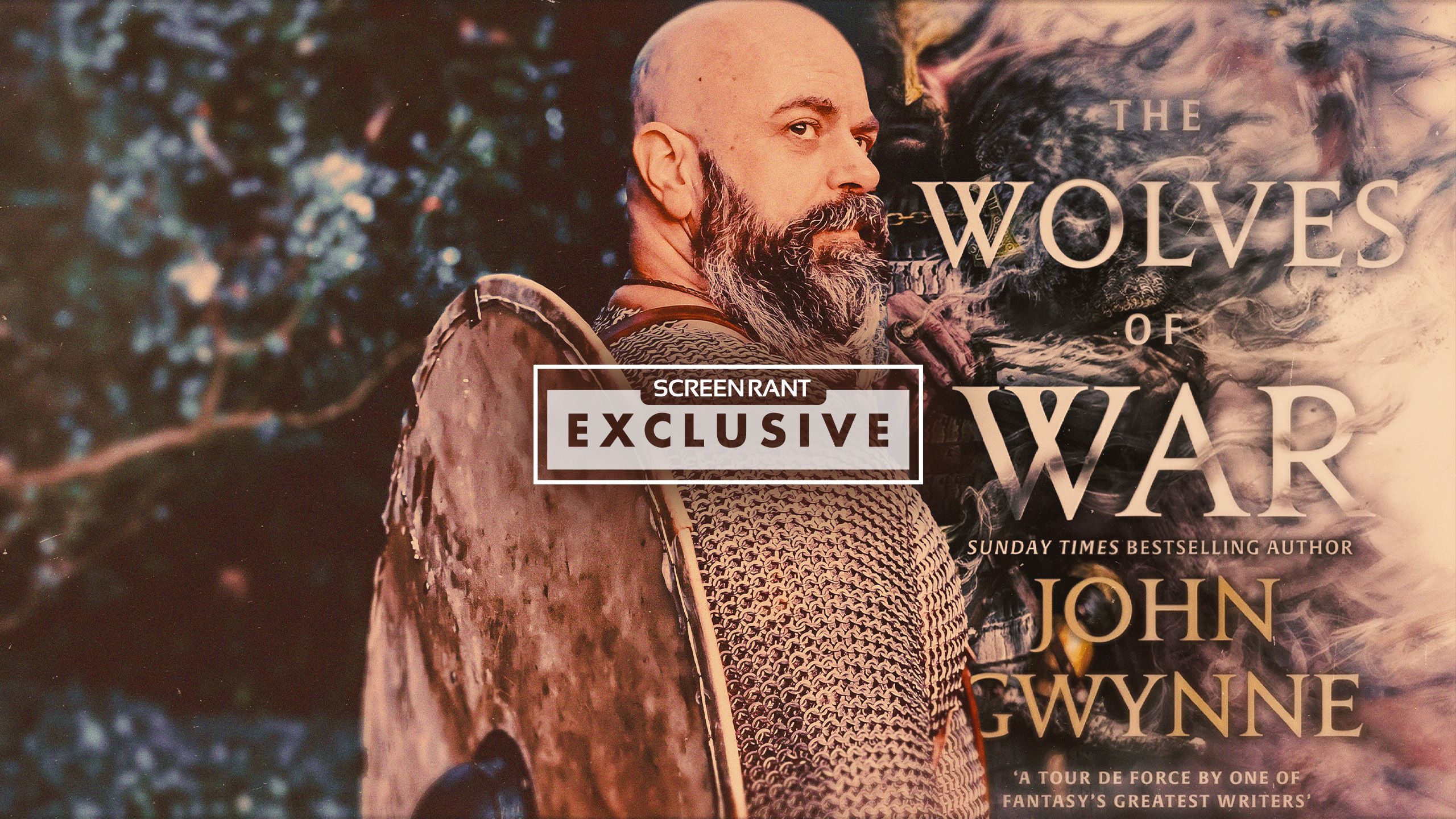
In a ScreenRant exclusive interview, John Gwynne has discussed the writing, research, and emotional core of his newest book, The Wolves of War.

Hannah is a senior writer and self-publisher at ScreenRant. There, she focuses on writing news, features, and list-style articles about all things comics, books, anime, and manga. She works as a freelance writer in the entertainment industry, focusing on video games, anime, and literature.
Her published works can be found on Screen Rant, FinanceBuzz, She Reads, and She Writes.
John Gwynne has built his fantasy career around warriors, epic battles, and worlds shaped by old legends. With The Wolves of War, he turns toward darker folklore, drawing on Slavic mythology to create a story where monsters are not simply obstacles for heroes, but part of an unsettling landscape. The book brings fantasy together with the creeping unease of horror.
The book also marks a deeply personal return to writing. Halia, its main character, was inspired by Gwynne’s daughter Harriett, who passed in 2021. Rather than making the story solely about loss, he approached it as a tribute to her personality and the qualities he remembers most fondly. In this exclusive interview, he discussed the folklore, horror influences, and emotional origins of The Wolves of War.
The Wolves of War is available to purchase now through this link
The Wolves of War Is A New Starting Point For John Gwynne

For readers new to Gwynne’s novels, The Wolves of War offers a more contained entry point than his previous fantasy sagas. He describes it as a two-book story, with both volumes complete, giving readers a defined commitment rather than a much longer sequence. Its smaller scope also shapes the narrative’s pace and focus.
“I think The Wolves of War is a really good starting point […] It is a shorter series, only two books, and both are finished. The story I think is tighter, more focused and so a little faster paced than my other series.” - John Gwynne
That compact structure does not mean Gwynne is leaving behind the ingredients that have defined his fiction. The story still has Vikings, battles, and supernatural threats, but its smaller cast and more concentrated world allow the narrative to move with greater urgency. Readers can expect a focused adventure without losing the intensity associated with his fantasy writing.
A new setting also gives Gwynne the pleasure of discovering its rules alongside its characters. He says the early stages of a project involve learning who inhabits the world, finding its atmosphere, and deciding which creatures belong there. Those choices help establish a story’s identity before its conflicts fully take shape, making world-building part of the creative journey.
“I love that feeling of exploring a new world and new characters, getting to know them and the world, figuring out the tone of the story and world.” - John Gwynne
Slavic Folklore Gives The Wolves of War Its Horror

Gwynne’s research introduced him to a rich collection of Slavic gods and supernatural beings. He names Perun, Mokosh, and Veles among the deities, alongside creatures such as the rusalka, leshen, domovoi, and upir. These figures give the novel a folklore foundation distinct from the familiar bestiary often found in contemporary epic fantasy, while offering an unsettling range of threats.
The figure who particularly captured his attention was Baba Yaga, a witch whose reputation is more complicated than a simple villain label suggests. Gwynne describes her as associated with murder, cannibalism, and the deaths of children. Yet the folklore also makes her unpredictable, because despite her cruelty, she sometimes helps heroes complete their quests, adding ambiguity to her terrifying reputation.
“As I dove deeper into the folklore around her, she is surprisingly ambiguous, even sometimes helping heroes to complete their quest.” - John Gwynne
That contradiction is perfect for a story blending fantasy with horror. Gwynne has described The Wolves of War as The Witcher meeting Stephen King’s Carrie, a comparison that points to its combination of folkloric monsters and human terror. For him, horror is not separate from fantasy or mythology; it is a shift in focus toward their most frightening possibilities.
“Horror really is fantasy just moved a little along the line, focusing a little sharper on the creatures and sometimes humans and the awful things they can do.” - John Gwynne
Atmosphere is very important to that approach. The forest in The Wolves of War is not a picturesque backdrop, but an oppressive presence filled with unseen dangers. Gwynne wanted readers to feel the tension of moving through darkness, where sounds seem louder, shadows shift, and the possibility of something watching turns the landscape into a source of dread.
“Because this tale is inspired by Slavic folklore, the forest is almost a character in its own right.” - John Gwynne
Halia Makes The Wolves of War A Personal Story About Family And Grief

For all its monsters and violence, Gwynne says the emotional focus of The Wolves of War is a family enduring dangerous circumstances. He hopes readers respond to the love holding that family together as strongly as the action. The contrast matters: the darker elements do not displace the novel’s warmth or interest in human connection.
“At its heart it is a family just trying to survive through dark times.” - John Gwynne
That focus is closely connected to Halia, the character at the heart of the book. Gwynne has said she was inspired by his daughter Harriett, who passed in 2021. He wanted Halia to reflect the qualities that made his daughter special, preserving something of her spirit rather than concentrating only on the pain of losing her.
“This book is written as a tribute and celebration of my daughter. It is not a book that is all about grief, although grief is in it.” - John Gwynne
Writing Halia was bittersweet, as Gwynne recalls shedding tears while working on the character, but also smiling at memories of Harriett. He hopes readers will come away with some sense of who his daughter was. He is nervous about the novel’s reception, too, because this time he especially wants to feel he has done her justice.
“I am always nervous when a new book comes out. My only writing rule is to ‘write what I want to read.’” - John Gwynne
The path back to writing was difficult after Harriett’s passing at the end of 2021. Gwynne struggled to read, watch television, listen to music, or imagine writing again. After The Bloodsworn Saga concluded, this became the story he had promised his wife, Caroline. A new book inspired by Harriett, written while learning to live alongside grief.
“Very soon after Harriett died, I said to my wife, Caroline, if I am ever able to write again, my next book will be inspired by Harriett. This is that book.” - John Gwynne
KioskNews shows a cleaned-up reading view extracted from the publisher’s page — the original always lives on their site, not ours.