A fossil called Lizzie was thought to be an early reptile
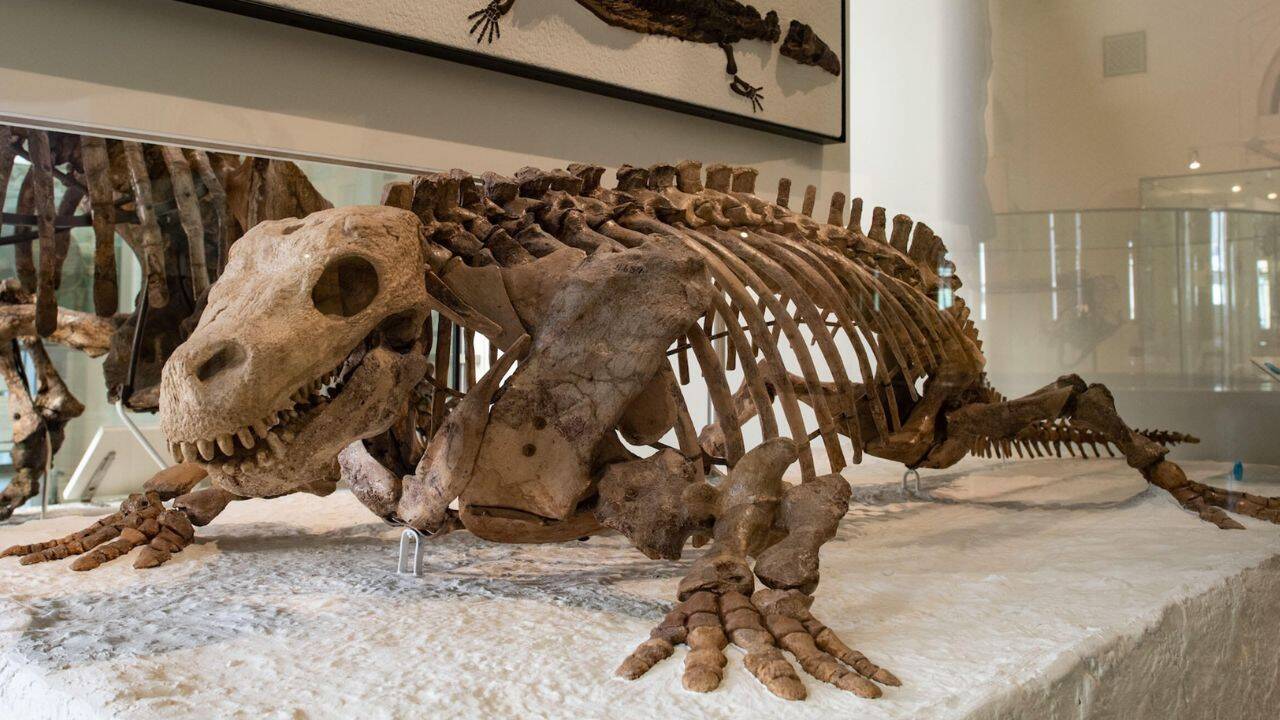
PC: Denis Finnin/ American Museum of Natural History
For more than 30 years, a Scottish fossil called Lizzie was considered one of the earliest known reptiles. The 345-million-year-old fossil, known as Westlothiana lizziae, was discovered in Scotland in 1984.
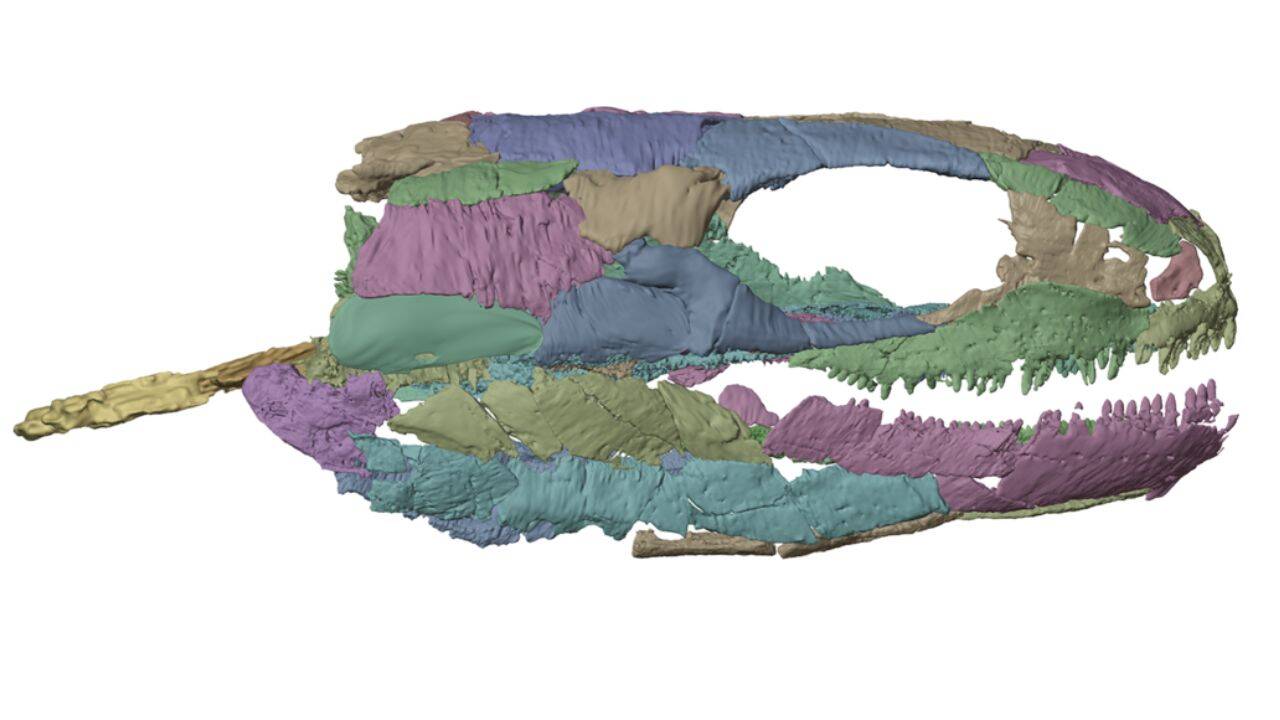
Its claw-like digits and reptile-like legs led scientists to describe it in 1990 as the earliest land-adapted amniote, a group that includes reptiles, birds and mammals.Researchers have looked inside the crushed fossil using X-ray scans and found features that could not be seen from its surface. According to the American Museum of Natural History, the scans revealed a primitive skull, internal gills, and a fish-like mouth filled with thousands of tiny teeth.
These findings show that Lizzie was not a reptile and likely lived in or around water.
Why was Lizzie once considered one of the earliest reptiles
For decades, Lizzie was treated as one of the earliest known reptiles. It was discovered in Scotland in 1984, the fossil was described in 1990 as the earliest land-adapted amniote. That group includes reptiles, birds, and mammals. The fossil’s crushed condition made it difficult to interpret, but its claw-like digits and reptile-like leg anatomy supported that earlier view.
Its lizard-like appearance also gave Westlothiana lizziae the nickname ‘Lizzie’. The fossil later became an important reference point in studies of early amniote evolution. That interpretation has now changed after researchers were able to examine parts of the animal hidden inside the rock.
PC: American Museum of Natural History
X-ray scans revealed Lizzie’s fish-like features
Using X-ray scans at the European Synchrotron Radiation Facility in Grenoble, France, researchers could see through the rock surrounding Lizzie.
The scans allowed them to reconstruct parts of the animal that were not visible from the surface. Inside the fossil, they found a primitive skull, internal gills, and a fish-like mouth filled with thousands of tiny teeth. These features were very different from what researchers expected to find in an early reptile.
The primitive skull showed that Lizzie belonged to a much more ancient lineage than amniotes. The internal gills and fish-like mouth suggest it likely lived in or around water.
Together, these hidden features changed the interpretation of a fossil that had been considered an early land-adapted amniote for decades.
What does Lizzie reveal about the evolution of land-based traits
The new findings show that Westlothiana was not a reptile at all and likely lived in or around water. They also change how scientists view traits once linked closely with early amniotes. Five-toed feet and claw-like digits had been considered hallmarks of early amniotes. The new evidence shows that such features were already present in more aquatic members of the tetrapod lineage.Tetrapods include both amphibians and amniotes. This means some traits associated with reptiles were already present in the ancestor shared by amphibians and reptiles. Lizzie therefore provides evidence that features linked with life on land did not appear all at once. Instead, they accumulated gradually in close relatives that could still live in and out of water.
What does Lizzie reveal about ancient clawed footprints
The findings may also affect how scientists interpret ancient fossil trackways. Clawed footprints have sometimes been used as evidence that amniotes originated more than 359 million years ago. But the presence of claws in Westlothiana shows that animals outside the early amniote group could also have had them. This raises the possibility that some clawed tracks were made by more primitive amphibious relatives instead of early amniotes.
KioskNews shows a cleaned-up reading view extracted from the publisher’s page — the original always lives on their site, not ours.