China pushes brain-computer interface breakthroughs as Neuralink advances towards market
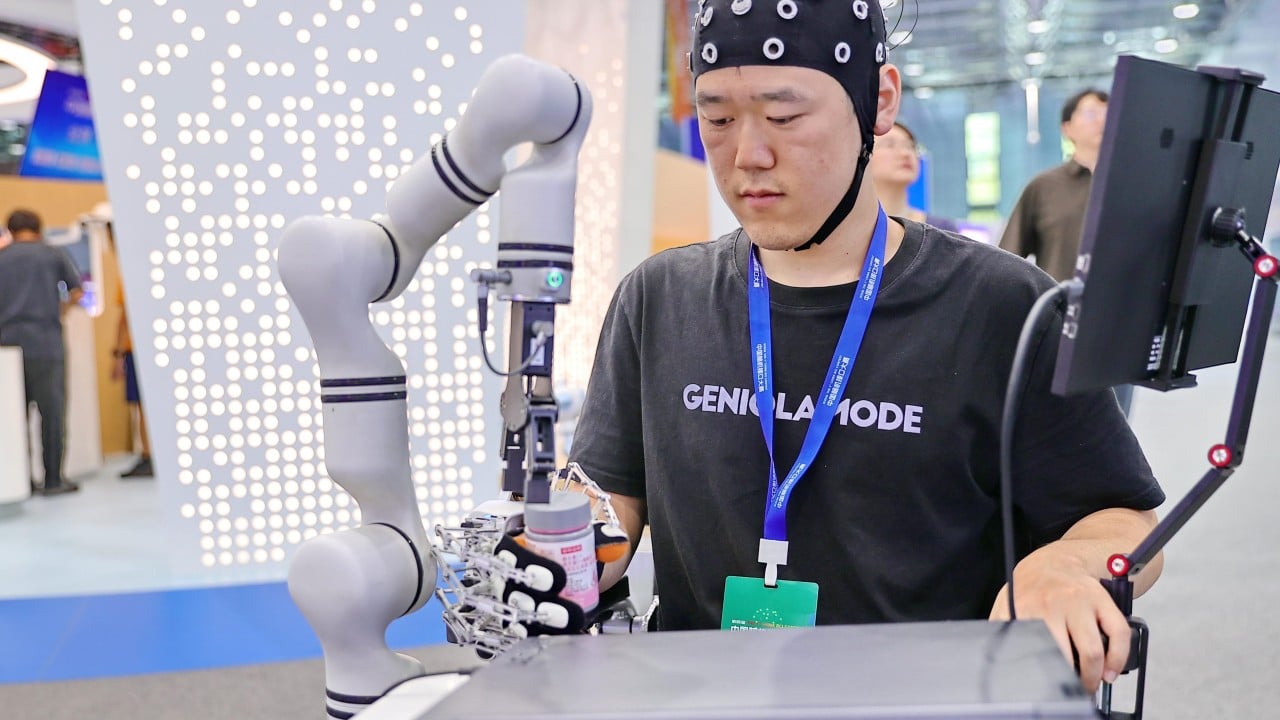
Chinese firms are racing to claim brain-computer interface (BCI) breakthroughs as Elon Musk’s Neuralink advances towards commercialisation, with Beijing seeking to leapfrog the US by setting standards and expanding real-world applications in what it sees as a strategic industry.
Neuralink said on Wednesday it would launch a late-stage trial to evaluate the safety and effectiveness of its implantable BCI device for adults living with amyotrophic lateral sclerosis (ALS), allowing them to control digital devices using their thoughts.
The study would be the first pivotal trial for an implantable BCI device in the US, with the company calling it “an important step” towards bringing the technology to market.
According to the US Food and Drug Administration website, “pivotal” studies followed “exploratory” trials that assessed a product’s feasibility and were designed to gather evidence needed for pre-market approval.
Neuralink said its ongoing early-stage studies across the US, Canada and the United Kingdom had enrolled more than 30 participants who had accumulated thousands of hours of real-world use.
Earlier this week, the Fremont, California-based company showcased a participant with quadriplegia – caused by a spinal cord injury – playing the blockbuster video game Grand Theft Auto VI using only his mind instead of a physical controller.
China has been accelerating efforts to compete with Neuralink in BCI technology, which Beijing has identified as one of six “industries of the future” in its latest five-year plan.
Hangzhou-based Kingstronics, a start-up jointly backed by Zhejiang University and the local government, said on Wednesday that it had achieved a breakthrough in using BCI to treat depression.
In an early clinical trial for its DeepAxtiv system, five of the six participants achieved remission, a rate of 83 per cent, the company said. The team had yet to publish peer-reviewed research on the results.
The China Academy of Information and Communications Technology, a think tank under the Ministry of Industry and Information Technology, said in a report published earlier this week that China, the US and Europe were all “actively vying for influence” in BCI technology, and that the global industry landscape was facing a “reshuffle”.
While the US relied on venture capital to maintain its edge in foundational and frontier technology breakthroughs, China could gain an advantage by leaning on its manufacturing supply chain and broader clinical use cases, according to the think tank.
Chinese authorities are also stepping up efforts to shape standards for the emerging sector. The ministry on Wednesday established a new working group under its BCI standardisation technical committee to help advance real-world applications.
KioskNews shows a cleaned-up reading view extracted from the publisher’s page — the original always lives on their site, not ours.