Has Hong Kong’s IPO boom hit a wall – or is a year-end rush still to come?
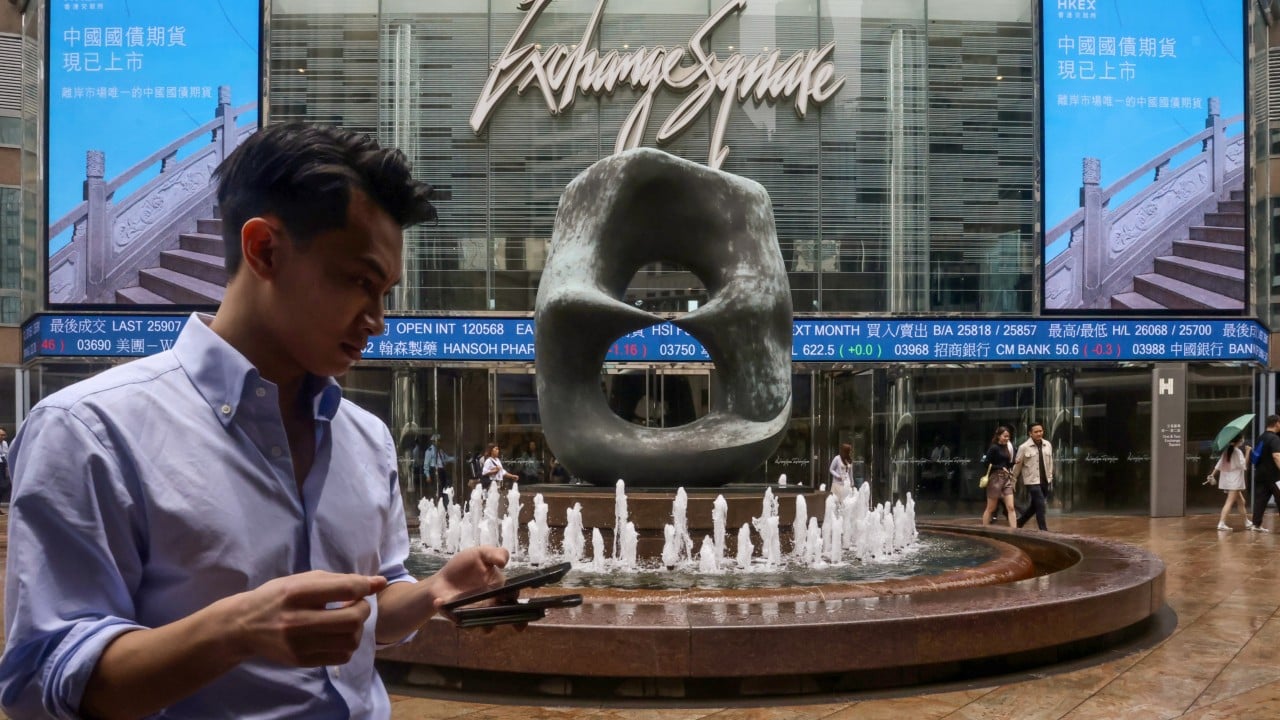
Hong Kong’s initial public offering (IPO) momentum has cooled sharply in the fourth quarter amid market volatility and tighter regulatory scrutiny, but industry players say a year-end rush of listings could still help the city secure a top-three global ranking for 2026.
The market has slowed significantly since October, with only three new listings, all of which closed below their offer prices on debut.
Two other IPO candidates shelved their listings after completing procedures, testing Hong Kong’s goal to raise HK$480 billion (US$61 billion) this year.
As of Thursday last week, 17 companies that had passed their listing hearings had yet to launch their IPOs, with some remaining on hold for as long as four months after receiving approval, according to data from bourse operator Hong Kong Exchanges and Clearing.
The outlook showed signs of improvement on Friday, when six companies – Hosin Global Electronics, Sichuan Neautus Traditional Chinese Medicine, Ganzhou Hemay Pharmaceutical, Jiangsu Xinde Semiconductor Technology, Suzhou Denglin Technology and RelyEZ Energy Storage Technology – started bookbuilding, aiming to raise a combined total of up to HK$6 billion.
“Hong Kong stocks have lacked positive catalysts since August,” said Nip Chun-pong, chief financial analyst at Solo Securities.
Hard-tech firms that need substantial funding for research and development still have a strong urge to list before year-end, even if they are forced to accept discounted valuations
He said most issuers remained in a wait-and-see mode and projected that fourth-quarter deal volume could fall below third-quarter levels unless market sentiment improved markedly.
“Hard-tech firms that need substantial funding for research and development still have a strong urge to list before year-end, even if they are forced to accept discounted valuations,” Nip said. “In contrast, consumer companies constrained by low valuations are choosing to wait.”
Beyond market volatility, the Securities and Futures Commission has tightened scrutiny of the IPO market for months and recently launched enforcement action against two groups suspected of manipulating the pricing of three new listings.
Hong Kong is having its busiest IPO year since 2020, driven by a surge in listings from mainland Chinese artificial intelligence companies. By the end of September, 118 companies had listed, raising HK$388 billion, marking a record nine-month fundraising period.
However, more than half of those newly listed companies currently trade below their offer prices.
Edward Au Chung-hing, southern region managing partner at Deloitte China, said the traditional peak issuance window ran from mid-November to mid-December, meaning the current consolidation was normal and there was no need to revise down annual projections yet.
“Hong Kong remains well-positioned to maintain a top-three global finish,” he said.
While global liquidity had recently gravitated towards mega tech listings in the US, “funds are expected to be reallocated and flow back into Asian markets once those mega listings are completed”, Au added.
Deloitte forecast Hong Kong’s IPO fundraising would reach HK$480 billion in 2026, meaning the city would need to raise some HK$100 billion to meet the target.
Looking ahead, Hong Kong could see another wave of listing applications in the first half of 2027, when many companies were expected to have completed the dismantling of their red-chip structures, said Michael Yu, partner in charge of Hong Kong at Cooley, a US-headquartered law firm.
Yu said quality start-ups, especially in high-barrier tech and biotech sectors that originally raised high-profile US dollar funds, could return to the market by June next year.
Some major mainland Chinese AI large language model developers could also join the pipeline in the future, although that could take longer as both investors and start-ups now prioritised business expansion and commercialisation, he added.
KioskNews shows a cleaned-up reading view extracted from the publisher’s page — the original always lives on their site, not ours.