Online claims revive mercury mystery around tomb of first Chinese emperor
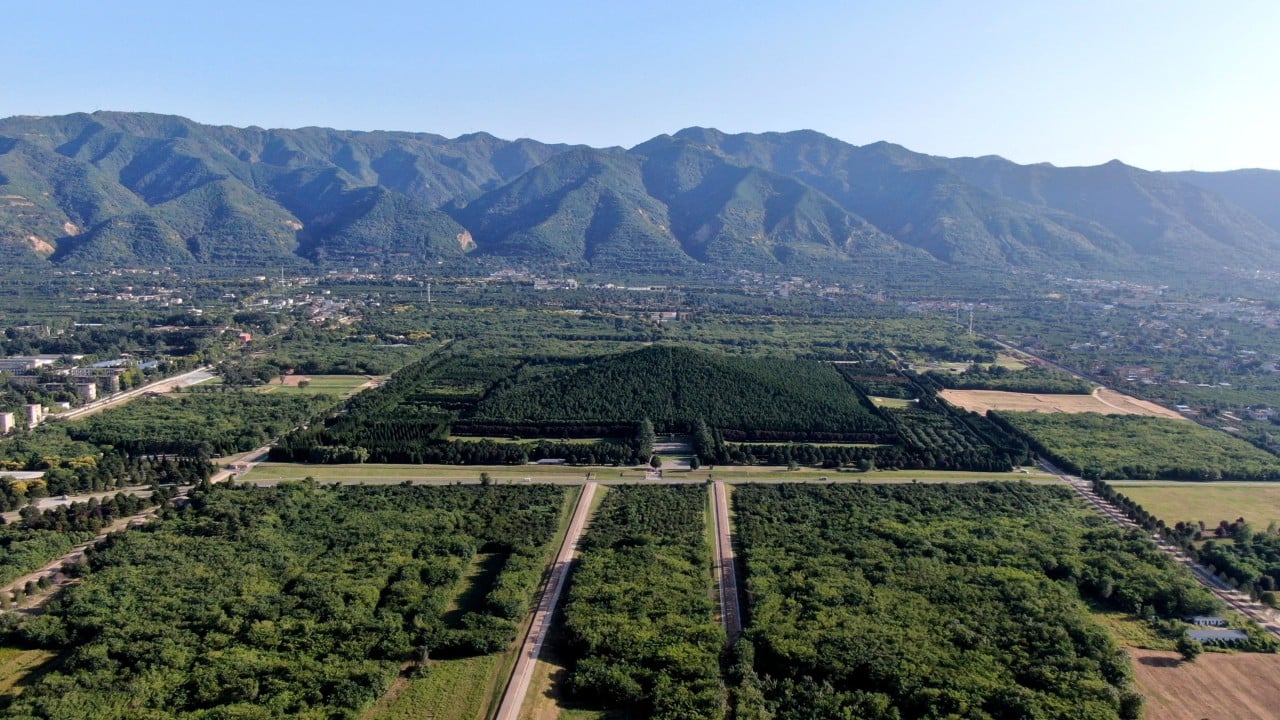
Online claims that archaeologists have identified the source of mercury in the mausoleum of Qin Shi Huang – China’s first emperor, who unified the country more than 2,000 years ago – have revived interest in ancient cinnabar sites in northwestern China’s Shaanxi province.
The claims, which sent related hashtags trending on social media late last month, centred on three sites in Xunyang where archaeologists last year found evidence of cinnabar mining, processing and transport during the pre-Qin and Qin-Han periods.
The underground burial complex, at the northern foot of Lishan Mountain, has never been opened, but one of the most enduring accounts of what lies beneath comes from Sima Qian, the early Han dynasty (206BC-AD220) historian who described a vast subterranean realm, elaborate in its design and ambition, that mirrored the heavens above and the Earth below.
In his masterwork, the Shiji, or Records of the Grand Historian, Sima Qian wrote that mercury was used to recreate the “rivers and seas” inside the tomb, with a mechanism designed to keep the metal flowing.
KioskNews shows a cleaned-up reading view extracted from the publisher’s page — the original always lives on their site, not ours.