Can PH stand out from BN? Analysts weigh coalition’s Melaka election strategy
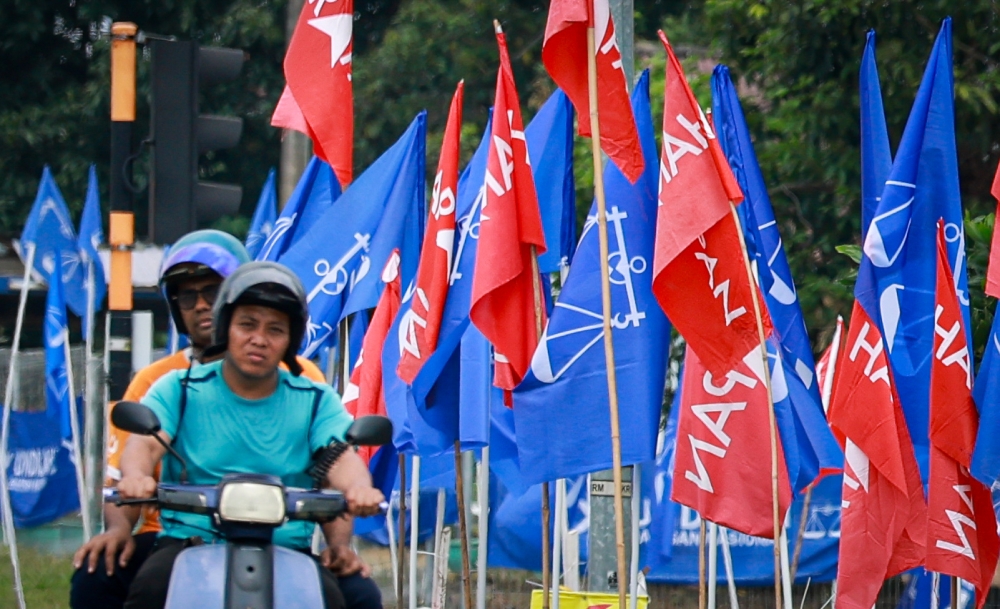

The first week of campaigning for the 16th Melaka State Election has been relatively subdued, with parties focusing mainly on house-to-house visits and manifesto promises to win over voters. — Bernama pic
First Published: Saturday, 07 Nov 2026 2:45 PM MYT
MELAKA, Nov 7 — The first week of campaigning for the 16th Melaka State Election has been relatively subdued, with parties focusing mainly on house-to-house visits and manifesto promises to win over voters.
Pakatan Harapan (PH) has offered an alternative to Barisan Nasional (BN) through its “Aspirasi Melaka Rumah Kita” manifesto, which outlines three main pillars and 12 priorities, including a clean, transparent and efficient administration, the Smart Melaka transformation, expanding economic opportunities for youths and strengthening the tourism industry.
Apart from highlighting solutions to issues such as the cost of living, employment opportunities, housing and public welfare, PH is also wooing young voters by offering to allocate 30 per cent of local authority work contracts to young men and women, while fielding several young candidates to appeal to this voter segment.
The campaign machinery of PH’s component parties has also been strengthened through better coordination, including the establishment of a PH Main Operations Room, and the participation of the top leadership of PKR, DAP and Amanah in grassroots engagement programmes.
Commenting on PH’s campaign efforts so far, Universiti Teknologi MARA (UiTM) Negeri Sembilan Branch Faculty of Administrative Science and Policy Studies senior lecturer Mujibu Abd Muis said the coalition still had room to differentiate its manifesto from BN’s, despite both coalitions being part of the federal Unity Government.
He said the differences needed to be translated into policy approaches and priorities, with PH seeking to highlight the Smart Melaka transformation agenda, economic opportunities for youths, more transparent governance and tourism sector reforms suited to the state’s context.
“However, their positions in the federal government could still create a political dilemma for both PH and BN. As such, neither coalition can rely too heavily on criticisms towards the government, as both share responsibility for national administration.
“PH needs to prove that it offers added value in terms of state administration, rather than merely bringing a different political brand,” he told Bernama.
Mujibu said PH had also succeeded in highlighting several issues closely affecting people’s daily lives, particularly traffic congestion, employment opportunities, housing and infrastructure. However, the welfare of fishermen and problems involving local amenities require more specific attention.
Issues such as coastal erosion, jetty facilities, fishermen’s operating costs, water supply disruptions and road problems require localised and practical solutions.
On the candidacy of young candidates, Mujibu said the move had the potential to inject new life into PH’s campaign through an image of renewal, political energy and the ability to connect with younger generations. However, age alone does not guarantee voter acceptance.
“What matters more is credibility, the ability to understand issues concerning employment, wages, housing and the cost of living, as well as the candidates’ ability to represent young people’s voices in the decision-making process.
“In electoral politics, young voters do not necessarily choose young candidates, as they prefer candidates who understand their problems and can offer solutions,” he said.
On cooperation among PKR, DAP and Amanah, Mujibu said seat allocations and agreements at the leadership level did not necessarily guarantee an automatic transfer of votes at the grassroots level. Therefore, PH needed to ensure that supporters of all three parties accepted the candidates fielded, avoid internal competition and ensure that their campaign machinery delivered consistent messages, he said.
“PH is contesting 24 of the 28 state seats. Therefore, it must not only defend the five seats it won in the 2021 state election but also prove its ability to make inroads into new areas.
“The target of winning 18 seats announced by PH’s leadership is an ambitious one and requires genuinely effective cross-party support,” he said.
Mujibu said PH’s biggest challenge was to convince voters that the coalition had the capability and plans to govern Melaka, including in terms of leadership, coalition stability, development priorities and fiscal discipline.
He said PH needed to focus on practical solutions to issues involving employment, traffic congestion, housing, welfare and infrastructure.
Meanwhile, UiTM Melaka Branch Faculty of Communication and Media Studies senior lecturer Dr Shafezah Abdul Wahab said PH had managed to establish itself selectively as an alternative to BN, particularly in urban areas, but might still face challenges in securing grassroots support.
On PH’s manifesto offers, she said issues involving the cost of living, employment opportunities, affordable housing and digital transformation should be key campaign priorities.
However, she said their effectiveness would depend on how realistic the proposals were and whether they were backed by clear implementation mechanisms rather than being merely election promises. — Bernama
KioskNews shows a cleaned-up reading view extracted from the publisher’s page — the original always lives on their site, not ours.