Reserve Bank’s blunt warning just days before next interest rates decision
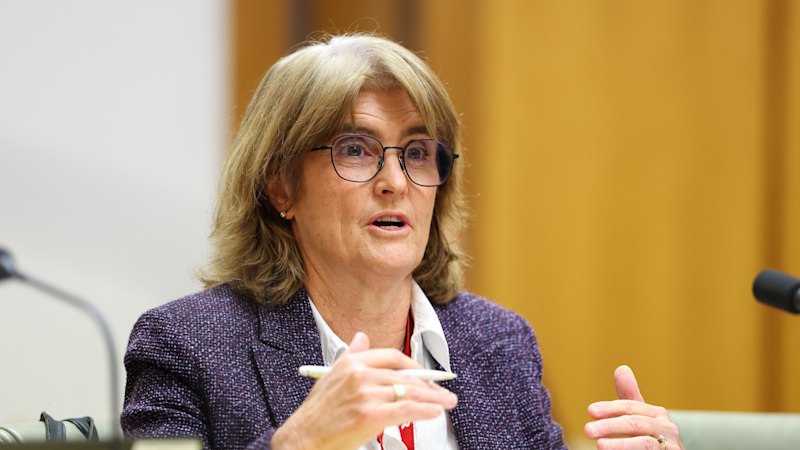
Reserve Bank governor Michele Bullock has issued a blunt warning that inflation in Australia is too high days before the bank’s board will consider lifting interest rates for the fourth time this year.
Addressing a House of Representatives Economics committee on Friday, Bullock said the Middle East conflict, the AI boom and extreme weather events were pushing up prices.
“Inflation is too high,” she said. “We are focused on getting it back down and making sure that it does not become embedded into price and wage-setting decisions.”
Bullock warned that a series of risks to the inflation outlook previously flagged by the Reserve Bank “appeared to be materialising”, especially the prolonged period of elevated fuel prices caused by war.
“There is little sign of resolution of the Middle East conflict,” she said. “Oil and related prices have increased sharply again and will add directly to inflation.”
Bullock also said the boom in AI-related infrastructure, including the construction of data centres, is “exerting inflationary pressure” by adding to demand for labour in key economic sectors and driving up prices for some AI-related technologies.
“It is important that these effects remain contained and do not become embedded into price and wage setting decisions,” she said.
Following Bullocks comments Westpac, one the nation’s biggest banks, revised its interest rate forecast and now expects the Reserve Bank to lift to move rates higher this month, with the “risk of a follow-up hike”. It had previously forecast an increase in November.
The RBA monetary policy board has already increased the benchmark cash rate by 0.75 percentage points in three separate increases this year in a bid to reduce inflation.
The board will next meet on September 28 and 29 to consider the level of interest rates.
Bullock said a key question at that meeting will be whether the current level of interest rates “will be sufficient to bring inflation back to target in a reasonable time”.
EY Australia chief economist Cherelle Murphy said Bullock was “putting the case” for why interest rates needed to be lifted.
“There is a lot of evidence that the inflation outlook is worsening,” she said.
On Friday, bond futures traded on financial markets had priced in an 82 per cent chance that the Reserve Bank would lift interest rates by 0.25 of a percentage point this month.
Another interest rate hike would lift the cash rate, now 4.35 per cent, to its highest level in 15 years.
The ongoing disruption to international oil supplies caused by the interruption of key transport routes in the Middle East has pushed the average petrol prices in Australia above the $2-a-litre mark this month.
“This particular Middle East shock has made us poorer,” said Bullock.
“We can’t respond to that by letting inflation get out of control – it is more important than ever that we bring inflation back to target.”
During the past five years there have been repeated inflationary shocks triggered by global factors and Bullock said this had made combating inflation more difficult.
Bullock warned that a “period of subdued growth of aggregate demand” was needed to reduce capacity pressures and bring down inflation. At the same time, continued weak productivity growth meant that the economy could not grow strongly without putting pressure on inflation.
“This is a fundamental challenge for the Australian economy over the next few years” Bullock said.
Bullock made her comments at a hearing of the House of Representatives Standing Committee on Economics. She and senior RBA staff members answer questions before the committee twice each year.
RBA assistant governor Sarah Hunter told the committee the bank was monitoring the potential economic consequences of this year’s El Niño effect in the Pacific Ocean, which is often associated with drier weather conditions to central and eastern Australia.
“We are very conscious of El Niño and the effect that might have on agricultural products and prices as well as food,” she said.
On Thursday America’s central bank, the Federal Reserve, this week lifted interest rates for the first time in more than three years in a bid to combat rising inflation.
Cut through the noise of federal politics with news, views and expert analysis. Subscribers can sign up to our weekly Inside Politics newsletter.

KioskNews shows a cleaned-up reading view extracted from the publisher’s page — the original always lives on their site, not ours.