‘You can’t just bet everything on exports’: as its gas runs out, is Bolivia doomed to repeat history?
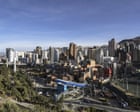
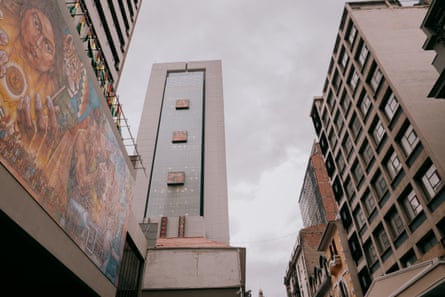
Once hailed as the “energy heart of South America”, Bolivia’s economy was buoyed up by a fossil gas boom from 2006 to 2014. At its height, then-president Evo Morales commissioned a gleaming presidential skyscraper and installed the world’s longest urban cable car network in La Paz, the seat of government.
Flush with cash, the country grew its GDP, expanded social programmes and halved poverty rates. But then commodity prices plummeted and gas reserves started to dry up, bringing Bolivia’s “economic miracle” crashing down. Inflation – once the region’s lowest – has soared.
In the markets of La Paz, some imported staples have now doubled in price. “Because prices are so high, people are buying less and switching to the cheapest options,” says Felipa Huanca, who sells vegetables at the city’s bustling Rodríguez market. “Wages just aren’t keeping up.”
Bolivia’s decades-long reliance on gas is driving the crisis. A failure to discover new fields, coupled with costly subsidies and capital flight, has pushed the economy into a tailspin. Though more sustainable alternatives exist, powerful extractive lobbies continue to impede progress towards a more diversified and sustainable model.
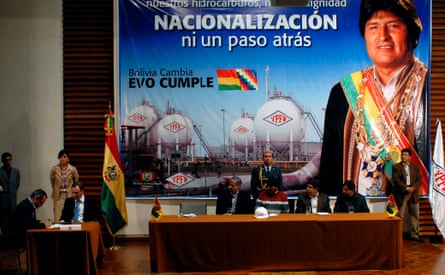
The roots of the crisis trace back to 2006, when Morales took control of Bolivia’s hydrocarbons sector and renegotiated contracts with foreign companies. The move coincided with high global fuel prices and brought an economic windfall to one of the poorest nations in the Americas.
But rather than investing in industrialisation or developing value-added exports, successive governments funnelled the profits into heavy state spending, costly fuel subsidies and maintaining a fixed currency exchange rate pegged to the US dollar.
“We failed to take advantage of a historic opportunity that brought in immense revenue,” says Luis Fernando Romero, the former head of an association of economists in southern Bolivia.
The country fell into a classic rentier state model – common for hydrocarbon-rich nations – where state revenues depend on exporting raw natural resources rather than building domestic industries.
“If you compare other petrol states like Qatar and Norway, it’s not the fact of having a large and state-owned hydrocarbon industry that determines your fate,” says Andrés Arauz, a former chief operating officer of the Central Bank of Ecuador and a senior research fellow at the Center for Economic and Policy Research, a thinktank. “It’s whether the private sector development, diversification, domestic market and poverty alleviation efforts are accompanying that.”
In Bolivia, those parallel investments never materialised.
Experts say sustained prosperity would have required investment in core economic pillars: steel and aluminium plants, agriculture, education and healthcare. Diversifying revenue away from a single commodity was equally essential.
While some economists blame hydrocarbon nationalisation for Bolivia’s decline, Arauz notes that the failure to regulate offshore capital is often ignored. “It’s not that poor people have a little bit more money,” he says, referencing the macroeconomic stability that state hydrocarbon control brought. “The bigger factor is that rich people are taking their money out and that there is no response from the domestic elites in establishing an industrial economy.”
Bolivian elites hold an estimated $10bn (£7.4bn) offshore – an eighth of the country’s GDP – which Arauz says is an underestimate.
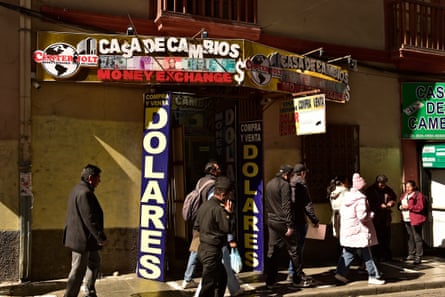
After the 2014 commodity crash, Bolivia’s foreign reserves dwindled due to heavy fuel subsidies and its dollar peg, which wasn’t ended until earlier this year. Production fell as gas reserves went unexploited, but the government sustained subsidies and the peg, printing money to cover deficits.
The boliviano’s exchange-rate fix boosted cheap imports and consumer power but hurt local industry by fostering import reliance. Carlos Arze, a Cedla hydrocarbons expert, notes that cheap imports eroded productive sectors, requiring protection from Asian competition. Cheap dollars also grew the informal labour sector to 84% in 2024 – Latin America’s highest.
Dollar shortages and a parallel exchange rate still discourage industry. “Speculating on the exchange rate can be more profitable than legitimate business,” says Arauz.
Foreign investors remain wary, says Romero, due to Bolivia’s complexity, technological hurdles, and dollar shortages. A $1.9bn IMF loan in July mostly services debt or adds reserves, not economic diversification.
after newsletter promotion
In December, the government cut fuel subsidies with little support for the vulnerable. After austerity and agroindustry-favouring land reforms, protesters called for President Rodrigo Paz’s resignation. The government then announced that the state hydrocarbons firm will now focus on exploration, extraction, and refining.
As gasfields run dry – with estimates that Bolivia will become a net fossil gas importer by about 2030 – the growing goldmining and agroindustry sectors are becoming the country’s next frontiers in an export-oriented rentier model. “It’s a repeating story of natural resource dependence,” says Arze, the hydrocarbons expert.
Yet in Bolivia’s Amazonian lowlands, Indigenous and peasant communities have long practised an alternative economic model. For generations, they have gathered wild fruits and nuts such as açaí, cacao and Brazil nuts. Known as non-timber forest products, these plants thrive naturally without clearcutting, forming the foundation of sustainable “bioeconomies” that generate income while leaving forests intact.
Unlike industrial soya plantations or environmentally destructive gold dredging, these harvests directly benefit thousands of people in local communities. “Each dollar you invest benefits a lot of different people,” says Vincent Vos, a biologist who has lived and worked in the Bolivian Amazon since 2002.
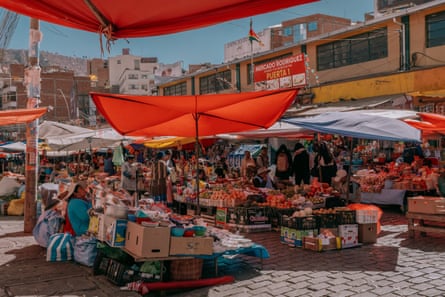
Bolivia exported £145m worth of Brazil nuts in 2024, double the value of its timber sector. In 2025, gold exports were reportedly worth £890m, though far more was trafficked illegally.
While these alternative economies “are still not near what you get from mining or soya”, says Vos, combining sustainable forest harvesting with tourism and carbon sequestration programmes could help them grow. Also key is long-term sustainability. “You can harvest soya for about 10 years and then your land is destroyed,” he says. “But when you harvest Brazil nuts, you can do it until eternity.”
Yet scaling these green alternatives faces major political barriers. Mining and agroindustrial lobbies hold increasing power over a government that has sidelined environmental policy. “Cacao and açaí don’t have any power whatsoever compared to that,” Vos says.
Arauz also cautions against dependence on exporting yet another commodity. “To just continue exporting raw materials – whether they are more niche-based or even fair trade-based – is not enough to transform a national economy,” he says. “You can’t just bet everything on export markets without consciously and proactively transforming domestic ones.”
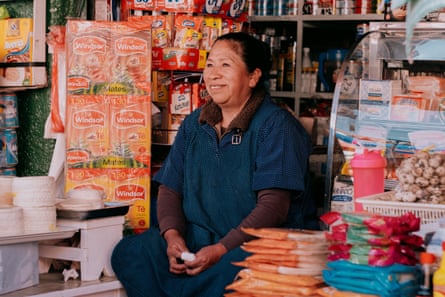
For Rosmery Vega, another vendor at La Paz’s Rodríguez market, Bolivia’s economic decline is simple. “Our politicians are to blame – they’ve failed to manage this country,” she says. “They’re financially comfortable, but it’s us ordinary people who suffer.”
KioskNews shows a cleaned-up reading view extracted from the publisher’s page — the original always lives on their site, not ours.