Supreme Court rejects plea seeking rotation of reserved Parliament, Assembly seats: ‘Wrong number’
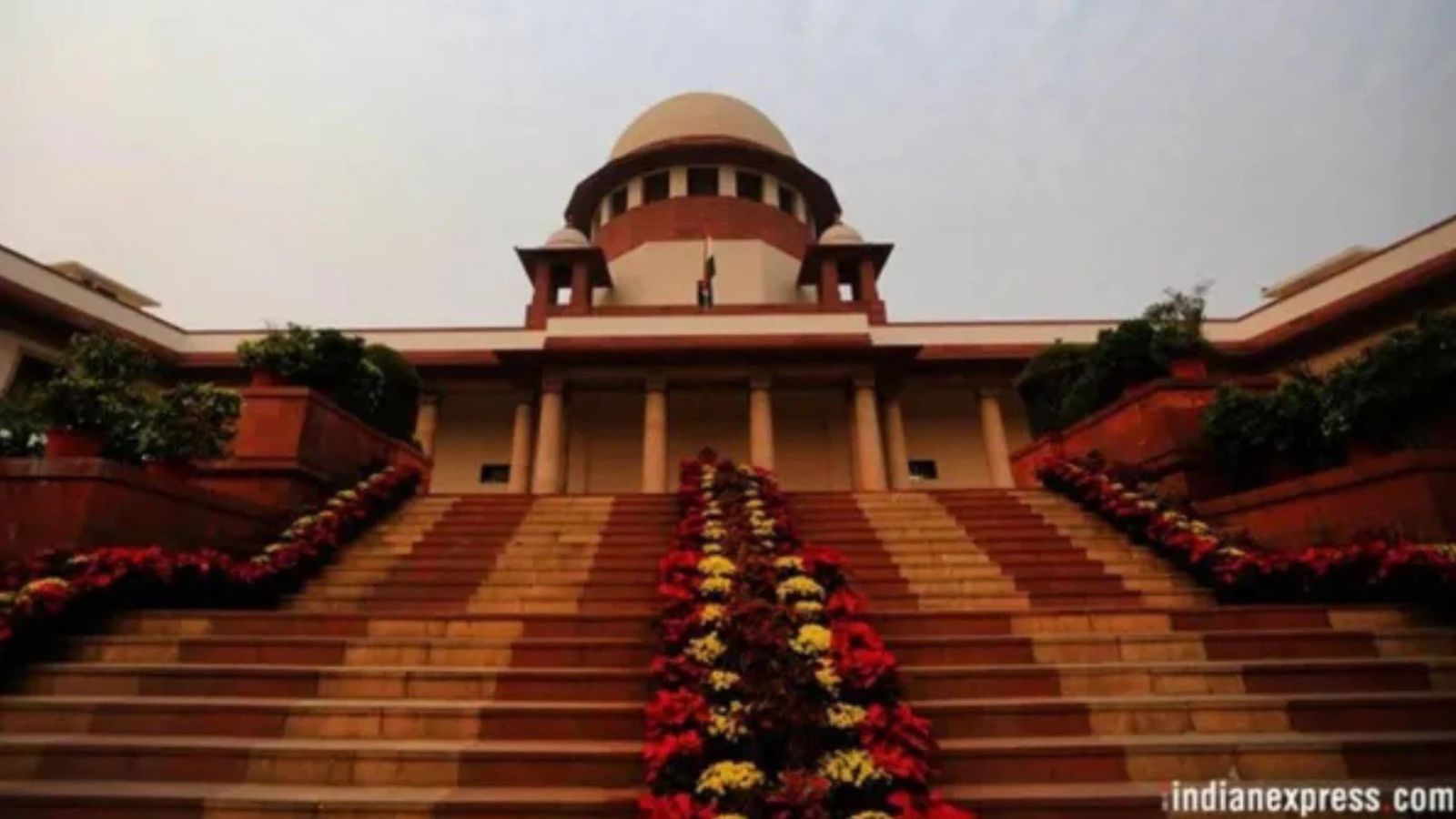
The CJI told the counsel appearing for the petitioner in a lighter vein: “This is a season of protests, naarebaazi. So this is also a good ground…”
The Supreme Court on Wednesday dismissed a plea seeking compulsory rotation of Assembly and Parliament seats reserved for Scheduled Castes (SCs) and Scheduled Tribes (STs), saying it was something for the legislature and not the judiciary to decide.
During the hearing, Chief Justice of India Surya Kant presiding over a three-judge bench told the petitioner, Jagdish Singh, a voter from 191-Kadipur Assembly constituency in Sultanpur district of Uttar Pradesh, that he was “dialling the wrong number” as the request should have been made to Parliament.
The CJI told the counsel appearing for the petitioner in a lighter vein: “This is a season of protests, naarebaazi. So this is also a good ground…”
The counsel said he had no such intentions. Singh’s plea challenged Section 9(1)(c) of the Delimitation Act, 2002. Section 9 deals with the delimitation of constituencies and Section 9(1)(c) says that “constituencies in which seats are reserved for the SCs shall be distributed in different parts of the State and located, as far as practicable, in those areas where the proportion of their population to the total is comparatively large”.
Singh contended that his constituency, a reserved one for SCs, had remained so for about seven decades ever since it was created. Without rotation, it forced voters to select only from SC candidates, benefiting only a few and not the broader community, he argued, adding that this was violative of Articles 14, 15 and 19 of the Constitution. He said there should be a system of rotation like is the case with panchayats and municipalities under the Act.
Singh moved the SC after the Allahabad HC declined to grant his prayer although it accepted that rotation of seats would have been ideal. The SC said the argument is based on the premise that people vote on religious or caste lines whereas in a multi-party democracy, they vote on party loyalties. “In a political democracy, there are multiple parties… The voters are expected to vote for the party, not for the religion. You may like or dislike a particular political ideology. Who is representing that ideology becomes irrelevant. You vote for that ideology. So that defeats your argument,” Justice Bagchi said.
KioskNews shows a cleaned-up reading view extracted from the publisher’s page — the original always lives on their site, not ours.