Is the PLA rehearsing operations to keep US forces out of a Taiwan conflict?
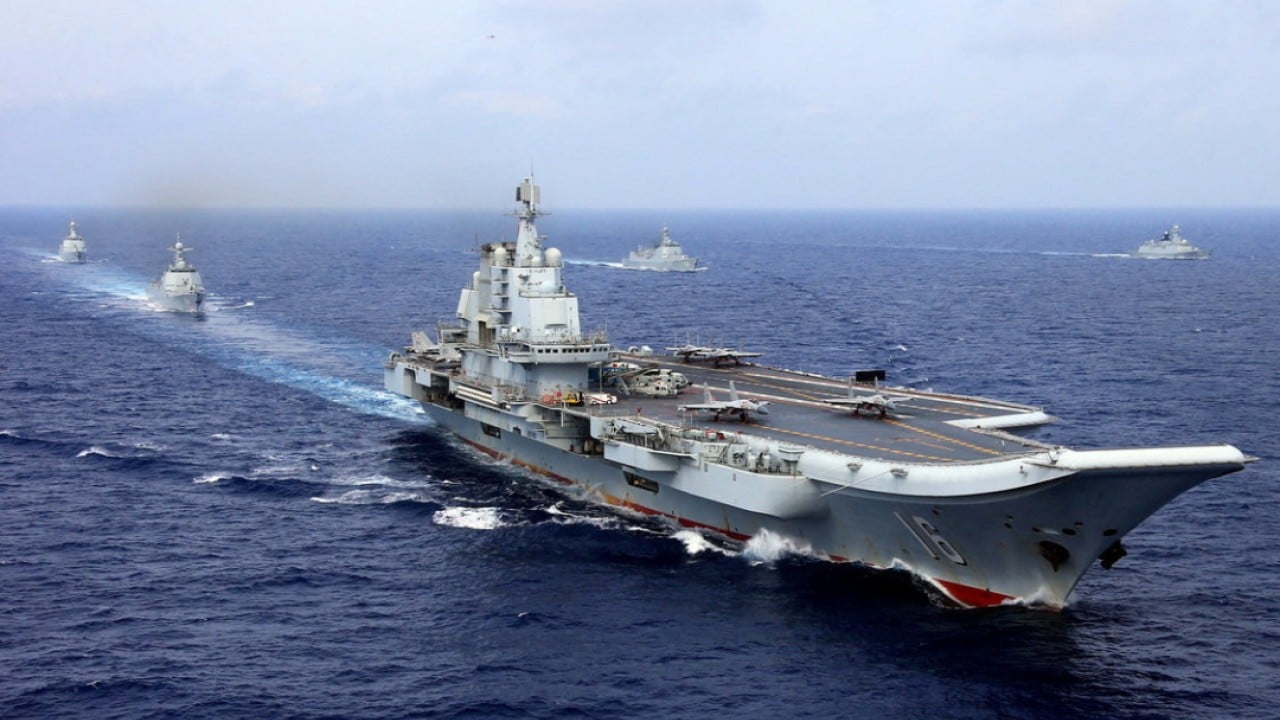
Activities include the Liaoning aircraft carrier sailing around the southern Philippines in late October and other PLA warships entering the Pacific through straits near Japan in late October and early November.
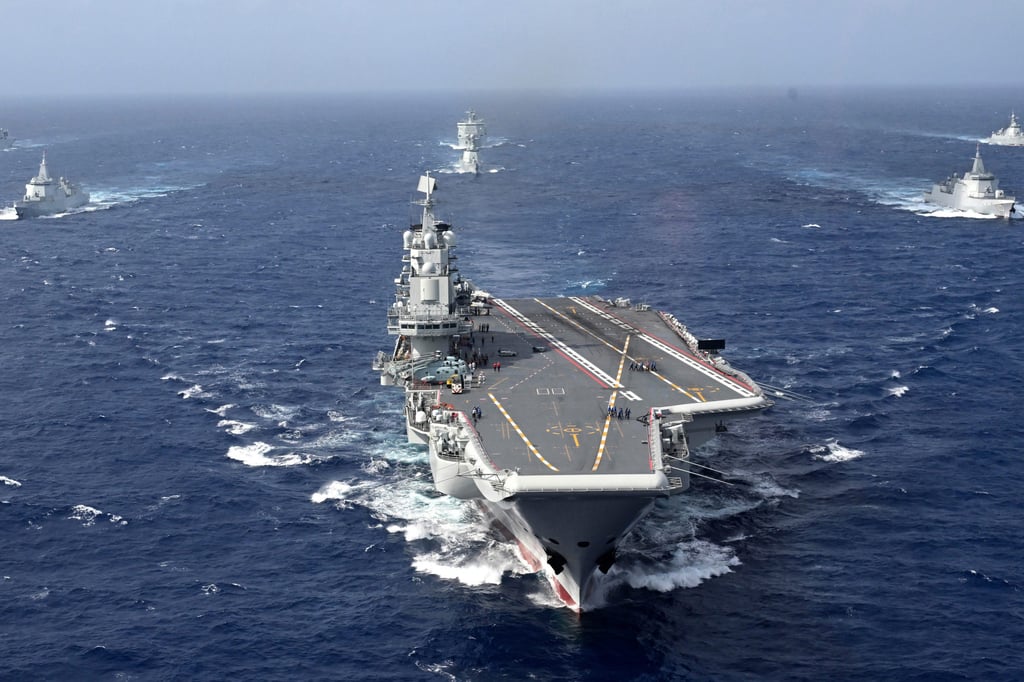
The ISW’s assessment drew in part on a November 3 report by Taiwan’s National Security Council secretary general Joseph Wu that said more than 100 PLA Navy and China Coast Guard vessels were operating across the region.
The ISW identified four naval task forces between Taiwan and Guam – alongside vessels near Taiwan – that were reportedly drawn from the PLA’s eastern, northern and southern theatre commands.
It said coordination of surface forces from three theatre commands was “rare”, with major Taiwan-focused drills usually carried out by the eastern military command. The ISW said the recent formations beyond the first island chain “could represent an effort to coordinate” their principal surface combatants.
The naval movements also coincided with increased PLA air activity around Taiwan. The island’s defence ministry said it had detected 49 PLA aircraft sorties in the 24 hours to 6am on November 3, including 36 to the south.
While those numbers were high compared to the year-long average they were still significantly lower than during previous large-scale drills staged by the PLA near Taiwan, when there have been more than 100 sorties per day.
Southern flights could have been conducted to support warships farther into the Pacific, according to the ISW.
The Pacific is home to the strategically important first island chain that stretches from Japan through Taiwan to the Philippines. It separates the near seas from the Philippine Sea – a potential approach for US and allied forces responding to a Taiwan conflict.
In June last year the Liaoning and Shandong aircraft carriers operated simultaneously beyond the island chain.
02:53
US midterm elections: What the results mean for mainland China, Taiwan and foreign policy
Jim Fanell, a retired US Navy captain and former US Pacific Fleet intelligence official, said the latest deployments suggested preparations for a “no-go zone” using naval, air and land-based missile forces.
“It is the presence of naval task forces from multiple theatre commands that makes me think this is about counter-intervention,” he said.
In a conflict over Taiwan, he said, PLA warships east of the island would seek out and attack US submarines, surface ships and aircraft to stop them from disrupting PLA operations.
Beyond attacking approaching forces, they would also need to disrupt resupply to forces already operating in contested areas, according to Bradley Martin, a senior policy researcher at the Rand Corporation and retired US Navy captain.
The movements could improve coordination among naval formations, increase pressure on Taipei and demonstrate readiness for conflict, said Lyle Goldstein, director of the Asia programme at Washington think tank Defence Priorities.
“My guess is that the concentric or layered defence of some kind of Taiwan operation is the best interpretation at this stage,” said Goldstein, who also heads the China Initiative at Brown University’s Watson School.
He said possible tasks included coordinating naval groups under limited communications, monitoring adversaries and establishing air, missile, drone and anti-submarine defence zones. Northern and southern formations could also screen against foreign intervention.
The Japanese defence ministry has also reported Chinese navy and coastguard vessels passing through straits near Japan in late October. Defence Minister Shinjiro Koizumi said it was the first time the ministry had confirmed and publicly reported such a passage involving both services, though that did not establish their degree of coordination.
Farther south, the Liaoning sailed around the southern Philippines into the Philippine Sea in late October. USNI News subsequently reported the warship being spotted northeast of Luzon, citing Taiwan’s National Security Council.
The ISW suggested that route could help the PLA reach the Pacific without using the Luzon Strait and potentially practise isolating the Philippines. Goldstein highlighted its political signalling and relevance to a wider battlespace.
Fanell said the Liaoning’s passage around the Philippines suggested counter-intervention preparations could extend south towards US bases in the country.
But deployment does not demonstrate sustained combat capability. Michael Bosack, director of the Parley Policy Institute, identified the principal challenges as “reach, survivability and sustainability”.
East of Taiwan, PLA surface groups could face Japanese submarines, allied aircraft and counterstrike weapons beyond the densest protection of mainland China-based forces. Goldstein noted, however, that mainland China’s relatively nearby regional bases offered a logistical advantage.
For its part, Beijing has described the Liaoning’s deployment as routine annual training that complied with international law and was not directed at any particular country or target.
The ISW noted that the absence of an announced region-wide exercise differed from previous major Taiwan-focused drills, but there was no confirmation that the movements were part of a unified operation.
Bosack cautioned that the formations might be operating independently while giving the impression of a coordinated exercise.
“If they were truly integrated and well-orchestrated, that would indicate a level of readiness that would be disconcerting for those concerned of a near-term Chinese operation against Taiwan,” he said.
But while the extent of coordination remains uncertain, Fanell said the deployments pointed to Beijing’s longer-term ambition of developing a more integrated military force.
“The use of PLA naval forces from different theatre commands demonstrates the PLA is working to achieve an integrated joint force that has the command and control capability across theatre commands,” he said.
KioskNews shows a cleaned-up reading view extracted from the publisher’s page — the original always lives on their site, not ours.