Kevin Costner's 'Mad Max: Fury Road' Replacement Remains a Global Streaming Hit

Erik Hawkins is an award-winning writer and editor who's been obsessed with cinema since he was old enough to hold Roger Ebert's Video Home Companion in his hands. He lives in NYC, where he rabidly watches everything from the newest releases to the more odd and obscure, and regularly shares his thoughts on Letterboxd. From ghost-writing fiction and webisodes in South America to local news, trial coverage, and politics in NYC, he's rarely put down his laptop over the past 15 years.
Sign in to your Collider account
In the 1990s, journeymen filmmakers used to take big swings with accompanying big budgets. Even when Joel Schumacher took over the Batman franchise from Tim Burton and applied his own queer-coded, neon campiness to it, the films made bank. But they weren't all guaranteed smashes. And perhaps the biggest swing and flop of the 1990s was Kevin Reynolds and Kevin Costner's passion project Waterworld. A hugely ambitious stab at an entirely new post-apocalyptic world and a Hollywood star to swashbuckle through it, the pair's vision ended up the most expensive film of all time (at the time) and was largely laughed at by critics.
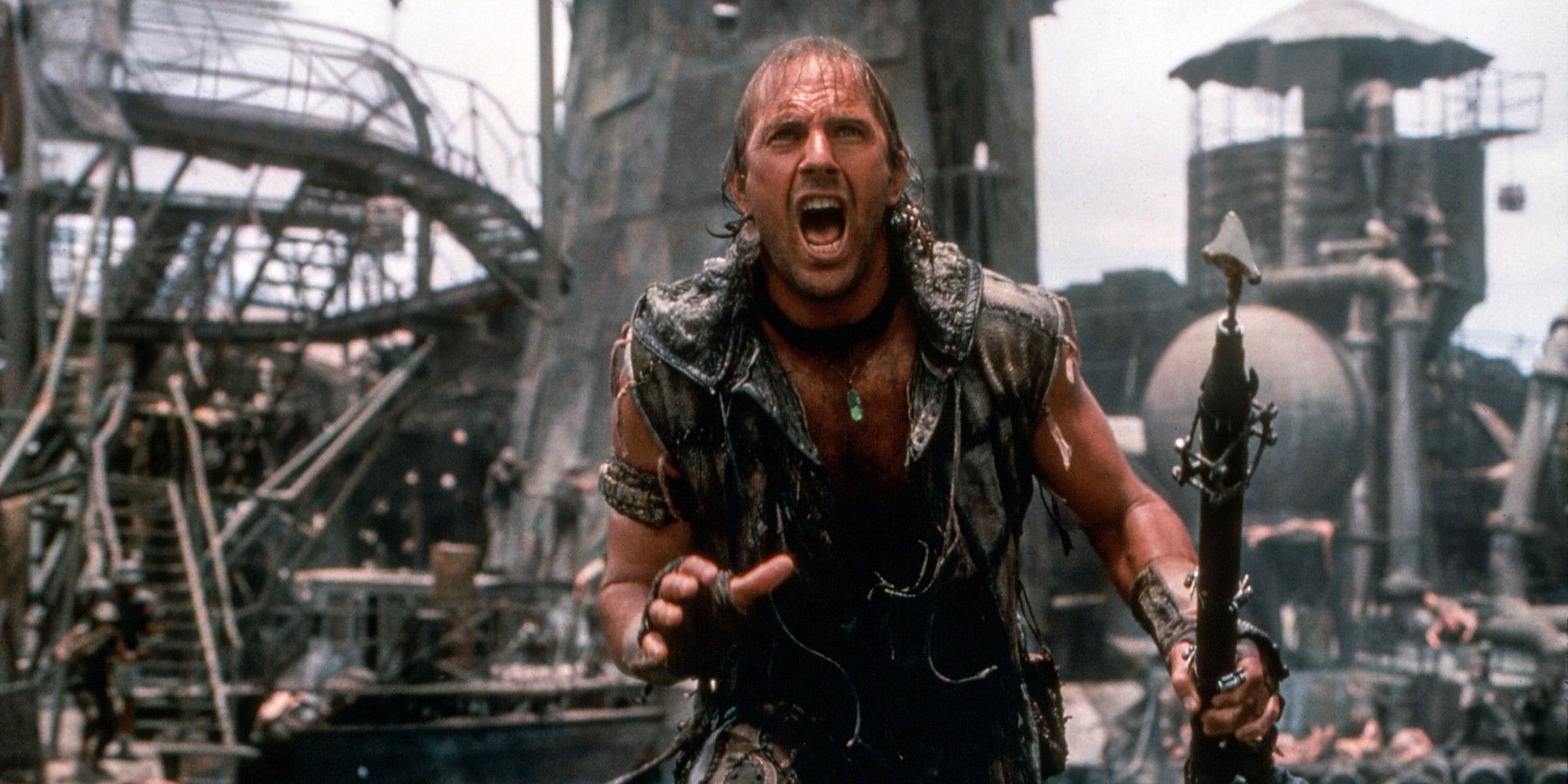
However, the unabashedly goofy and frankly astonishing spectacle that the movie delivers is still resonating with audiences — it was recently among the top 10 most-streamed on Tubi — and most likely with filmmakers tackling the post-apocalypse, as well. Costner's performance and the filmmakers' sheer dedication to pure analog spectacle honestly put many 2020s action films to shame, and favorably recall George Miller's outrageous new Mad Max duology once Hollywood welcomed him back and gave him the money to tell the story he wanted to tell.
What Is 'Waterworld' About?

Waterworld makes an admirable gamble with its opening sequence, introducing its post-climate apocalypse world by first showing the Universal Pictures logo overtaken by water, then Kevin Costner's protagonist ("the Mariner") at sea and gradually drinking his own piss — via a new analog purification method, of course. It's also revealed here that the Mariner has webbed feet and gills (an object of much mockery by Waterworld's critics). He ends up on the run from a diesel-fueled pirate faction called the Smokers, led by a reliably demented Dennis Hopper, channeling as much Frank Booth as he can in an ostensibly family-friendly sci-fi romp.
The Mariner also takes under his wing a young woman played by Jeanne Tripplehorne and a mysterious child (Tina Majorino) who has a map to the mythical "dryland" tattooed on her back. It's a prototypical action-adventure, with a gruff hero eventually coming round to what his charges have to say and realizing they may have a larger battle to right. Waterworld distinguishes itself, though, with a visit to the literal Exxon Valdez (rendered as a villains' hideout), the suggestion that only Mount Everest remains as "dryland," and the sheer, borderline insane practical film-making on display.
'Waterworld' Is Still a Mind-Blowing Action Spectacle Today


The most expensive movie ever made in its day, Kevin Reynolds' mega-epic was also a mega-bomb, failing to even make back its budget. Although it currently sits at a reasonable 61% on Rotten Tomatoes, Waterworld was widely mocked for the impossibility of making a return on the studio's investment. The film was also savaged for some of its dubiously goofy elements. though even in his largely negative review, Roger Ebert still praised the film for its "virtuoso action sequences" and Costner's laconic, Mad Max-style performance.
Still, Waterworld is one of the grandest analog spectacles ever made, and the kind of thing we'll likely never see again in multiplexes. Watching these stunts, sets, miniatures and mattes, largely filmed on open water, is breathtaking today. People were in danger, whole days of shooting could be thrown out in a minute if the slightest thing went wrong, and they still pulled off a competent picture. It's a staggering achievement and a feast for the eyes. The film (co-written by the Chronicles of Riddick's David Twohy) posits a genuinely interesting — and today, all-too plausible — future and populates it with loveable freaks. If Reynolds was a tighter action director and the film were a bit shorter, it may have even approached Miller's Mad Max masterpieces.

- Release Date
- July 28, 1995
- Runtime
- 135 minutes
- Director
- Kevin Reynolds
-

Dennis Hopper
Deacon
-

Mariner
-

Jeanne Tripplehorn
Helen
-

Tina Majorino
Enola
KioskNews shows a cleaned-up reading view extracted from the publisher’s page — the original always lives on their site, not ours.