What’s with Marcos’ new EO on class suspensions?
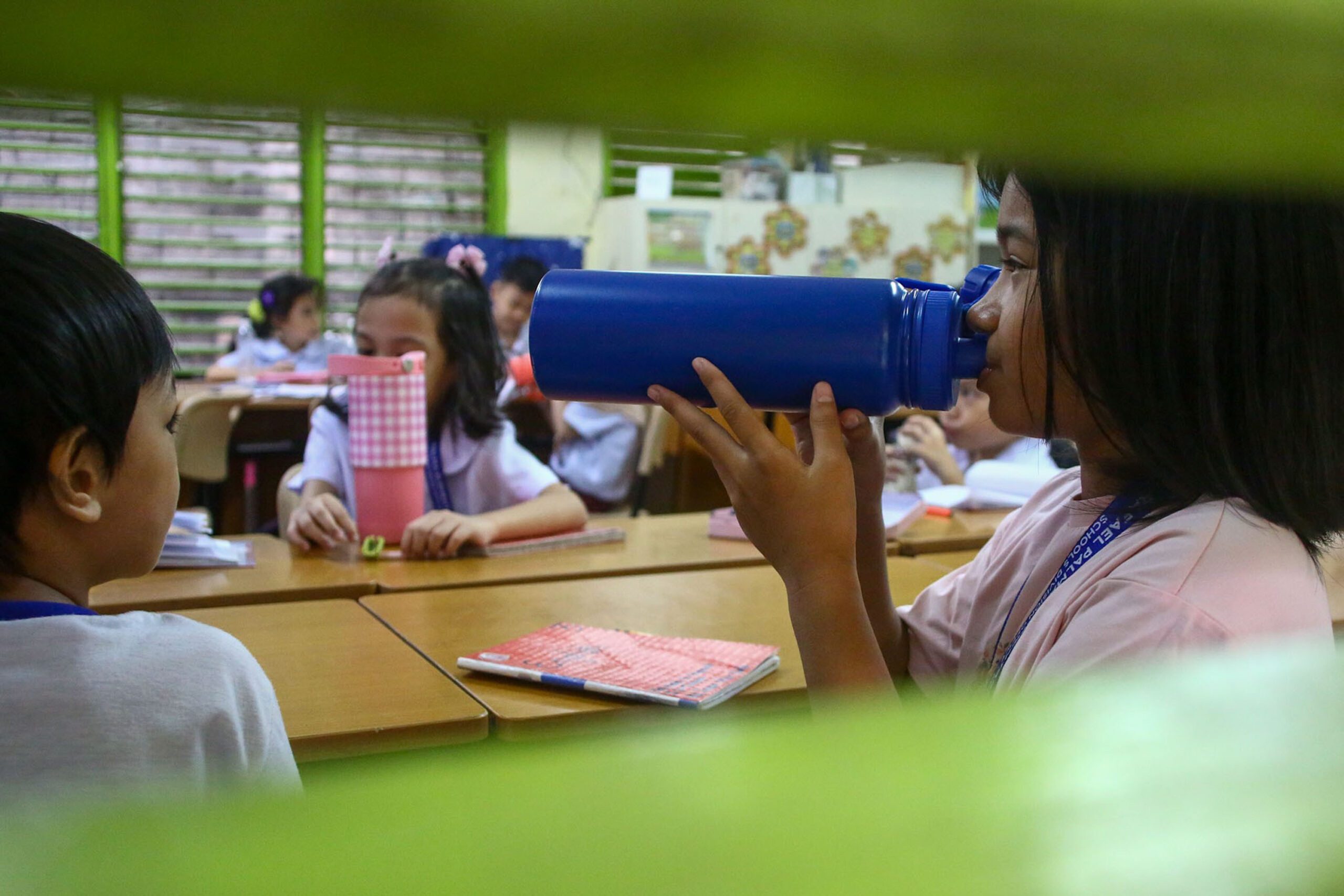
Blanket orders no more? President Ferdinand Marcos Jr.’s Executive Order No. 130 provides an updated framework for declaring #WalangPasok.
AT A GLANCE
- President Ferdinand Marcos Jr. signed Executive Order No. 130, introducing three mechanisms for class suspension.
- The goal is to minimize lost instructional time.
This is AI-generated. Read the article for full context. Report any errors.
MANILA, Philippines – School heads are now more empowered to suspend and resume classes following a new executive order (EO) from President Ferdinand Marcos Jr.
EO No. 130, signed last Wednesday, October 28, and publicized on Tuesday, November 3, introduces a framework for the suspension and resumption of face-to-face classes through the following mechanisms: automatic, localized, and granular.
The EO also seeks to ensure the “uninterrupted delivery of quality education through risk-informed, science-based, locally responsive policies that support learning continuity.”
Pending formal implementing guidelines, which must be issued within 30 days, let’s try to break down this new EO.
What does granular suspension mean?
Through granular suspensions, a school can suspend classes even if there is no applicable automatic suspension or localized suspension ordered by a local chief executive.
This must be based on the determination of actual or imminent threat to the safety, health, and welfare of students and school personnel over “documented site-specific conditions.”
School heads can also declare resumption of face-to-face classes earlier than the prescribed end of the localized suspension. For this, school assessments must show that the “conditions warranting suspension no longer exist or have been sufficiently mitigated” to ensure safety of students and personnel.
The granular suspension and resumption of classes must still be in coordination with the local chief executive.
What is automatic suspension?
Automatic suspension is based on the warnings, advisories, alert levels, forecasts, or other issuances from agencies such as the Philippine Atmospheric, Geophysical, and Astronomical Services Administration or PAGASA; the Philippine Institute of Volcanology and Seismology or Phivolcs; and the Environmental Management Bureau.
The EO states that “suspension shall automatically take effect, without need of further declaration.”
The thresholds for the warnings and other issuances must be specified in the implementing guidelines.
An example for this could be Pasig City’s class suspension guidelines, which list various scenarios during emergencies, not only wind signals for tropical cyclones, where automatic suspensions will apply.
Face-to-face classes will automatically resume once the warnings or other issuances have been “lifted, downgraded, expired, or ceased,” and the required safety assessment inspections have been completed.
How about localized suspension?
When there is no applicable automatic suspension, local chief executives may declare localized suspension “within specific areas in their jurisdiction” based on documented local risk assessments and prevailing conditions.
According to the EO, the local chief executive must specify the following:
- Areas covered by the suspension, which may include an entire locality or specific places or barangays
- Schools covered, as far as practicable
- Duration of the suspension
The local chief executive should consult barangay captains, schools division superintendents, and heads of private schools for the scope and duration of the class suspension.
Classes will resume once the period specified in the suspension order ends, and safety assessment inspections are completed.
Why are these important?
The Department of Education (DepEd) proposed these revised guidelines on class suspensions to Malacañang in September, in a bid to amend EO No. 66, which was signed in 2012.
The new EO comes months after the DepEd updated its own class suspension guidelines to adopt the 4H framework, or Hayo (Continue), Hinay (Ease-in), Hinga (Check-in), and Hinto (Stop).
The 4H framework guides schools on what learning mode to use in specific emergencies. It also introduced the concept of granular or school-based suspension orders.
“While learner and teacher safety remains strictly non-negotiable, we can no longer rely on sweeping, blanket suspensions when a campus is dry, safe, and ready to teach,” Education Secretary Sonny Angara said in a statement on Tuesday.
“By authorizing granular resumptions alongside localized suspensions, President Marcos is giving our school heads and local executives the legal framework to reopen cleared campuses safely without waiting for broader declarations.”
Since 2024, the Second Congressional Commission on Education (EDCOM 2) has pushed for the policy shift as it found significant class time lost to calamity-related suspensions.
Particularly, it found that schools lost an average of 15 school days annually due to calamity-related suspensions in the past two school years.
“While our learners’ safety remains the priority, we also have to recognize that every day of lost instruction has consequences, particularly for children who are still learning how to read. We cannot allow the worsening of learning loss because of blanket suspensions that could have been more granular and targeted,” EDCOM 2 Commissioner and Senate President Win Gatchalian said.
The guidelines on the suspension and resumption of classes will be tested in the coming months as the country experiences the effects of El Niño. – Rappler.com
KioskNews shows a cleaned-up reading view extracted from the publisher’s page — the original always lives on their site, not ours.