Hungary finds $30 million cash, some buried in forests, in bribery probe
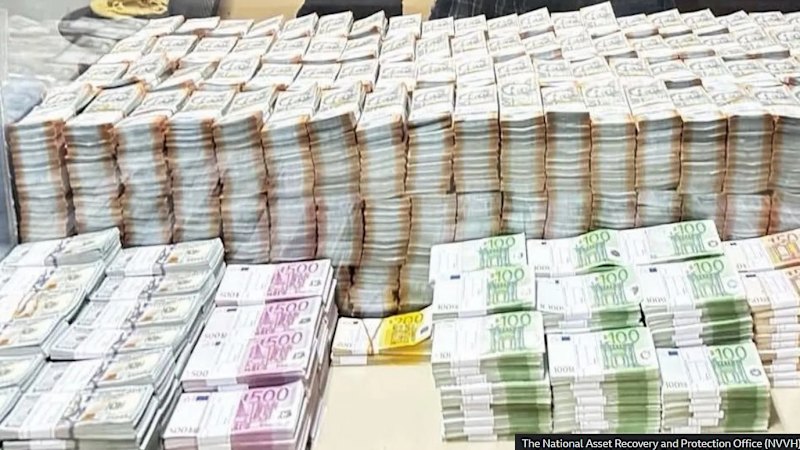
Budapest: Hungarian authorities have recovered nearly $30 million in cash, some buried in forests or hidden in farm buildings and warehouses, in a bribery investigation into Miklos Sesztak, a minister under former leader Viktor Orban.
Prime Minister Peter Magyar ousted Orban after 16 years in power in an April election, pledging to mend ties with the European Union strained by years of disagreements under Orban, and to launch a sweeping investigation into allegations of graft.
The clampdown is part of an anti-graft drive that the centre-right Magyar has dubbed Operation Purgatory, which 70 per cent of people rated as “very important” in a survey by the pollster Median, carried by news website HVG last week.
“During searches, investigators found large amounts of cash buried in forests, hidden in farm buildings, warehouses and a residential property, and stored in a high-value safe in a secluded location,” said newly created anti-corruption agency the National Asset Recovery and Protection Office late on Friday (Budapest time).
Finance Minister Andras Karman said it took a dozen state treasury workers eight hours – using banknote counters – to count the cash that had been retrieved.
Magyar said the recovered cash signalled the end of what he described as a “mafia” led by Orban’s right-wing Fidesz party and his Christian Democrat allies during Orban’s rule. Fidesz wrote in a Facebook post that it hoped Sesztak was not connected to the cash.
“Since the change of regime, every lawmaker in Hungary has sworn an oath to abide by and enforce the law. Fidesz-KDNP (Christian Democrats) cannot associate itself with anyone who fails to do so. We trust that the images published by the NVVH [asset recovery office] have nothing to do with Miklos Sesztak,” Fidesz wrote.
Sesztak, who was Orban’s development minister from 2014 to 2018, has denied wrongdoing. His lawyer, Gabor Papp, did not respond to a request for comment on the recovery office’s statement. But he told local news website Telex the seized cash did not belong to Sesztak, a member of parliament’s economic and energy affairs committee. He added that the bribery case also involved other suspects.
But Bence Retvari, parliamentary group leader of the Christian Democrats, said Sesztak, the party’s vice chair, should relinquish his parliamentary mandate as he seeks to clear his name. “This is an individual criminal case, and the criminal proceedings must be kept strictly separate from our political community,” Retvari said on Facebook. “Peter Magyar wants to use it to portray the entire right as a criminal organisation. We reject this in the strongest possible terms!”
In separate investigations, two former ministers from Orban’s government and former central bank chief Gyorgy Matolcsy are under arrest over graft accusations. They have denied wrongdoing.
Authorities have also detained Orban’s brother in a people-smuggling case that the former leader has dismissed as an act of political revenge.
Political scientist Gabor Torok said the images of the cash were so vivid they were likely to spell doom for Fidesz, whose support fell by half from its pre-election level to 16 per cent of voters in November, a Median survey showed.
KioskNews shows a cleaned-up reading view extracted from the publisher’s page — the original always lives on their site, not ours.