How a fuel crisis is threatening Bangladesh’s reform goals: ‘it hit our citizens hard’
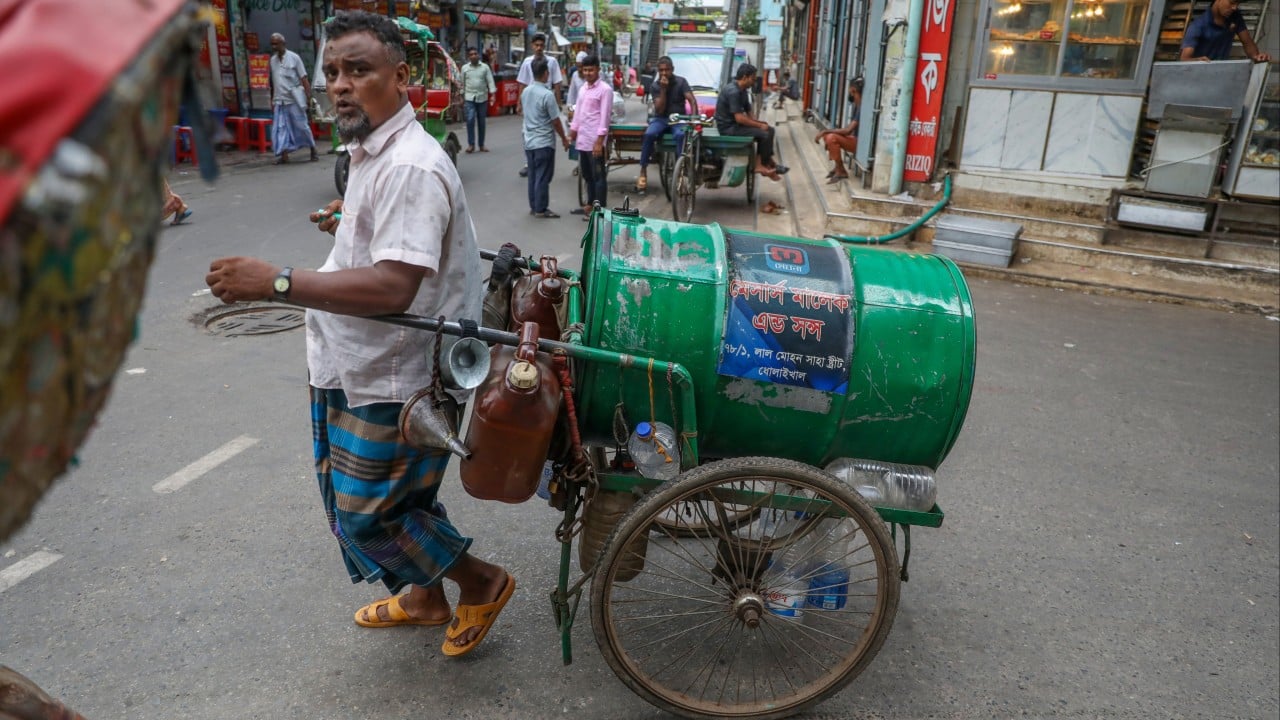
Confronted by a fuel crisis beyond its control, Bangladesh’s government is spending hundreds of millions of dollars each month to insulate its people from surging prices.
But as growth slows and inflation rises, the new government’s reform plans are being tested before it has had much time to clean up the country’s bad banks or retool its young, abundant – but underemployed – workforce for the AI era.
Prime Minister Tarique Rahman took office on February 17, elected on promises of sweeping economic and social reforms to turn the country of 175 million people into a US$1 trillion economy within a decade.
An interim government had steered the country through the treacherous months following Sheikh Hasina’s downfall in 2024. She was ousted by a student-led revolt after what they claimed were 15 years of repression, corruption and bad governance.
Her critics say those years saw cronies freely dip into state banks, stuffing them with bad loans, and leaving the healthcare and education systems in tatters while filling the civil service with loyalists to her Awami League party rather than competent administrators.
But just 11 days after Rahman – a scion of a rival political clan to Hasina – was sworn in, the US and Israel attacked Iran, sending the price of oil and gas upwards.
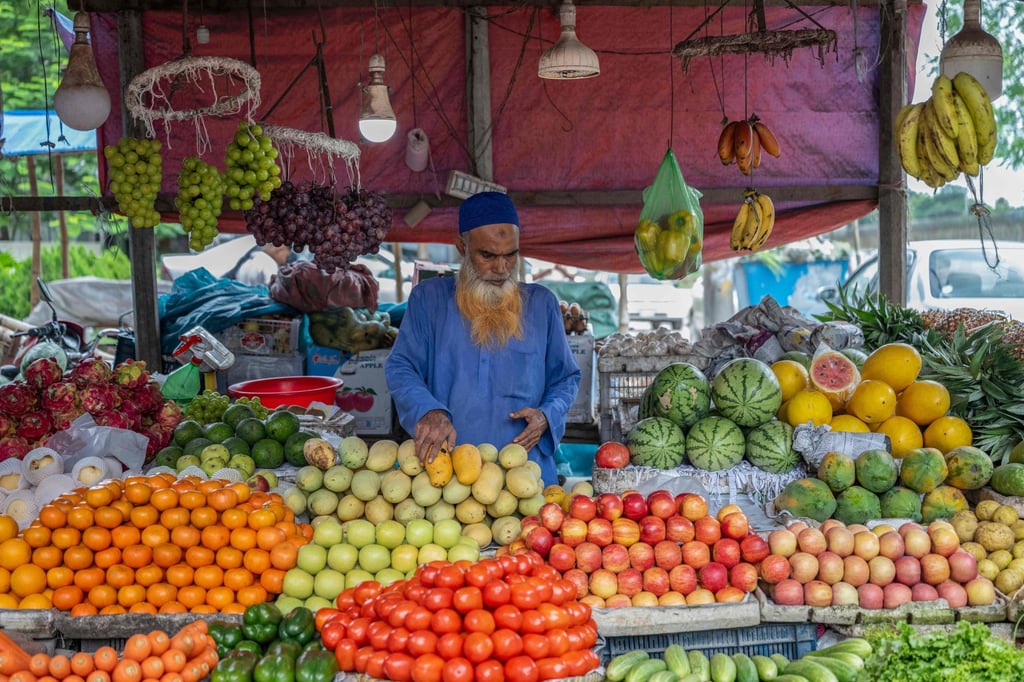
In Bangladesh, which imported about 65 per cent of its energy needs last year, that has meant power cuts, long queues at petrol stations and driven up the costs of everything from transport to food.
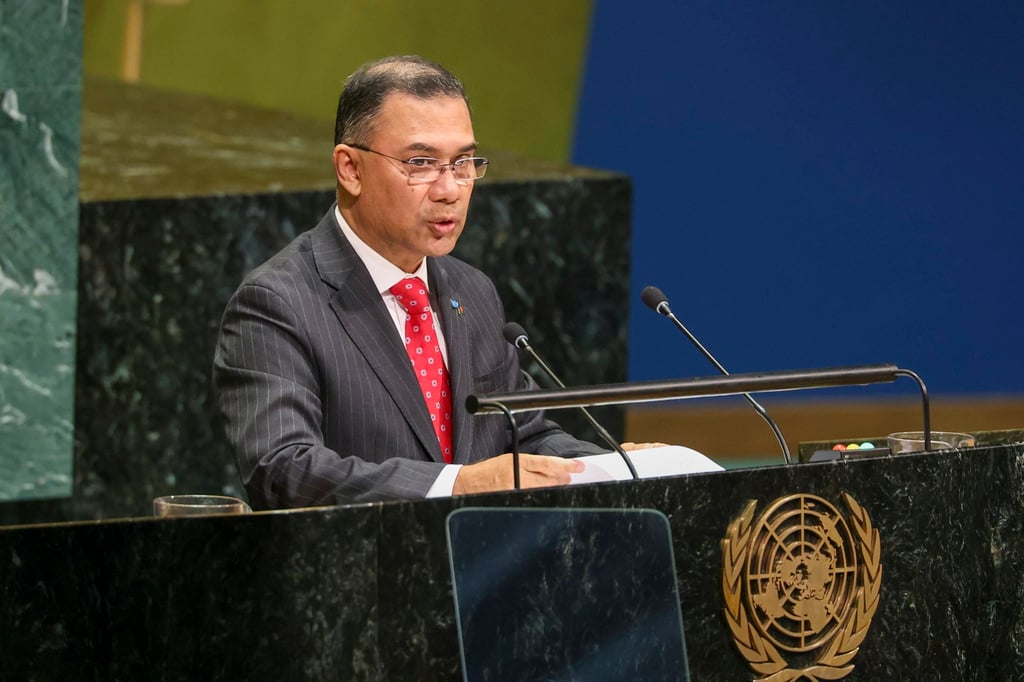
“Energy is not just buying oil, gas or fertiliser,” Rashed Al Mahmud Titumir, an adviser to Rahman, told This Week in Asia on the sidelines of the IMF–World Bank summit in Bangkok.
“It hit our citizens hard,” he said. “Our estimates are that from late February to [now] we have spent an estimated US$4.1 billion in additional costs.”
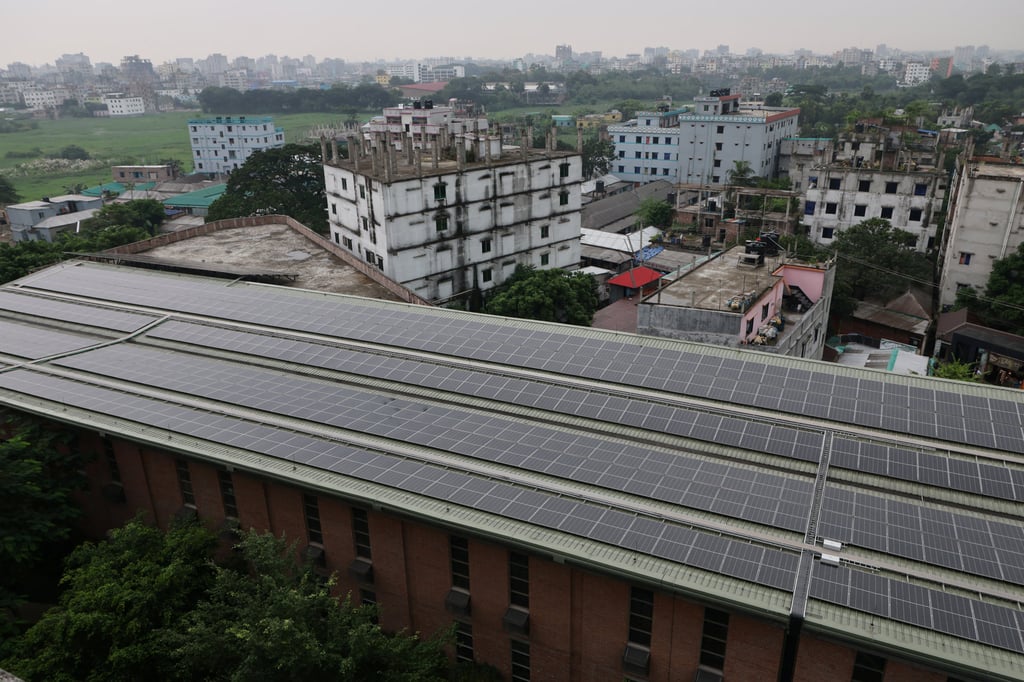
Some of the impact should have been absorbed by the solar power potential in a nation that roasts under the sun more than ever as the climate heats up.
But “the previous government didn’t build any sustainable energy security infrastructure”, he said, part of a legacy of years of mismanagement and corruption.
The World Bank and Asian Development Bank have loaned hundreds of millions of dollars to help ease the government’s burden to cover energy costs.
The International Monetary Fund (IMF), which has about US$1 trillion in loan capacity, has also dispersed nearly US$3.6 billion since 2023 – a loan Rahman’s government is hoping to renegotiate this week in Bangkok.
But as the outside pressures build, this week the IMF trimmed Bangladesh’s growth projection for 2027 to 3.2 per cent from 3.6 per cent this year, putting it below climate-battered Nepal and Cambodia among developing Asian nations.
It also forecast inflation to nudge upwards next year to 10.9 per cent from 8.7 per cent this year – although Bangladesh’s government said both projections had not fully taken into account the impact of its structural reforms of bad banks, indebted businesses and a hollowed out welfare state.
“Unfortunately the people are suffering for the misdeeds of the previous regime,” Titumir said. “We have already brought five banks to be owned by the government … after fears there will be a bank run, that has now calmed. We want to bring discipline into the system [and] then provide finance for investment, finance for expansion.”
Future growth, he said, would sprout from foreign investment into new manufacturing – including electronics and toys – infrastructure, solar power, deep-sea ports and new special economic zones, including the US$1.3 billion Chinese-backed Anwara in Chattogram in southern Bangladesh.
Bangladesh also has a young population, deep experience in manufacturing including the key garment industry, and a seam of cheap workers for firms looking to relocate from Southeast Asia where costs are rising.
But questions remain over how Bangladesh will get fit for immediate needs of energy, skills and infrastructure to gain from the AI revolution, which undergirds global growth.
The IMF message this week in Bangkok has been to identify a two-tone global economy, where sky-high energy prices have hit growth but the trillions of dollars sunk into AI and its spin-off industries – data centres, semiconductors and printed circuit boards – have driven momentum in many countries.
“Who is taking the biggest hit? Low-income countries. Especially those who are energy importers or left out from technology boom,” IMF managing director Kristalina Georgieva said on Wednesday.
She hailed Asia as “the engine of global growth” but warned nations roiled by the energy crisis to run a tight ship despite the political temptations to roll out sweeping subsidies.
“First protect your buffers, protect your fiscal space,” she said, advising governments to give out “temporary and targeted support to the most vulnerable”.
Bangladesh, the second-largest economy in South Asia, is at a turning point. A new Bangladesh National Party (BNP) government came to power with a two-thirds majority in February’s election on a reform banner but it faces a large population anxious for delivery on fresh opportunities after the ulcerous Hasina years.
Rahman’s family has traded power with Hasina’s clan for much of the South Asian nation’s short but turbulent history.
The 57-year-old returned from years in self-exile in London to successfully contest elections this year after an interim government led by Nobel laureate Muhammad Yunus plotted a route through the chaotic and dangerous period following Hasina’s ousting by student protesters whom she had tried to repress with violence.
“We have delivered in the past,’’ Titumir, the prime minister’s adviser added, saying Rahman’s “political approval” has given him a remit for reform.
Rahman’s mother, Khaleda Zia, served three terms as prime minister between 1991 and 2006. She was put under arrest several times for her political activism as she vied with Hasina – the daughter of independence icon Sheikh Mujibur Rahman – for power.
Zia died last year. Her husband, former army commander and war hero Ziaur Rahman, was assassinated in 1981 after five years leading the country.
KioskNews shows a cleaned-up reading view extracted from the publisher’s page — the original always lives on their site, not ours.