No research fund, no teaching job: late Chinese pianist’s note published by student
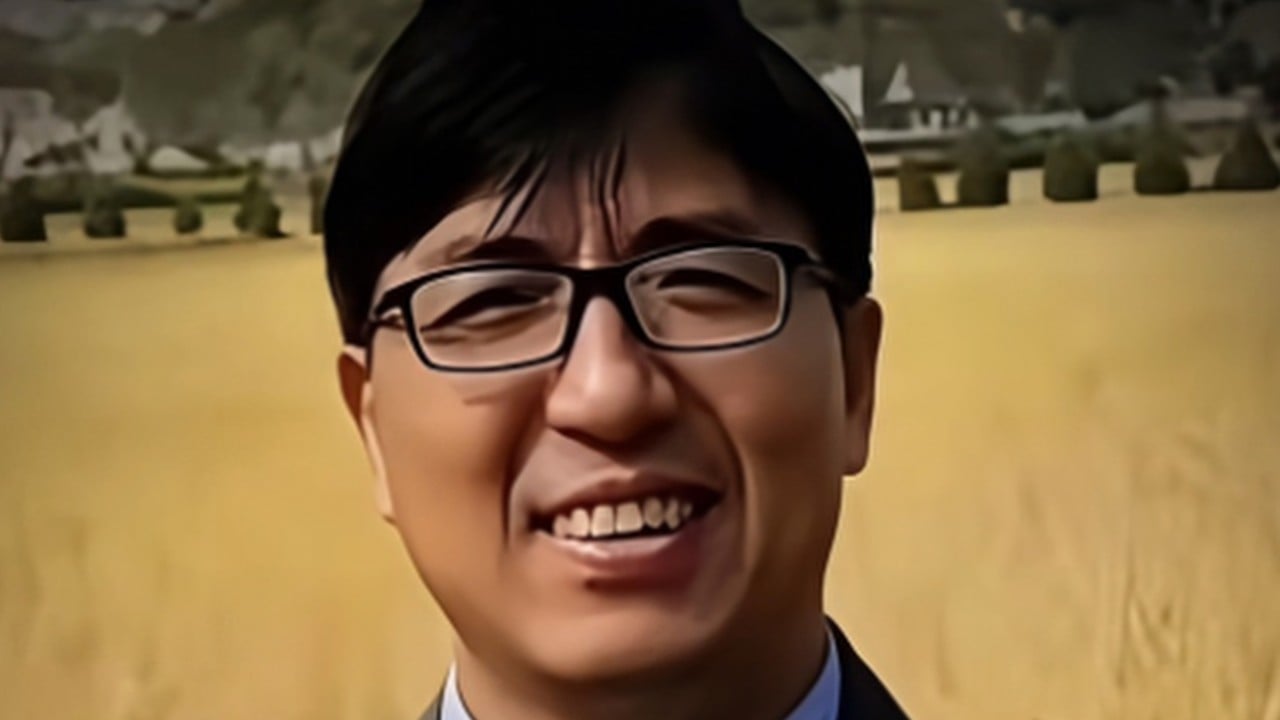
A Chinese pianist ordered to secure research funding to save his university job has taken his own life, while a note that he left exposing alleged malpractices at the institution was posthumously posted online by one of his students – with his family’s consent.
The note was penned by Bai Baoguo. Born in 1972, Bai was an associate professor at the Yan’an University’s Luxun Academy of Fine Arts in Shaanxi province. He died on October 20.
Two weeks later, on November 3, a six-page note circulated on the Chinese internet, blowing the whistle on questionable practices at the university and exposing issues that included faculty members being required to fund their own research, and some staff remaining on the payroll while undertaking no work.
The following evening, the Shaanxi Provincial Department of Education issued a statement confirming the 54-year-old academic’s death.
“Recently, a teacher at Yan’an University surnamed Bai tragically passed away, and we are deeply saddened,” the authority said.
It added that it attached “high importance” to the issues raised online, stating that a joint investigation team had been set up to conduct a comprehensive inquiry and the matter would be handled in accordance with the law and regulations.
Multiple mainland Chinese media outlets confirmed the letter was published by one of Bai’s students, with the consent of his family.
The student had taken piano lessons from Bai for six years during primary school and maintained close ties with his family. The South China Morning Post has contacted the student but has yet to receive a response.
An unnamed source told China Newsweek that at noon on October 20, while his family was taking a nap, Bai left his bank cards and other belongings on his wife’s pillow. He then took a taxi alone to a location in Yan’an, where he was later found to have died.
12:18
What is the outlook for China’s fresh graduates in an already crowded job market?
According to his profile on the university’s website, Bai graduated from the Wuhan Conservatory of Music and had been deeply involved in piano teaching for over 30 years. He held memberships in several organisations, served as an examiner for music grading tests and was a member of the Chinese Musicians’ Association.
Bai also served as a judge for multiple piano competitions over consecutive years. Academically, he published more than a dozen papers and was repeatedly awarded the university’s prize for outstanding supervisor of undergraduate and postgraduate dissertations.
However, the highly respected pianist in the local music community struggled in his final days, forced to choose between maintaining his integrity and keeping his teaching position.
In the letter, the late professor disclosed numerous problems with the university’s administration. One such issue was the imposition of rigid quotas on staff for securing corporate research funding and publishing papers.
Because these targets were difficult to meet, Bai revealed that, in practice, most teachers had to front the money themselves. They would transfer funds to the university through a partner company and the money would then be routed back to them through the university’s financial channels – a fraudulent practice used to fake the completion of their funding targets, he wrote.
“I am a piano teaching professor at Yan’an University, undertaking a role in arts teaching and performance. The core duties of my position are classroom teaching, stage performances and the cultivation of artistic talent.”
However, because he refused to comply with this evaluation system, he wrote that in September 2025, the university’s human resources department notified him that he was facing demotion and a change of contract for failing to meet his performance targets.
The university gave him a deadline to rectify the situation, forcing him to pay 150,000 yuan (US$22,490) out of pocket to meet the project funding requirement and a further 50,000 yuan to secure paper publications.
Knowing this amounted to academic misconduct and violated regulations, he found himself in deep “internal conflict”, writing that he could “only prove my innocence with my death”.
The funding referred to here is known in Chinese academia as “horizontal funding”, which applies to research projects commissioned by enterprises or social organisations.
Its original intention was to promote industry-academia collaboration; however, it is reportedly common for academics to pay out of their own pockets to fulfil non-existent partnership agreements to meet their quotas.
A survey published in the newspaper Chinese Social Sciences Today in August this year showed that among 117 university teachers, nearly 90 per cent were aware of colleagues engaging in the shadow practice of self-funding these industry projects.
The article noted that some universities had continuously increased the quantitative weight of such funding, “ignoring the differences in resource endowments between different disciplines and types of institutions”.
The professor’s note also mentioned that Yan’an University had a mandate that “all professors must publish a certain number of papers per contract term”, leading the vast majority of teachers to pay out of their own pockets to get published in order to satisfy the assessment criteria.
In stark contrast, the pianist revealed that some staff members had been absent from their posts for long periods – undertaking no teaching, research or administrative duties – yet were still rated as “qualified” in annual appraisals, with their salaries and performance bonuses completely unaffected.
Bai’s student told the media that the pianist had been suffering from depression for around two years and had even been hospitalised for it.
In the months leading up to his death, Bai was said to have begun writing phrases on paper such as, “Heavens, what should I do? Save me.”
If you have suicidal thoughts or know someone who is experiencing them, help is available. In Hong Kong, you can dial 18111 for the government-run Mental Health Support Hotline. You can also call +852 2896 0000 for The Samaritans or +852 2382 0000 for Suicide Prevention Services. In the US, call or text 988 or chat at 988lifeline.org for the 988 Suicide & Crisis Lifeline. For a list of other nations’ helplines, see this page.
In the US, call or text 988, or chat at 988lifeline.org for the 988 Suicide & Crisis Lifeline.
KioskNews shows a cleaned-up reading view extracted from the publisher’s page — the original always lives on their site, not ours.