Two views in dowry death case? Kerala High Court says benefit must go to accused
The Kerala High Court has said that while direct evidence of matrimonial cruelty is rarely available when a wife dies at her matrimonial home, courts must carefully weigh surrounding circumstantial evidence and specific overt acts regarding dowry demands. But the court held that if the evidence permits two plausible interpretations, the view favouring the accused must prevail, especially when the prosecution’s case contains unresolved doubts. The observations came while acquitting a husband and his father in a dowry death case, holding that doubts in the prosecution’s evidence must benefit the accused.
Justice A Badharudeen made the observations while acquitting a husband and his father in a dowry death case involving the death of a woman, who died by suicide at her matrimonial home in October 2006, a little over a year after her marriage.
“It is true that when a wife dies at the matrimonial home, direct evidence to establish the acts of cruelty may not be available. Therefore, the attending circumstances, in the form of circumstantial evidence and certain overt acts during their married life, in the form of direct evidence available, to be considered to ascertain whether the allegations of cruelty demanding more dowry to be found. At the same time, when two views are possible on the basis of the evidence available, the view favourable to the accused has to be adopted in the interest of justice, particularly when the prosecution case is not fully free from doubts,” the court said on November 6.
The court made the observation while allowing an appeal by the husband and his father against their conviction by the an additional sessions court. It found inconsistencies in the prosecution witnesses’ accounts, insufficient details of the alleged acts of cruelty and medical evidence indicating that the woman had been treated for postpartum psychosis. The court held that the prosecution had failed to establish beyond reasonable doubt that the alleged harassment had driven her to suicide.
Conflicting accounts of additional gold demand
The couple got married on August 28, 2005. Woman’s father told the court that he had given her 19.5 sovereigns of gold at the time of marriage. According to his testimony, his daughter complained within days of the wedding that her husband and father-in-law were troubling her over the quantity of gold and demanding another 15 sovereigns.
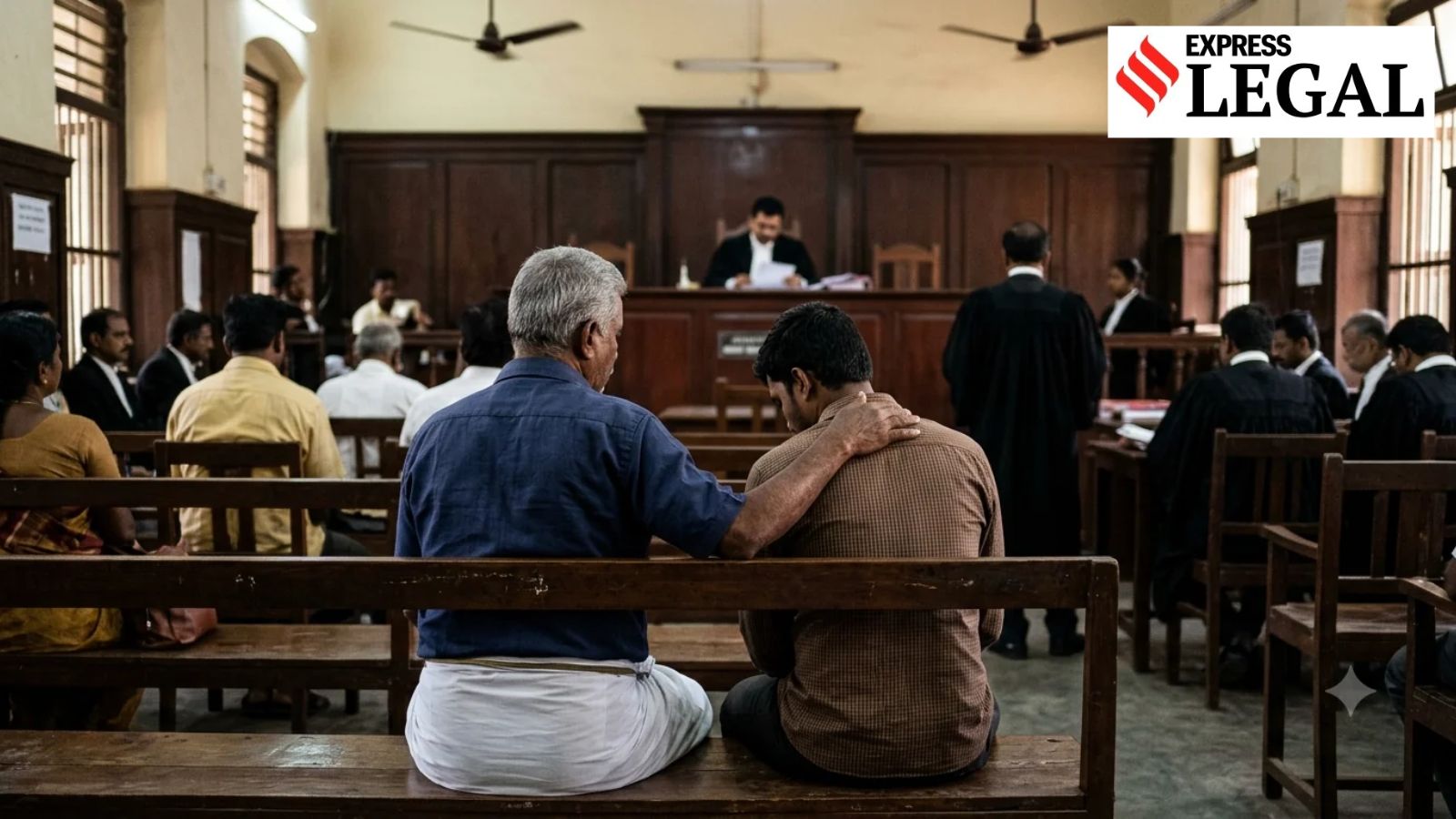
 Justice A Badharudeen observed that circumstantial evidence and specific acts during marriage must be examined when allegations of dowry-related cruelty are assessed. (Image enhanced using AI)
Her parents alleged that the demand continued during the marriage. They also said that when they went to bring her to their home for delivery, the family demanded additional gold. However, her maternal uncle gave a different account, stating that the demand was for 50 sovereigns.
Taking note of this discrepancy between the accounts of the parents, who spoke of 15 sovereigns, and the uncle, who referred to 50 sovereigns, the court also said that the father’s evidence did not disclose any specific instance of mental or physical cruelty apart from the alleged demand for additional gold.
Story continues below this ad
The court examined the mother’s account of a visit to the matrimonial home three days before woman’s death. She alleged that the family refused to let the relatives hold the child unless the remaining gold was given and that her daughter was dragged out of a room after her father-in-law caught hold of her. However, the court noted differences between the parents’ accounts of the visit and the alleged incident.
Psychiatrist’s evidence on postpartum psychosis
The defence also relied on woman’s mental health. A psychiatrist examined as a defence witness, testified that her husband and father-in-law had brought the woman to him on September 4, 2006. The doctor said he had diagnosed her with postpartum psychosis after noting symptoms including loss of sleep, unhappiness, fear, lack of interest in food and crying.
The doctor told the court that severe cases of the condition could involve suicidal tendencies. She was prescribed medicines and advised to return for a review after a month, but she did not come back. The doctor issued a certificate on January 1, 2007, after her death, recording the earlier consultation. The high court acknowledged that the certificate and related records were issued after her death, but considered the doctor’s testimony relevant while assessing the possible reasons for her suicide.
The court did not conclude that postpartum psychosis caused her death. It considered this medical evidence alongside the prosecution’s allegations and other circumstances, finding that the reason for her suicide remained doubtful. The court also considered evidence that the husband had visited her and their child after delivery, given Rs 5,000 towards the child’s expenses and that ornaments were gifted to the newborn.
Story continues below this ad
It noted that she had returned to the matrimonial home after staying with her parents for delivery. These circumstances formed part of the overall assessment and were not treated as conclusive proof that no harassment had occurred. The court further noted that earlier statements of some prosecution witnesses recorded by the police had not been made available to the accused, limiting their ability to use those statements to confront the witnesses during cross-examination.
It ultimately found that the allegations of harassment and creation of difficulties were largely general and did not specify the acts of cruelty in sufficient detail. The court said it remained doubtful whether she died by suicide because of postpartum psychosis or because of the alleged conduct of the accused.
The trial court had sentenced the husband and his father to seven years’ rigorous imprisonment each for dowry death and three years’ rigorous imprisonment each for cruelty, besides imposing a fine of Rs 25,000 each. Setting aside the convictions and sentences, the high court allowed their appeal and acquitted both men of all charges.
KioskNews shows a cleaned-up reading view extracted from the publisher’s page — the original always lives on their site, not ours.