Didn’t go to school, but took officials to Supreme Court over husband’s ‘custodial death’
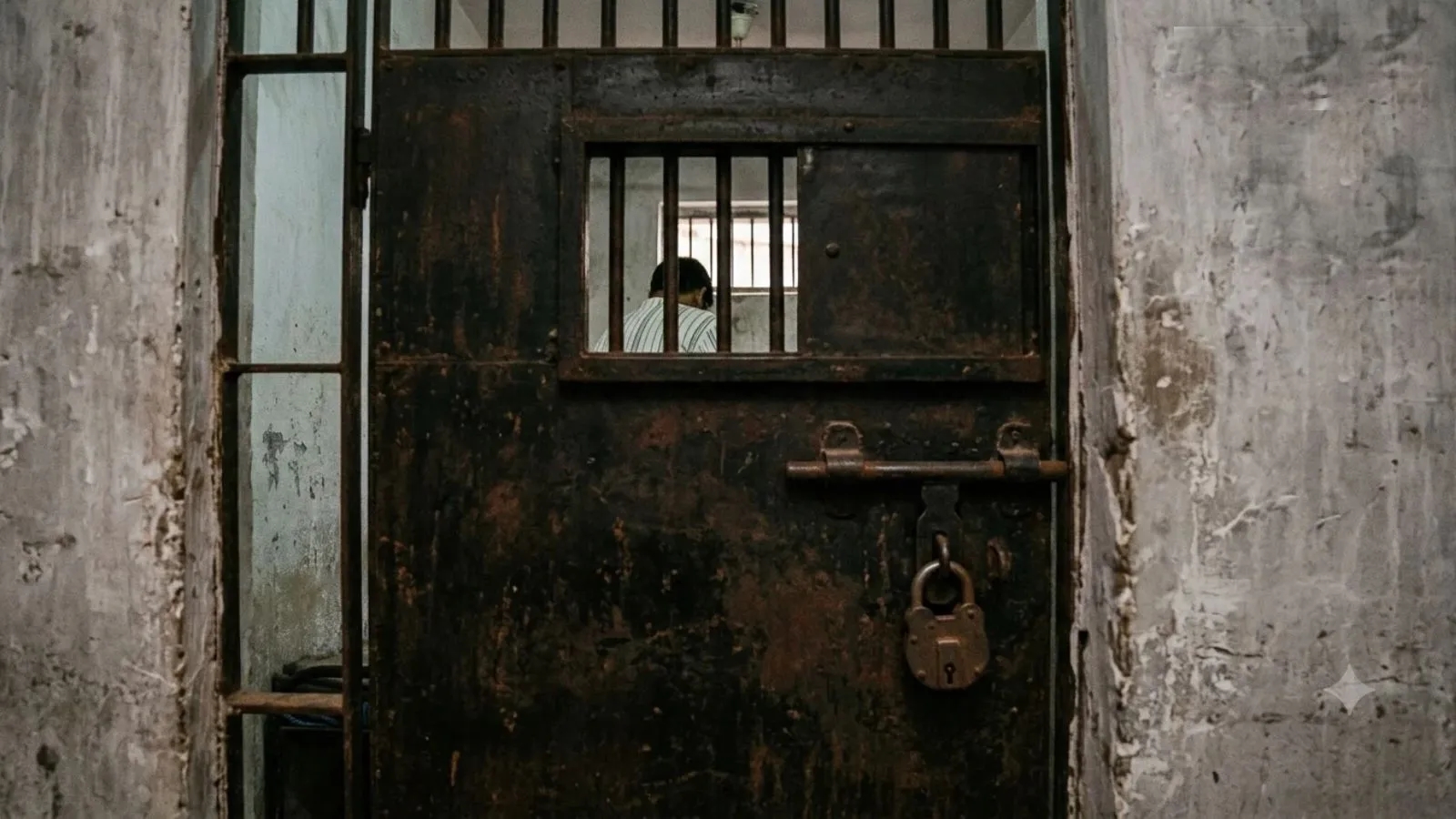
Lehra Bai, 35, was not present in person when the Supreme Court came down hard on the Chhattisgarh DGP, Director General (Prisons) and Principal Secretary (Home) for their handling of her case, calling their actions “sacrilegious” and their claims “patently false and wholly reprehensible”.
It took a fight of more than two years, but the 35-year-old mother of two, who never went to school, had made her voice heard, ensuring that the death of her husband, allegedly in custody, did not go unacknowledged. The Court directed the Chhattisgarh government to pay her interim compensation of Rs 25 lakh, ordered a CBI inquiry, and said that a criminal case be registered against the guilty officials.
On January 18, 2024, Shravan Suryavanshi Tamre was at his shop next to his house in Mohra village in Bilaspur district, when a team from the Sipat Police Station suddenly drove up, Lehra recalls.
She ran out from a neighbour’s house and saw Tamre, 34, being bundled into a police van. “He had been caught earlier, and let go. So, I thought they would leave him in a day. But that was the last time I saw him,” Lehra says.
Tamre was arrested under Section 34(2) of the Chhattisgarh Excise Act, 1915, for allegedly possessing 6 litres of mahua liquor, worth Rs 1,200. A first-time conviction under the Act means imprisonment of not less than one year, extendable to three years, and a fine of at least Rs 25,000, going up to Rs 1 lakh.
When her brother Jagprasad went to see Tamre at the police station, he was not allowed to meet him, says Lehra. “He saw Shravan behind bars and was told he had refused to eat the food we sent.”
Tamre’s father Amritlal, who lives nearby, was at school when the police came, and got to know about the arrest the next day. Then, on January 21 night, he says, a villager contacted by the police informed the family that Tamre had been taken to the Chhattisgarh Institute of Medical Sciences Hospital in Bilaspur, 19 km away.
Story continues below this ad
Amritlal says one of his other sons rushed to the hospital immediately, but the police did not let him in. When Sahildeo finally managed to sneak in around 3 am on January 22, he found Tamre dead.
Hospital records show Tamre’s time of death as 6 am on January 22.
Says Lehra: “I don’t know anything that happened after his arrest, only that he suffered a head injury. I did not even get to see his body properly.”
A medical report recorded no external injuries on Tamre, but the postmortem stated the cause of death as “cardio respiratory arrest due to head injury and its complication, which is caused by blunt objects”. It also recorded “laceration on the occipital scalp” with bleeding and no stitches, multiple bruise marks, swelling and bleeding from penis.
The court fight
Story continues below this ad
Days after Tamre’s death, lawyer Rajeev Kumar Dubey, who read about the incident in a newspaper, contacted Lehra and offered to represent her free of cost.
Dubey told The Indian Express he first wrote to the officer in-charge of Sipat Police Station, seeking CCTV footage of the station from January 18 to January 21, 2024, while Tamre was in custody. “We got no response. We then approached the Bilaspur SP and the DGP, Chhattisgarh, but our pleas were ignored. Following this, we approached the High Court in August 2024,” he says.
In December 2024, a Division Bench of the High Court ruled that the State was liable to pay Rs 1 lakh in compensation, blaming Tamre’s death on “negligence” by officials.
Dissatisfied with the compensation, Lehra approached the Supreme Court with Dubey’s help.
Story continues below this ad
In August this year, a Supreme Court Bench of Justices Vikram Nath and Sandeep Mehta criticised the High Court for awarding what it called “meagre compensation”, and for having “completely overlooked the prayer made for directing action against the officers… responsible for the custodial death”.
The Court noted that there was no dispute over the fact that a judicial inquiry report submitted on July 22, 2024, stated Tamre had died due to a head injury, and that the High Court had also taken the probe into account.
In light of this, the Court said, “the stance of blissful ignorance taken by… the Principal Secretary (Home), the Director General of Police and the Director General (Prisons), is sacrilegious and reflects a disturbing disregard of the statutory procedure governing custodial deaths”.
The Court slammed the “totally intransigent stance” of the DGP, that “since the inquiry report had not been received… there was no occasion for registration of a criminal case” into Tamre’s death; the “rather perfunctory and pedantic explanation for the grave omission” by the DG (Prisons) in forwarding the judicial inquiry report to police officials for follow-up action; and “a similar indifferent approach” by the Principal Secretary (Home). It accused the officials of “a cover-up story and an attempt to pull the wool over the Court’s eyes”, and called the DGP’s submission “patently false and wholly reprehensible”.
Story continues below this ad
At its last hearing on October 13, the Supreme Court granted the CBI three more months to complete its investigation and posted the matter for further hearing on February 2, 2027.
While the Chhattisgarh DGP then, Ashok Juneja, has retired, current DGP Arun Dev Gautam refused to comment on the matter.
Then Sipat Police Station in-charge, Inspector Naresh Chauhan, told The Indian Express: “I checked the CCTV footage and did not find anything suspicious. Tamre’s medical report before he was produced in court was normal and he had no injuries.” Chauhan also underlined that this was a third case under the excise Act against Tamre, after two incidents in 2023.
A family struggles
Tamre’s death left Lehra struggling to support their two daughters. The two had got married against the wishes of Tamre’s family, who frowned upon Lehra’s previous wedding and that she was older than him.
Story continues below this ad
The animosity remains, with Tamre’s father Amritlal, a government schoolteacher, moving the Supreme Court seeking a share of the compensation. Tamre was the eldest of his five children. The Court has put off the matter until the final relief is decided.
Lehra says she works as a farm hand and daily-wage labourer, earning Rs 300-odd a day to make ends meet. “But I cannot find work every day and am unable to take care of my daughters. I want them to study.”
Tamre wanted that for his daughters, 13 and 11, whom he doted on and named Sandhya and Sakshi, Lehra says. He worked hard to ensure the family had a house of their own and also paid off the loan. “He would tell our girls to study hard and become something ‘big’, a doctor or a collector,” Lehra says.
Amritlal says Tamre was as devoted to his parents and siblings, and started working as a mason soon after finishing Class 10, travelling long distances and for days on end, to help the family. According to Amritlal, it was he who was the role model for Tamre. “He wanted his daughters to be well-educated like me and get government jobs.”
Story continues below this ad
Arguing that he deserves a share in the compensation, Amritlal says: “I spent all my savings on bringing up my children.”
What they both want is “justice”. “Let the government decide what punishment the culprits deserve,” says Lehra.
KioskNews shows a cleaned-up reading view extracted from the publisher’s page — the original always lives on their site, not ours.