New initiative launched to provide timely support for caregivers of persons with disabilities
SINGAPORE – Rather than wait for caregivers to seek help when they are burnt out, a new initiative aims to detect early signs of distress so that there is appropriate help before a crisis happens.
CaringSG, a charity supporting caregivers of special needs children, launched on Aug 29 its new CAREmind programme, with the aim of reaching out to some 1,200 caregivers here over the next three years.
About 120 staff and volunteers will be trained to administer mental health screenings during the charity’s events, activities and house visits, so that tiered support can then be provided depending on a caregiver’s level of mental wellness.
For instance, caregivers with less intensive needs but who still require targeted support may be connected with a trained caregiver volunteer providing one-to-one emotional support under the charity’s CAREbuddy programme.
Those experiencing greater emotional distress or isolation may be linked up with a trained professional in social work, healthcare, special needs, or other related professions, under its CAREwell programme.
Speaking at the launch event at Enabling Village, Senior Parliamentary Secretary for Social and Family Development Eric Chua said caregivers of persons with disabilities may prioritise the needs of their loved ones over their own.
Prolonged caregiving without adequate support can lead to social isolation and emotional exhaustion, and too often caregivers seek help only at the point of crisis, he added.
Chua said a programme like CAREmind helps ensure that caregivers receive the support they need not only to care for their loved ones, but also for themselves.
“Caregiver burnout is real, but it does not always arrive suddenly. It can build quietly through accumulated stress, the consistent lack of rest, social isolation, and also the feeling that there’s simply no room to attend to one’s own needs,” he added.
“Too often, help is only sought when a caregiver has already reached or is nearing a breaking point, and that is why early support matters.”
CaringSG chief executive Edwin Tan said the programme seeks to provide a quick “pulse check” of caregivers, allowing the charity to reach out to them proactively.
Among the questions that caregivers will be asked during the screening are whether they have engaged in self-harm, or whether they have suicidal ideations. The charity hosts between two and four membership events and between four and eight training events each month.
The CAREmind programme will be supported by about $500,000 from the Chua Foundation over the next three years.
Chua Foundation executive director Chua Weiling said the foundation has realised over the years that behind every person receiving help is a caregiver whose emotional and mental well-being matters as much as well.
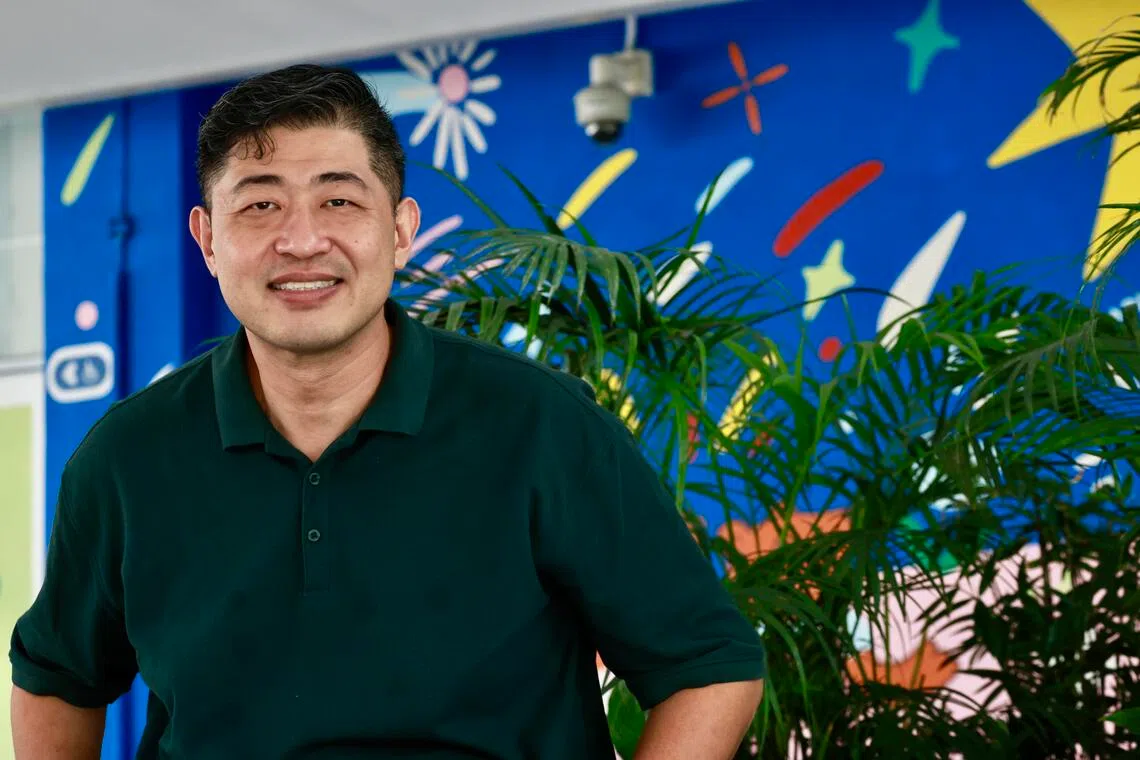
Single father James Ong said the initiative can provide new caregivers with a starting point to the different support systems in Singapore.
PHOTO: LIANHE ZAOBAO
Single father James Ong, whose son was diagnosed with global developmental delay at 15-months-old, said CAREmind would have come in handy for him.
The finance manager recounted having to “search the ocean through the Internet”, only to find that many support programmes were not based in Singapore.
The initiative can provide new caregivers with a starting point to the different support systems and schemes they can tap on here, Ong added.
He said: “The start is the most challenge phase where caregivers are like ‘Okay, what am I supposed to do?’ This programme helps to step in early.”
KioskNews shows a cleaned-up reading view extracted from the publisher’s page — the original always lives on their site, not ours.