Funding strains, construction delays test America’s $10T AI buildout: FT
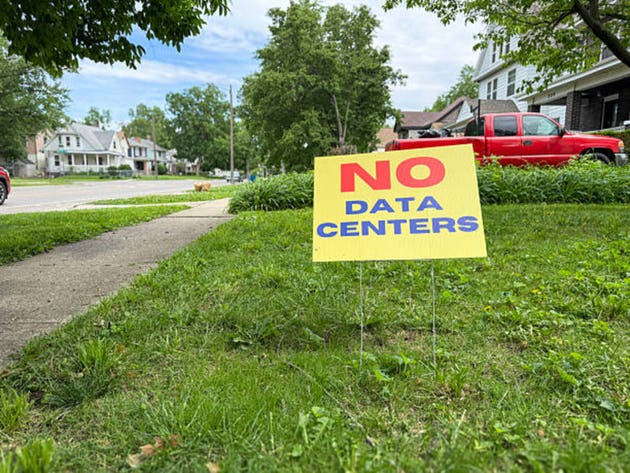
America’s race to build computing infrastructure for artificial intelligence is encountering financing pressures, construction setbacks and local opposition. The difficulties are testing whether developers can deliver the capacity promised to technology companies and AI businesses, and whether investors will keep funding the expansion, the Financial Times reported.
For investors, the central risk is the gap between enormous future revenue commitments and the money needed to turn those contracts into operating facilities. Developers must finance construction, secure electricity and install costly equipment before collecting much of that revenue. Delays can increase expenses or allow customers to cancel agreements, potentially weakening both shareholder returns and lenders’ prospects of repayment.
The scale of the obstacles is growing. Regulatory intelligence firm RegLayer counted at least 47 major projects delayed, withdrawn or blocked in 2026, describing its tally as conservative. Bernstein analysts estimated that only about 35% of the proposed US data center pipeline was credible, while Financial Times research identified more than 1,000 communities that had sought moratoria or other restrictions this year.
Financial markets are showing greater unease. CoreWeave (CRWV) shares fell nearly 25% during the week covered by the report, and one of its unsecured bonds dropped to distressed levels. Other debt linked to AI infrastructure also declined. Meanwhile, several developers have postponed listing plans, complicating efforts to raise capital as borrowing costs rise and investors question whether AI companies can generate enough revenue to support their spending commitments.
Construction problems can magnify those funding pressures. Cipher agreed to cover the first $359 million in cost overruns at a Texas project when it renegotiated a lease with Fluidstack, securing additional delivery time. The revised arrangement required roughly $750 million in additional equity.
Separately, Anthropic’s (ANTHRO) $45 billion agreement with Nscale (NSCL) permits the AI company to withdraw if financing or delivery milestones for a West Virginia development are missed.
Other providers face substantial funding gaps. SoftBank-controlled SB Energy needs $174 billion to fulfill contracts representing $430 billion in prospective revenue, largely from OpenAI (OPENAI), despite having completed no data centers, according to the report. Nebius (NBIS) has estimated that its planned five-gigawatt expansion would require about $250 billion, with approximately one-fifth financed as of September.Power availability and planning approvals present further constraints. Industry executives say some utility regulators are requiring developers to provide their own electricity before receiving grid connections. Projects associated with OpenAI’s Stargate initiative have also encountered delays and permitting difficulties, illustrating how physical infrastructure can become a bottleneck for AI growth.
The spending ambitions remain vast: Columbia Business School economist Stijn van Nieuwerburgh estimates US AI infrastructure investment could exceed $10 trillion between 2025 and 2032. But the emerging strains suggest investors will increasingly distinguish between providers with secured funding, reliable power and achievable construction schedules, and those whose valuations depend on projects still far from completion.
KioskNews shows a cleaned-up reading view extracted from the publisher’s page — the original always lives on their site, not ours.